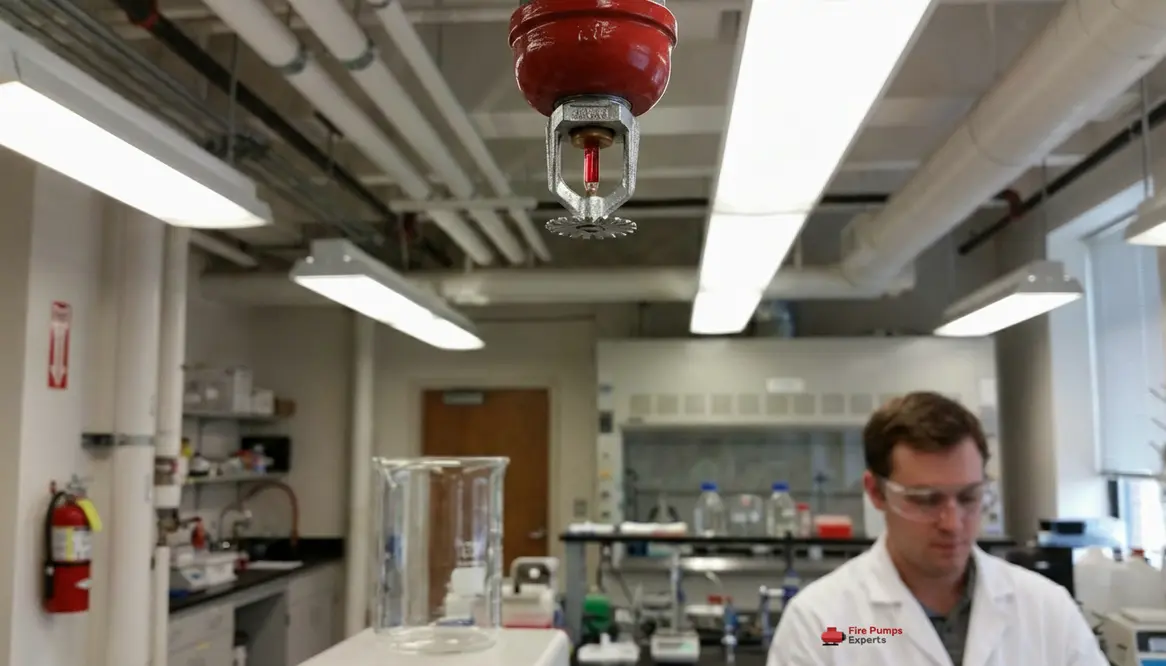
Fire Pump Systems for Laboratory Buildings Guide
I have spent enough time inside medical and research labs to know one thing for certain. These places are equal parts brilliance and controlled chaos. One moment you are looking at life saving innovation, the next you are staring at a shelf of chemicals that sound like rejected Marvel villains. That is exactly why Fire Pump Systems for Laboratory Buildings sit at the heart of serious fire protection planning. They do not just support safety. They quietly stand guard over people, data, and years of work that cannot be replaced.
So let me walk you through how I approach fire protection in these high stakes environments, without the jargon overload and with just enough humor to keep us both awake.
Why fire risks in labs demand more than standard protection
First, let us be honest. A laboratory is not your average office space with a burnt popcorn problem. Instead, you have volatile chemicals, pressurized gases, sensitive equipment, and occasionally, experiments that behave like they skipped their morning coffee.
Because of that, I always emphasize layered protection. While basic sprinkler systems matter, they are only part of the story. You need systems that respond quickly and deliver consistent water pressure, especially in large commercial research facilities where every second counts.
Additionally, fire loads in labs can shift daily. One day it is solvents, the next it is biological materials. Therefore, a static approach simply does not cut it. You need infrastructure that adapts and performs under changing conditions.
How Fire Pump Systems for Laboratory Buildings support critical response
Here is where things get serious, in a good way. Fire pump systems designed for lab environments ensure that water reaches suppression systems with the right pressure and volume, even in complex, multi story buildings.
I like to think of these systems as the quiet backup singer who actually carries the performance. When municipal water pressure drops or demand spikes, the pump system steps in without hesitation.
Moreover, these systems integrate with alarms and suppression networks, which means response is not delayed by human decision making. And let us face it, in an emergency, even the smartest researcher should not be expected to multitask between evacuation and water flow calculations.
In high value facilities, Fire Pump Systems for Laboratory Buildings turn what could be fragile protection into a resilient, predictable response framework that behaves the same way at 3 a.m. on a holiday as it does on a Tuesday morning drill.
What should I prioritize when designing lab fire protection systems?
If you are asking this, you are already ahead of the game. I focus on a few key priorities that make a measurable difference.
- Reliable water supply so suppression systems never run dry
- Redundancy to ensure continued operation during component failure
- Compatibility with specialized suppression like foam or clean agent systems
- Zoning to isolate hazards without shutting down entire facilities
At the same time, I always consider the building layout. Research campuses are often sprawling, and without proper zoning and pump support, you risk uneven protection coverage.
Balancing safety with sensitive equipment and research integrity
Now here is the tricky part. Labs house equipment that costs more than a luxury car collection and data that could redefine entire industries. So yes, water based suppression must be handled carefully.
However, avoiding water altogether is not realistic. Instead, I focus on controlled delivery. High performance fire pump solutions allow systems to activate precisely where needed, reducing unnecessary exposure.
Meanwhile, combining sprinklers with targeted suppression systems helps protect both people and assets. It is a bit like having both a firefighter and a surgeon in the same room. Each plays a role, and together they prevent disaster.
When you design Fire Pump Systems for Laboratory Buildings with sensitive equipment in mind, you get a protection strategy that respects both life safety and the reality that some instruments cost more than the building they are inside.
Key components working together in modern lab fire protection
Detection Systems
Advanced sensors identify heat, smoke, or chemical reactions early. Faster detection leads to faster response.
Suppression Systems
These include sprinklers, foam systems, and specialized agents tailored to lab hazards.
Fire Pump Infrastructure
Ensures consistent pressure and flow, especially during peak demand or supply interruptions.
Control Panels
Coordinate alarms, pumps, and suppression systems for a synchronized response.
When these components work together, the result is not just protection. It is confidence. And in a lab environment, confidence keeps operations moving forward.
Maintenance and testing keep systems ready when it matters
I cannot stress this enough. Even the best system will fail if it is ignored. Regular testing of fire pump systems for lab facilities ensures they perform under real world conditions.
In addition, inspections should account for system wear, changes in building use, and evolving compliance standards. Because let us be honest, regulations tend to update faster than your favorite streaming service adds new shows.
Routine maintenance is not glamorous, but it is the difference between a system that works on paper and one that works in a crisis.
Well maintained Fire Pump Systems for Laboratory Buildings also make it easier to document compliance, reassure insurers, and sleep at night knowing your protection strategy is more than wishful thinking.
FAQ about fire protection in medical and research labs
Protect your lab with systems that actually perform
At the end of the day, protecting a medical or research lab is not about checking boxes. It is about building a system that responds instantly, performs reliably, and supports the people doing critical work inside. If you are managing a commercial or industrial facility, now is the time to evaluate whether your fire protection strategy truly holds up under pressure. The right fire pump solution will not just meet standards. It will exceed expectations when it matters most.
If you are unsure where to start, benchmarking your current Fire Pump Systems for Laboratory Buildings against industry guidance and reputable resources such as https://firepumps.org can clarify what “good” really looks like for your facility.