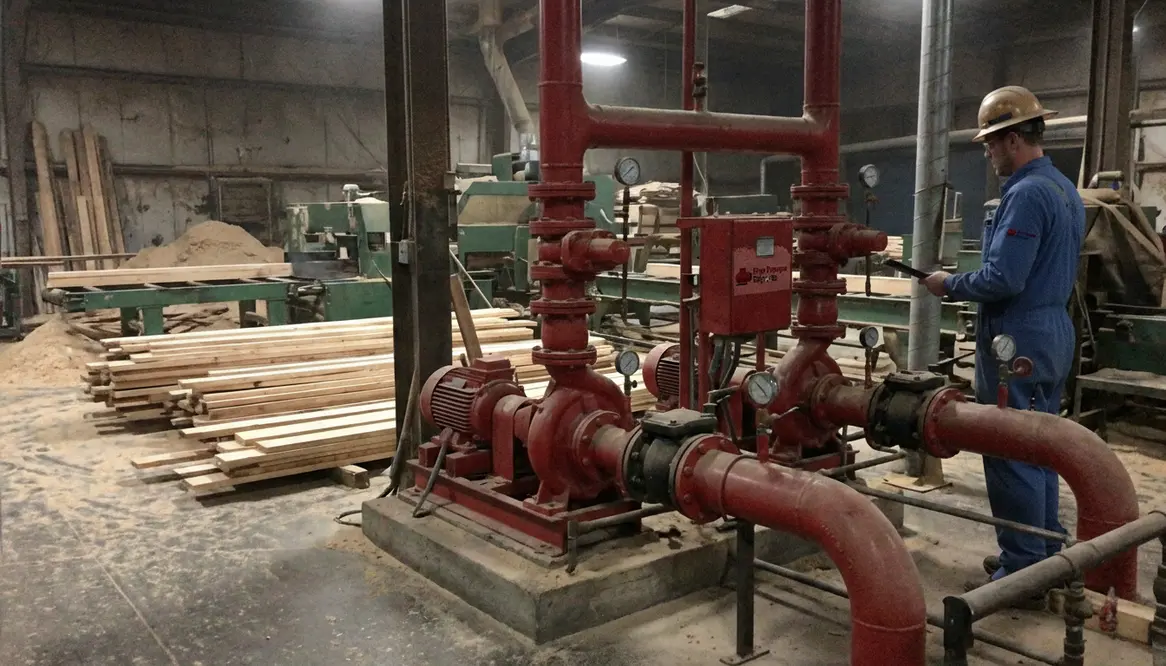
Fire Pump Systems for Lumber Fire Protection
Sawdust does not forgive mistakes. It hangs in the air, settles into corners, and quietly waits for a spark. That is why Fire protection for high-combustibility operations is not just a code requirement. It is a survival strategy. In environments where wood dust can behave like fuel in a blockbuster explosion scene, fire pump systems become the steady heartbeat of protection, ready long before anyone smells smoke.
Why Lumber Facilities Demand More Than Basic Fire Protection
First, let me be blunt. A standard fire protection setup is not enough here. Lumber mills process raw wood, generate fine particulates, and run heavy machinery that produces heat. As a result, the fire load is intense and constant.
Because of this, I always recommend systems that anticipate rapid fire spread. A fire pump in this setting must deliver consistent pressure even when multiple sprinklers activate at once. Otherwise, you are trying to put out a wildfire with a garden hose, and no one wants to be the hero in that movie.
Additionally, compliance with NFPA standards is not optional. It shapes everything from pump sizing to water supply reliability. When I design or evaluate systems, I treat every inch of the facility as if ignition is inevitable. That mindset changes everything.
How Do Fire Pump Requirements Differ in Lumber Processing Plants?
Let me answer this the way most facility managers ask me during a walkthrough. What makes these systems different?
First, higher flow rates are essential. Lumber facilities often require large volume water delivery to control fires fueled by wood stock and airborne dust. Therefore, I size pumps to exceed minimum requirements, not just meet them.
Second, redundancy matters. If one pump fails, another must take over instantly. I usually recommend diesel driven backup pumps alongside electric units. Power outages and fires have a funny habit of showing up together.
Third, suction supply must be rock solid. Whether it is a dedicated tank or a reliable municipal connection, interruptions are unacceptable. Fire pumps cannot hesitate. They need to perform like a seasoned actor who never misses a cue.
Designing Reliable Systems for Fire protection for high-combustibility operations
Now we get into the heart of it. Designing for Fire protection for high-combustibility operations means thinking beyond the pump itself.
I focus on system integration. Pumps, sprinklers, detection systems, and alarms must work as one coordinated unit. If one piece lags, the entire response weakens.
Moreover, I prioritize durability. Equipment in lumber facilities faces dust, vibration, and temperature swings. Therefore, I choose components that can handle harsh conditions without constant maintenance.
Design Priorities at a Glance
Key design focus
- High capacity pump sizing
- Dust resistant enclosures
- Redundant power sources
- Strategic sprinkler zoning
Operational benefit
- Controls large scale fire spread
- Reduces failure from debris buildup
- Keeps system active during outages
- Targets fire at its origin quickly
At this point, I often joke that the system should be smarter than the people operating it. Not because people are careless, but because automation reacts faster than human instinct.
Common Mistakes I See in Industrial Fire Pump Installations
Even experienced teams make missteps. I have seen them all, and some still surprise me.
One common issue is undersized pumps. It might save money upfront, but it creates serious risk later. Fires do not scale down to match your budget.
Another problem is poor maintenance planning. Facilities install high quality systems, then forget them until inspection day. A fire pump that has not been tested regularly is like a car that has not been started in years. It looks fine until you need it.
Also, I often find poor placement. Pumps located in hard to access areas delay response times for repairs and inspections. Accessibility is not a luxury. It is part of reliability.
Maintenance Practices That Keep Systems Ready
Routine testing and inspection
Consistency is everything here. I treat maintenance as part of daily operations, not an afterthought.
Weekly testing ensures pumps start and run correctly. Monthly inspections catch wear before it becomes failure. Additionally, I recommend full flow testing annually to confirm performance under real conditions.
Environment, cleanliness, and records
Cleanliness matters too. Dust buildup can interfere with moving parts and cooling systems. So I make sure pump rooms stay clean and controlled.
And yes, documentation is key. If it is not recorded, it did not happen. Inspectors will agree, and so will your insurance provider.
For facilities pushing production hard, treating Fire protection for high-combustibility operations as a standing agenda item in operations meetings keeps everyone aligned and accountable.
FAQ Quick Answers for Facility Owners
Questions about Fire protection for high-combustibility operations come up in nearly every project review, especially when production lines or storage layouts change.
Final Thoughts and Next Steps
If you operate a lumber processing facility, you already know the risks are not theoretical. They are real, constant, and unforgiving. I design fire pump systems to meet that reality head on, with strength, redundancy, and precision. If your current setup leaves even a sliver of doubt, now is the time to act. Reach out, evaluate your system, and make sure your operation stands ready when it matters most.
When in doubt, start with a documented review of your water supply, pump capacity, and sprinkler coverage. From there, compare your current installation to NFPA guidance and, if needed, bring in a specialist familiar with Fire protection for high-combustibility operations in lumber environments. A few hours of analysis today can prevent a catastrophic interruption tomorrow.
If you are looking for technical references and tools related to fire pumps and system performance, a good starting point is https://firepumps.org, alongside your local fire marshal’s office and insurance loss control team.