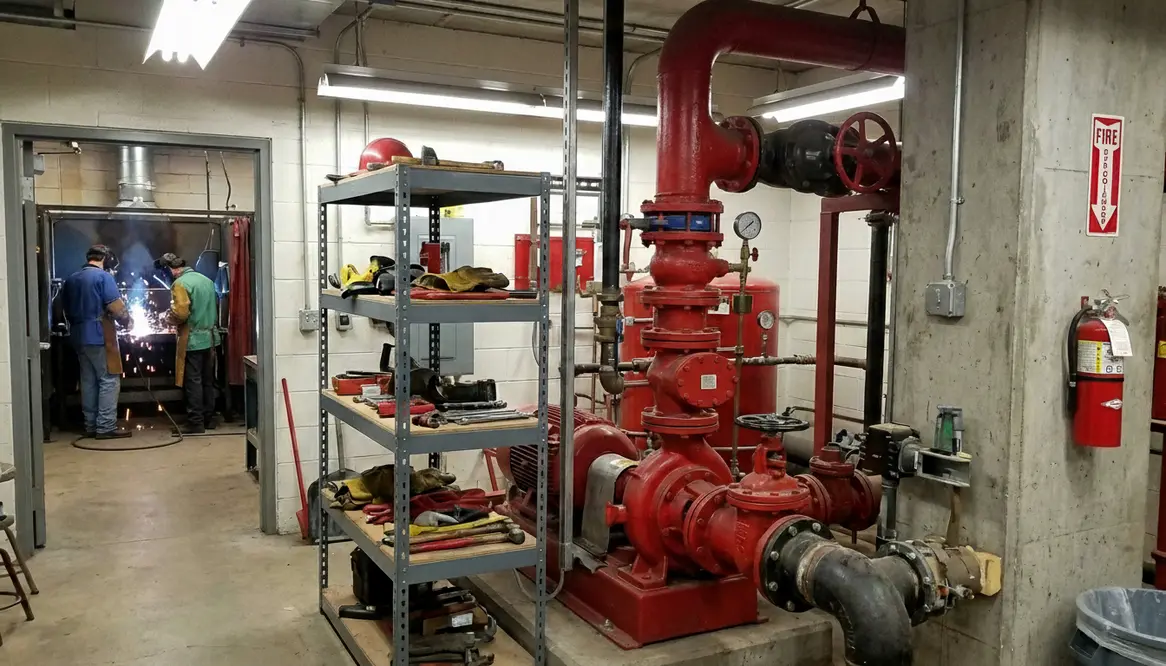
Fire Pump Systems for Trade Schools Safety Guide
I have walked through enough vocational campuses to know one truth. Sparks will fly. Sometimes on purpose. Welding bays, auto shops, electrical labs. These places hum with energy, and that energy needs boundaries. That is where Fire Pump Systems for Trade Schools step into the spotlight. Within the first moments of planning a facility, I treat fire protection like a quiet guardian. It does not shout, yet when it acts, it saves everything that matters. And yes, if buildings had a theme song, this system would play something dramatic, maybe a little Hans Zimmer, but calmer.
What makes fire safety different in vocational education spaces?
Vocational spaces are not your average classrooms. Instead, they are controlled chaos. Students cut, weld, wire, and test. Because of this, fire risks multiply in ways traditional buildings rarely see. I focus on ignition sources first. Open flames, heated tools, and flammable materials often share the same room. Therefore, I design safety systems that assume mistakes will happen, because they will.
Additionally, airflow matters. Workshops often need ventilation, yet that airflow can feed a fire if not managed properly. So I coordinate suppression systems with ventilation layouts. It is a bit like choreographing a dance, except the dancers are steel pipes and pressurized water.
And yes, I always assume someone will forget a step. Humans are consistent like that.
Fire Pump Systems for Trade Schools and why they matter
When I talk about protection, I am really talking about response time. A well designed fire pump system ensures water moves fast and with force. In large trade campuses and industrial training facilities, municipal pressure alone often falls short. That is where dedicated pump systems earn their keep.
Moreover, these systems support sprinklers and standpipes across expansive workshop floors. I have seen facilities where a delay of seconds could mean the difference between a contained incident and a shutdown that lasts months. So I design for speed, consistency, and reliability.
And let me be honest. Water pressure is not glamorous. It will never trend on social media. But when something goes wrong, it becomes the hero nobody knew they needed.
How I design safer workshops from the ground up
I never treat fire safety as an add on. Instead, I build it into the bones of the facility. First, I map hazard zones. Welding areas, paint booths, and electrical labs each demand different approaches. Then, I align suppression systems with those zones.
Next, I ensure clear access. Equipment should never block sprinklers or hydrants. You would be surprised how often a misplaced storage rack becomes a silent risk. Therefore, I coordinate layouts with instructors and facility managers early on.
Finally, I test everything under real conditions. Not theory. Not assumptions. Real pressure, real flow, real scenarios. Because when a system activates, it does not get a second take.
Key Design Priorities
- Fast water delivery across large floor areas
- Clear zoning for high risk training spaces
- Integration with alarms and detection systems
- Reliable backup power for uninterrupted operation
Common Risks I Plan For
- Open flame training exercises
- Flammable liquids and gases
- Electrical overload scenarios
- Human error during hands on learning
Training students without compromising safety
Here is the balance I respect. Students need real world experience. However, realism should not invite unnecessary danger. So I advocate for structured safety protocols that feel natural, not restrictive.
For example, I encourage instructors to integrate fire response drills into coursework. This way, students learn not just how to build or repair, but how to react under pressure. Think of it as muscle memory for safety.
And yes, sometimes I joke that knowing where the extinguisher is should be as instinctive as knowing where your phone is. Both are things people panic about losing.
Fire Pump Systems for Trade Schools in large scale facilities
When dealing with major commercial training centers, scale changes everything. Large buildings require systems that can maintain pressure across long distances and multiple levels. Therefore, I specify pumps that match both size and complexity.
Additionally, redundancy becomes essential. Backup pumps and power sources ensure the system performs even when one component fails. Because in high occupancy facilities, failure is not an option.
I also coordinate with local codes and industrial standards. Compliance is not just paperwork. It is a framework that ensures every layer of protection works together. And when done right, it feels seamless.
Maintaining fire safety systems without cutting corners
Installation is only the beginning. Maintenance is where reliability lives or dies. I always recommend routine inspections and performance testing. Not occasionally. Consistently.
Over time, even the best systems can degrade. Valves stick. Pumps wear down. Sensors drift. Therefore, proactive servicing keeps everything ready. It is like maintaining a car, except this car protects an entire building.
And if I may add a touch of humor, ignoring maintenance is a bit like ignoring a smoke alarm with a low battery. Annoying at first, disastrous later.
FAQ
Conclusion
Fire safety in vocational education spaces is not just a requirement. It is a responsibility I take seriously every single time. With the right planning, strong systems, and reliable Fire Pump Systems for Trade Schools, facilities can operate with confidence and control. If you manage or design a large training center, now is the time to strengthen your protection strategy. Reach out, evaluate your systems, and make sure your building is ready long before it ever needs to be.