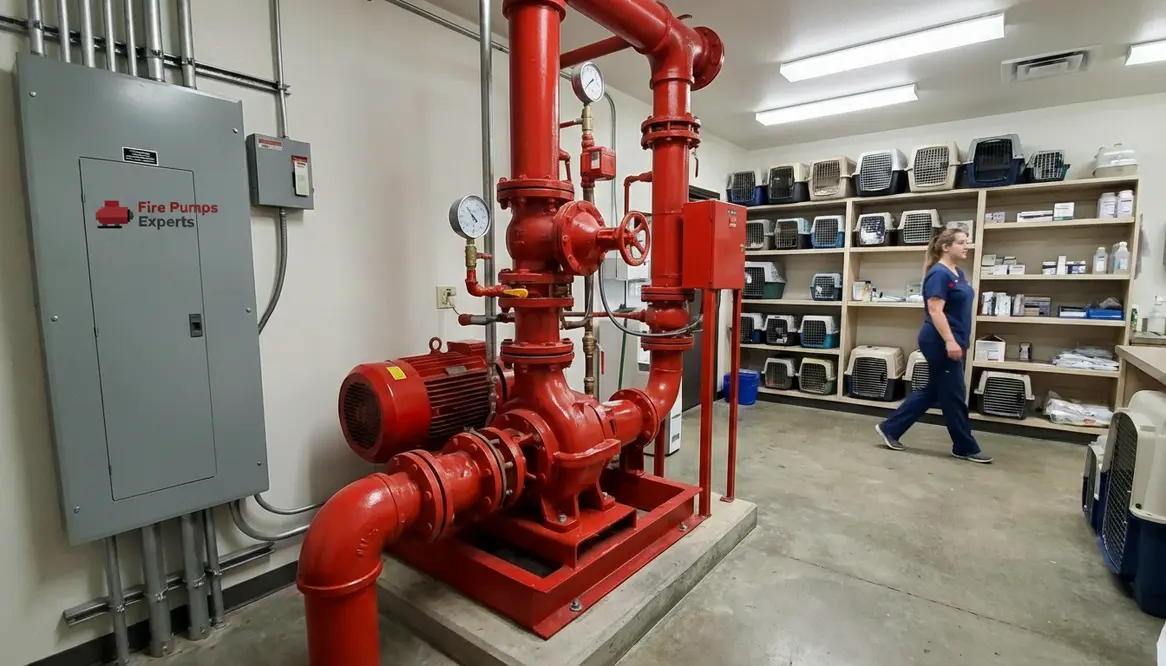
Fire Pump Systems for Veterinary Hospitals Guide
I have spent enough time around commercial animal care facilities to know one truth: when things go wrong, they go wrong fast. That is exactly why I always bring up Fire Pump Systems for Veterinary Hospitals early in the conversation. These systems are not just equipment tucked away in a mechanical room. They are the quiet guardians that step in when every second matters. And while no one enjoys talking about fire risks, I find it better to face them head on… preferably before they turn your facility into a scene from a disaster movie.
Why Fire Protection Matters in Animal Care Facilities
Animal care facilities carry unique risks. Unlike standard commercial buildings, you are dealing with living beings that cannot self evacuate. That changes everything. Therefore, I approach fire protection here with a deeper sense of urgency.
Additionally, many veterinary hospitals and large scale animal facilities store oxygen tanks, surgical tools, and electrical equipment that operate around the clock. Combine that with bedding materials and cleaning chemicals, and you have a recipe that demands serious planning.
Moreover, animals react unpredictably to alarms and smoke. While humans follow exit signs, animals may panic or freeze. So, your fire protection strategy must compensate for that gap. In my experience, a strong suppression system paired with reliable water pressure is not optional. It is essential.
How Fire Pump Systems for Veterinary Hospitals Improve Response Time
When I evaluate a facility, I always ask one simple question: will your system perform at peak demand? Because in a fire, there is no warm up period. It is showtime immediately.
Fire Pump Systems for Veterinary Hospitals ensure that sprinkler systems and standpipes receive consistent and adequate water pressure. Even in large commercial properties or multi building campuses, these systems eliminate weak flow issues that could delay suppression.
Furthermore, municipal water supply is not always reliable under emergency conditions. That is where dedicated fire pump units step in. They boost pressure instantly and maintain it throughout the event.
Think of it like this. If your sprinkler system is the actor, the fire pump is the director making sure every line is delivered on cue. And unlike some directors, it does not yell… it just performs.
What Should I Include in a Fire Protection Plan for Animal Facilities?
I get this question often, and I appreciate its simplicity. A strong plan includes more than just alarms and extinguishers.
Core Components
- Automatic sprinkler systems with full coverage
- Dedicated fire pump systems for pressure stability
- Smoke detection integrated with monitoring services
- Emergency power backups for uninterrupted operation
Operational Planning
- Staff training for animal evacuation procedures
- Clear zoning to isolate fire spread
- Routine inspection and testing schedules
- Coordination with local fire departments
Additionally, I always stress redundancy. Because in critical facilities, one layer of protection is never enough. You want overlap. You want backup. You want peace of mind that does not rely on luck.
Design Considerations for Large Veterinary and Animal Care Buildings
Designing fire protection for large scale facilities is not a copy and paste job. Each building has its own layout, occupancy type, and operational flow.
For example, surgical suites require higher levels of control compared to general boarding areas. Meanwhile, storage zones for medical gases demand specialized safeguards.
Consequently, I focus on zoning strategies. By dividing the facility into controlled sections, you can contain fire and smoke more effectively. This approach not only protects animals but also gives staff valuable time to act.
Another factor is system accessibility. Fire pumps, valves, and control panels must be easy to reach for maintenance teams. Because if servicing becomes a hassle, it often gets delayed. And delayed maintenance is how small problems turn into big headlines.
Key Design Priorities
- Strategic sprinkler placement
- Reliable water storage integration
- Dedicated fire pump rooms
- Clear access routes for responders
Risk Reduction Measures
- Fire resistant materials in high risk zones
- Separation of hazardous storage
- Advanced alarm monitoring systems
- Regular compliance audits
Fire Pump Systems for Veterinary Hospitals and Compliance Standards
Now, let us talk about compliance. Not the most thrilling topic, I know. But ignoring it is like skipping leg day… eventually, it shows.
Commercial animal care facilities must meet strict fire codes and insurance requirements. These standards often dictate system capacity, testing frequency, and documentation.
Therefore, installing properly engineered fire pump systems helps meet these requirements while also improving overall safety performance. Inspectors want to see reliability. Insurers want to see risk reduction. And frankly, you want both.
Additionally, routine testing is not just a checkbox. It verifies that your system will perform under real conditions. I always recommend scheduled flow tests and performance reviews to keep everything in peak shape.
Common Mistakes I See and How to Avoid Them
I have walked through enough facilities to spot patterns. Some good. Some… not so good.
One common mistake is underestimating water demand. Facilities expand, add equipment, and increase occupancy, yet their fire protection systems remain unchanged. That mismatch can be dangerous.
Another issue is neglecting maintenance. A fire pump system that is not regularly tested is like a car that has not been started in years. It might work… or it might not. That is not a gamble worth taking.
Finally, I often see poor integration between systems. Alarms, sprinklers, and pumps must work together seamlessly. If they do not, response time suffers.
And in this line of work, time is everything.
FAQ: Fire Protection for Animal Care Facilities
Fire Pump Systems for Veterinary Hospitals sit at the center of many of these questions, because so much of your protection plan relies on reliable water supply and pressure.
Conclusion
Protecting animal care facilities is not just about meeting code. It is about creating a system that performs without hesitation when it matters most. If you operate a large scale veterinary or animal care property, now is the time to evaluate your fire protection strategy. Invest in reliable systems, including properly designed fire pump solutions such as those highlighted at https://firepumps.org, and ensure every layer works together. Because when the unexpected happens, preparation is what stands between control and chaos.