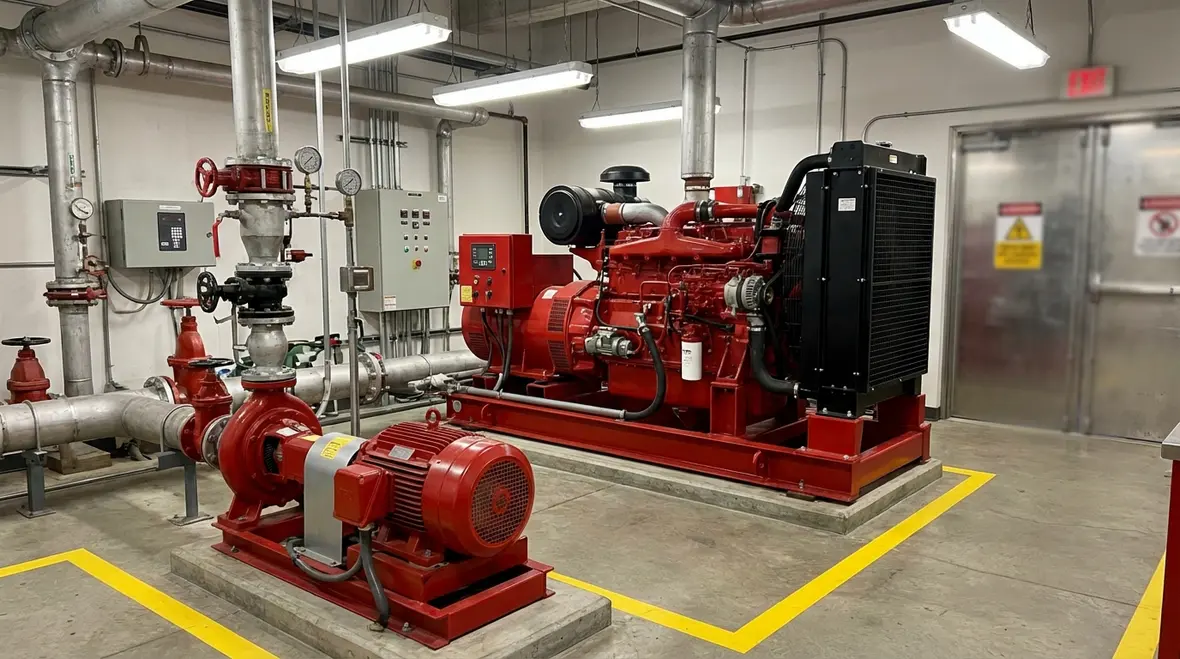
What Are Fire Pumps? (A Deep Dive for Commercial & Industrial Facilities)
By the time you’re done reading this, fire pumps will go from “What even is that thing?” to “Ah, yes, the unsung hero of fire suppression.” And yes, we’ll keep it as smooth and digestible as your morning coffee — just how firepumps.org likes it served up. And by the way, no, this isn’t your standard Wikipedia entry dry as a biscuit. Buckle in.
What Is a Fire Pump (And Why Should You Care)?
A fire pump is not a fancy garden hose, and it’s definitely not your granddad’s old water well. In the world of commercial and industrial fire protection, it’s the muscle behind the sprinkler system — the Bruce Banner of emergency water pressure. It kicks in when your building’s normal water supply can’t keep up with the demands of a raging fire.
Think of it like this: if your overhead fire sprinklers are the Avengers, then the fire pump is Nick Fury — the one calling all the shots and making things actually happen when disaster hits.
Typically connected to a main water source or a dedicated water tank, these mechanical beasts ensure that when an emergency calls… they answer — in gallons per minute.

How Fire Pumps Work in Industrial and Commercial Buildings
Now, let’s get a little technical — just a little. When a fire breaks out in a building that’s, say, ten stories tall or a warehouse that’s longer than a football field, water pressure can’t just magically get to every corner. That’s where the fire pump comes in like Gandalf at Helm’s Deep — right on time and with some serious power.
When a sprinkler head opens because it senses heat (not because of your burnt toast), the drop in pressure triggers the fire pump. That pump kicks on, feeding water into the system at high pressure, ensuring every sprinkler and hose in the building gets what it needs. It’s all about flow and pressure — two things you definitely want dialed-in when things get heated. Literally.
Types of Fire Pumps: Which One Do You Need?
Fire pumps are not a one-size-fits-all situation. Different types serve specific building needs. Choosing the wrong one? Kind of like putting diesel in a Tesla. Just don’t.
Electric Motor-Driven Pumps
- Lower maintenance
- Quieter operation
- Needs an external power source (and backup)
Diesel Engine-Driven Pumps
- Run without electrical power
- Perfect for power-outage scenarios
- Requires more regular upkeep and fuel management
There’s also the jockey pump, the system’s hype man. It runs quietly in the background, keeping the pressure steady so the big boy doesn’t have to jump in the ring for every small dip in pressure. And finally, the rarely used steam-driven fire pump — mainly residing in buildings older than The Rolling Stones’ touring schedule.
Why High-Rise and Large Facilities Cannot Afford to Ignore Fire Pumps
If you manage a 30-story commercial tower or an industrial facility filled with sensitive equipment (or flammable materials), a functional fire pump isn’t a luxury. It’s a must-have. Insurance won’t love you without one. The fire code definitely won’t. And the fire department? Don’t even go there.
These facilities are especially vulnerable because their internal plumbing systems can’t deliver enough pressure on their own. Your local coffee shop can probably get away without one. But a 500,000-square-foot logistics center holding enough cardboard to build a small country? Not so much.
What’s more — some jurisdictions legally require them in buildings where sprinkler systems are installed above 400 GPM. Translation: if water pressure matters at all in a crisis, the law likely requires a fire pump lurking somewhere near your mechanical room.

Installation & Maintenance (Yes, This Part Still Matters)
Look, having a fire pump is one thing. Having one that actually works when you need it? Whole different ball game.
I once heard someone say that installing a fire pump and never checking it again is like putting a smoke alarm in a microwave and calling it “high-end protection.” They’re not wrong. Regular inspections, flow tests, and proper maintenance are the key to long-term trust in your system — and frankly, worth every penny compared to the cost of catastrophic fire damage.
Working with certified professionals (hi there, firepumps.org *waves hand modestly*) ensures your pump meets local codes, NFPA standards, and performs when Thor’s hammer of doom (a.k.a. fire) decides to drop in for a surprise visit.

The Real Cost of Not Installing a Fire Pump
Let’s put this into perspective — a solid fire pump system might cost you, say, a few percentage points of your total facility budget. But fire damage without one? That’s the whole pie. With zero left for dessert. Facilities without fire pumps risk slower suppression response, higher insurance payouts, failed compliance inspections, and worst of all — loss of human life.
More than codes or fines, this is about responsibility. Fire pumps aren’t just precautionary — they’re mandatory in the modern industrial and commercial world. They’re as essential as security systems, elevators, and yes, even coffee in the break room.

Where Fire Pumps Should Be Placed Inside the Building
This isn’t Hollywood — you can’t just throw a pump anywhere and expect magic. Location is key. Fire pump rooms need to be accessible, secure, and preferably, fire-resistant. Proximity to a reliable water source is non-negotiable. And depending on whether it’s diesel or electric, you’ll need venting, drainage, and backup energy systems.
Suddenly, that dusty corner next to the vending machines isn’t looking like such an ideal location, is it?

FAQ
Final Thoughts: Why You Shouldn’t Sleep on Fire Protection
We covered a lot. From what fire pumps are to how they work, types, placement, costs, and the life-or-death importance in your building. These systems are the backbone of your fire safety operations. They work silently, patiently, and (if maintained properly) relentlessly.
So, if you manage a commercial high-rise, industrial fortress, or sprawling logistics center, don’t leave fire protection up to chance. Install it right. Test it often. And when in doubt, call a pro who speaks fluent GPM. (Hint: It’s firepumps.org)
Call to Action
You’ve learned the why — now take action. Make sure your fire protection system is powered by a reliable, code-compliant fire pump designed for your facility’s size and complexity. Reach out to firepumps.org and let’s put safety, strategy, and smarts front and center where they belong. Because the best time to prepare for a fire… was yesterday.