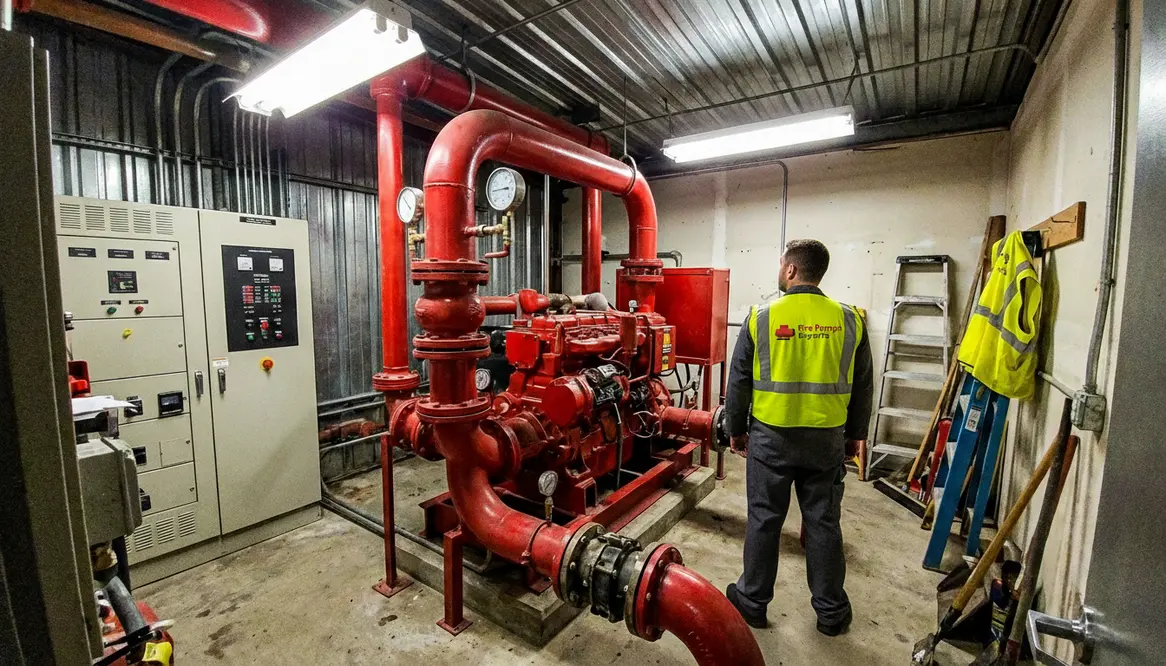
Fire Pumps in Business Continuity Fire Protection
Why the quiet workhorse in your mechanical room might be the most important player in your continuity plan.
I have spent enough time around commercial and industrial facilities to know one simple truth. When things go wrong, they do not send a calendar invite first. That is where business continuity fire protection steps in, calm and steady, like the one person in a movie who actually reads the emergency manual. Fire pumps sit at the center of that calm. They do not panic. They do not hesitate. They move water with purpose, buying time, protecting assets, and keeping operations alive when everything else wants to shut down.
In simple terms, fire pumps are the difference between a system that looks good on paper and a system that actually performs when it is needed. If business continuity fire protection is your playbook, the fire pump is the part of the team that never leaves the field.
They do one thing exceptionally well: keep water moving with the right force to stop a bad day from turning into a multi-week shutdown. That is the quiet promise sitting in your pump room.
What role do fire pumps play in business continuity fire protection
I like to think of fire pumps as the heartbeat of a fire protection system. Without them, even the best sprinkler system becomes more of a suggestion than a solution. When municipal water pressure drops or demand spikes, the pump steps in and says, “I’ve got this.”
Because of that, fire pumps ensure water flows at the right pressure and volume exactly when it is needed. In large scale facilities like manufacturing plants, distribution centers, and high rise buildings, that consistency is not a luxury. It is survival.
Additionally, when fire events threaten to halt operations, pumps keep suppression systems fully functional. That means less damage, faster recovery, and fewer interruptions. And let’s be honest, downtime is expensive. It is the kind of expense that makes finance teams stare into the distance like they just watched a plot twist they did not see coming.
If you care about contracts, customer trust, and staying operational after an incident, you care about business continuity fire protection. And you cannot have that without a dependable fire pump system at its core.
How fire pumps prevent operational shutdowns
First, they maintain pressure stability across vast systems. Large facilities often have complex layouts, and water needs to travel far and fast. Without a pump, pressure fades. With a pump, it stays consistent.
Second, they respond instantly. There is no warm up speech or dramatic pause. The system detects demand, and the pump activates. That speed limits fire spread and protects critical infrastructure like electrical systems, machinery, and inventory.
Moreover, fire pumps support compliance with safety codes. That matters because inspections do not care about good intentions. If your system cannot perform, operations can be halted before a fire even starts.
And finally, they reduce recovery time. A controlled incident is always easier to recover from than a full scale disaster. Think of it as the difference between cleaning up a spilled drink and rebuilding the entire kitchen.
If you are wondering where to start, partnering with a specialist matters. Providers like fire pump service experts who live and breathe pump testing and maintenance can keep your systems inspection ready and continuity focused at all times.
Inside the system: how fire pumps actually work
Let me walk you through it without turning this into a physics lecture. At its core, a fire pump takes water from a reliable source and boosts its pressure so it can travel where it is needed.
Key components I rely on:
- Pump unit that moves water
- Driver such as electric motor or diesel engine
- Controller that starts and monitors operation
- Jockey pump that maintains baseline pressure
What happens during activation:
- Pressure drops in the system
- Controller detects the change
- Main pump starts automatically
- Water pressure rises to required levels
Because everything is automated, the system reacts faster than any human could. It is less Hollywood action scene and more quiet precision. And honestly, that is exactly what you want when the stakes are high.
From a business continuity fire protection perspective, this automation is gold. You are not relying on someone to be in the right place at the right time. The system simply does its job.
Why reliability matters more than raw power
It is tempting to think bigger is always better. Bigger pump, more power, problem solved. Not quite. What I have learned is that reliability wins every time.
A properly designed fire pump system matches the facility’s exact needs. It accounts for building height, layout, hazard level, and water supply conditions. Oversizing can create inefficiencies. Undersizing can create risk. Neither is a good look.
Furthermore, regular testing and maintenance keep the system dependable. Weekly churn tests, annual flow tests, and controller checks ensure everything works when it counts. Skipping maintenance is like ignoring a check engine light and hoping the car just develops a sense of humor about it.
In commercial and industrial environments, where operations depend on uptime, that reliability directly supports continuity. You are not just protecting a building. You are protecting productivity, contracts, and reputation.
Framed another way, the real payoff of business continuity fire protection is not just surviving an incident. It is surviving it with your timelines, client commitments, and operations still intact.
Integrating fire pumps into a continuity strategy
I always tell facility managers that a fire pump is not a standalone hero. It works best as part of a broader plan.
For example, integration with alarm systems ensures immediate alerts. Coordination with backup power keeps pumps running during outages. Clear emergency protocols help staff respond without confusion.
Additionally, documentation plays a quiet but critical role. When systems are well documented, inspections move smoothly, and teams know exactly what to do. That clarity reduces delays and prevents small issues from becoming large problems.
And yes, there is a human side to all this. Training staff to understand how the system works adds another layer of resilience. Because even the best technology benefits from people who know what they are doing.
Bringing it all together
When fire pumps are properly selected, installed, powered, and maintained, they become the mechanical backbone of business continuity fire protection. They connect risk assessments, emergency response plans, and compliance requirements into one functional, reliable system.
FAQ: Fire Pumps and Business Continuity
These are the questions I hear most often when people start connecting fire pumps to broader continuity goals.
Final thoughts on business continuity fire protection
When I look at fire pumps, I do not just see equipment. I see a safeguard that keeps businesses moving forward when everything else tries to pull them back. If you manage a commercial or industrial facility, now is the time to assess your system, test its strength, and ensure it can carry the load when it matters most. Because in an emergency, preparation is not just smart. It is everything.
Treat your pump room as an essential part of business continuity fire protection, not just a back of house requirement. The work you put in there determines how quickly you can look at a post incident report and say, “That could have been so much worse, but we were ready.”