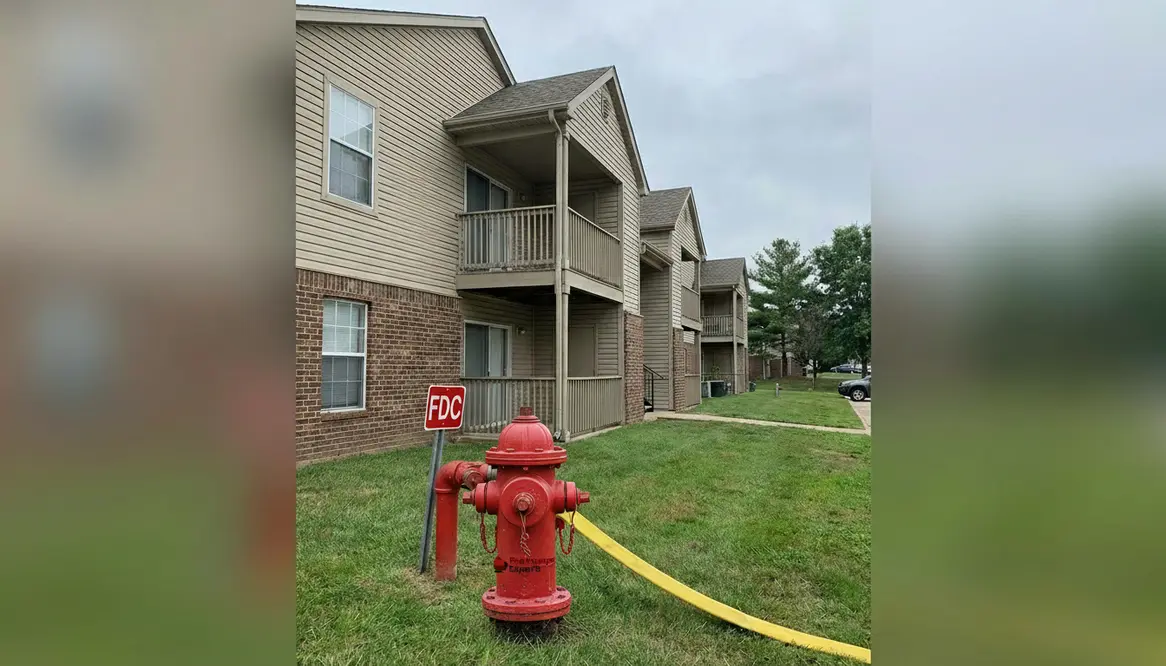
Garden Style Apartment Fire Pump Requirements Guide
I have spent years walking through properties that look calm on the surface yet quietly rely on serious systems behind the walls. Fire protection in lower rise residential communities is one of those unseen guardians. Early on, I learned how garden style apartment fire pump requirements shape the backbone of safety in these spaces. They are not just boxes and pipes. They are the difference between a close call and a headline. And while no one throws a party for a properly installed fire pump, they should. Because when things heat up, literally, that system becomes the hero no one sees coming.
What makes fire protection different in lower rise communities?
I often get asked why these properties need a tailored approach. The answer is simple. Lower rise communities spread out instead of reaching for the sky. Because of that, water distribution behaves differently. Pressure drops over distance, not just height. So while a skyscraper fights gravity, a garden style community fights friction and layout.
Additionally, these properties often blend residential comfort with light commercial elements like leasing offices or shared amenities. Therefore, I always treat them as part of a larger commercial ecosystem. That is where smart planning steps in. I look at access roads, hydrant spacing, and system redundancy as a complete picture rather than isolated features.
And yes, I have seen layouts that feel like a maze designed by someone who really loved puzzles. Fire trucks do not share that enthusiasm.
Why layout reshapes risk
In these communities, long hose stretches, parking courts, and building orientation can slow both water and firefighters. That is why garden style apartment fire pump requirements are not just about raw pressure; they are about delivering that pressure where and when it is needed across a wide footprint.
I pay close attention to how people actually move through a property. If residents get lost walking home from the pool, imagine what responding crews face at 2 a.m. in smoke and chaos.
garden style apartment fire pump requirements explained simply
Let me slow this down and make it practical. When I review garden style apartment fire pump requirements, I focus on consistency and reliability. These systems must maintain steady pressure across multiple buildings, even during peak demand.
Fire pumps come into play when municipal supply alone cannot meet required flow or pressure. That is more common than people think. Especially in larger residential communities, water systems often need that extra push.
Moreover, I always consider how quickly the system activates. A delay of even a few seconds can change outcomes. So I prioritize responsive controls and proper testing schedules. Think of it like a seatbelt. You do not notice it until you really, really need it.
Key elements to get right
- Reliable power sources for pumps, with redundancy where required
- Accurate hydraulic calculations that reflect real site conditions
- Clear performance benchmarks tied to garden style apartment fire pump requirements and local code
- Controls and sensing that trigger quickly without false starts
How I design systems that actually work when it matters
I approach every project with one rule. If it fails under pressure, it was never good enough to begin with. So I build layers of protection.
Water supply planning
I confirm that supply sources can handle worst case scenarios. Then I add margin because real life rarely follows clean math.
System integration
I connect alarms, pumps, and sprinklers into one coordinated response. No guessing. No delays.
Accessibility
I ensure fire department connections are easy to reach. Firefighters should not need a treasure map.
Maintenance strategy
I plan for ongoing inspections because even the best system fades without care.
At the same time, I avoid overcomplicating things. Complexity may look impressive on paper, but simplicity wins in emergencies. Always.
Common gaps I see and how to avoid them
I have walked into properties where everything looks compliant at first glance. Then I dig deeper. That is where the cracks show.
For instance, undersized piping can choke flow. Poorly placed valves can slow response. And neglected testing schedules can leave systems unreliable. Therefore, I always stress proactive management.
Another issue is assuming residential means lower risk. That assumption does not hold. People live there. Families sleep there. The stakes are just as high, if not higher.
And let me say this with a bit of humor. Fire does not care about your zoning classification. It is not checking paperwork before it spreads.
Checking against the right standard
When I walk a site, I do not stop at the minimums. I measure against how well the system would perform under real fire conditions. That includes reviewing how the layout and the garden style apartment fire pump requirements interact: where hose lines will run, how crews will stage, and how long pressure can be sustained.
Smart upgrades that bring long term value
When I advise property managers, I focus on improvements that deliver both safety and efficiency. Modern fire pumps with variable speed controls can adapt to demand. That means less wear and better performance over time.
Additionally, remote monitoring has changed the game. I can now track system health without waiting for a failure. It is like having a smoke detector that texts you before it even chirps.
I also recommend aligning fire protection systems with broader commercial standards. Since https://firepumps.org focuses on large scale and commercial applications, I apply that same level of rigor here. The result is a residential community protected with industrial grade thinking.
Where requirements meet long term planning
Good garden style apartment fire pump requirements do more than check a box for today’s inspection. They create a framework for upgrades, expansions, and future tenants you have not even met yet. When pumps, controls, and pipe sizing are planned with growth in mind, your next building phase plugs into a system that is already ready to protect it.
FAQ quick answers for property owners
Final thoughts and your next move
Fire protection is not the flashiest part of a property, but it is the one that stands between order and chaos. I always tell clients that investing in strong systems today prevents regret tomorrow. If you manage or develop larger residential communities, treat them with the same seriousness as commercial properties. Work with experts who understand scale, pressure, and performance. When you are ready to strengthen your system, take action and make safety a built in feature, not an afterthought.