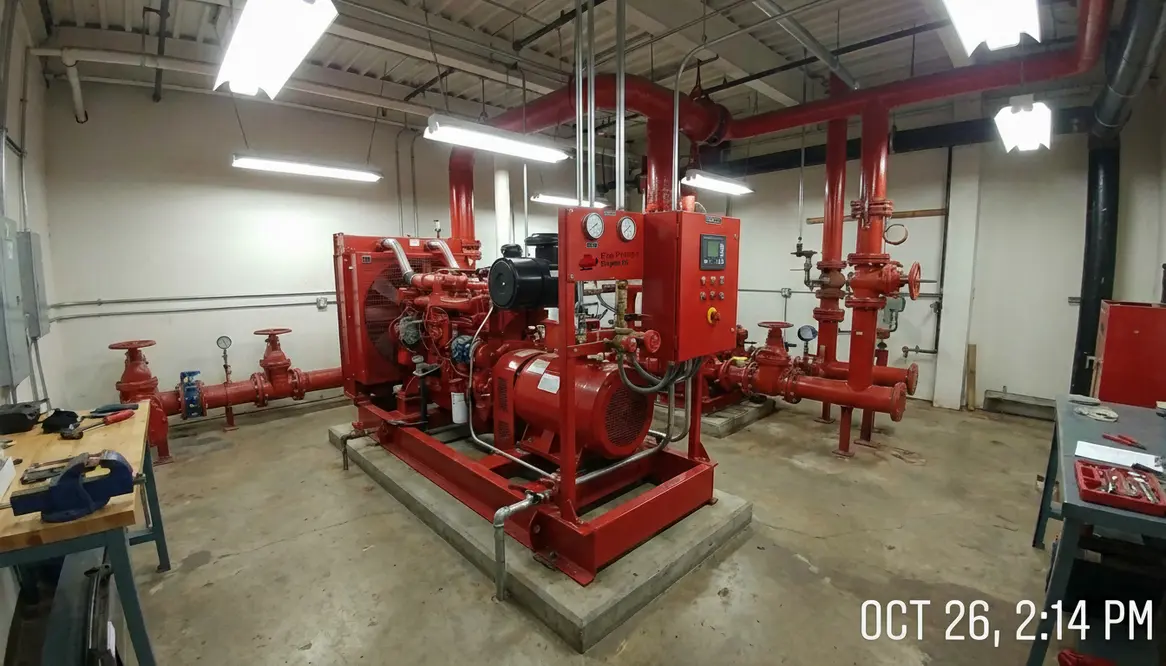
Industrial Fire Pump System Requirements Guide
I have spent years walking through massive plants, high rise complexes, and sprawling commercial properties where the hum of machinery never truly sleeps. In these environments, fire protection is not just another line item on a safety checklist. It is a lifeline. And that brings us to something many facility managers quietly Google at 2 a.m. after a safety audit: industrial fire pump system requirements. When you run a manufacturing facility or manage a major property, understanding how these systems work is not optional. It is essential. After all, when a fire emergency happens, you do not want your response plan to look like a confused group project from a high school science class.
So today I am going to walk through what really matters. Not just the rules on paper, but how these systems actually protect large commercial and industrial properties. And yes, I promise to keep things engaging. Because even something as serious as fire protection deserves the occasional well timed wink.
Why Large Facilities Cannot Ignore Fire Pump Design
Let me start with a truth that sounds obvious but deserves repeating. Industrial buildings are big. Sometimes extremely big. A warehouse can stretch longer than a football field. A manufacturing campus can resemble a small city. Because of that scale, the water pressure from a municipal supply often cannot deliver enough flow to power a full sprinkler network during a fire event.
That is where fire pumps step in. They increase water pressure so the suppression system performs exactly when it needs to. In other words, they take the existing water supply and give it the strength of a double shot espresso.
However, industrial settings add layers of complexity. Facilities may contain hazardous materials, heavy equipment, chemical storage, or high rack storage systems. Each condition changes how fire protection must perform. Consequently, engineers must design systems that meet strict codes while also handling the realities of industrial operations.
Additionally, insurance carriers pay very close attention to fire protection infrastructure. A properly designed pump system can influence premiums and compliance ratings. Conversely, cutting corners can lead to some very uncomfortable conversations with inspectors.
In short, a reliable fire pump is not just equipment. It is the backbone of a building’s fire suppression capability and the centerpiece of meeting industrial fire pump system requirements with confidence instead of guesswork.
What Codes Shape Industrial Fire Pump System Requirements?
If you have ever read a fire protection code manual, you know it can feel like trying to decode ancient scrolls. Yet these guidelines exist for a reason. They standardize safety practices across commercial and industrial properties.
The primary reference is NFPA 20, which governs installation of stationary fire pumps. This standard outlines how pumps should be selected, installed, and tested. It also addresses controller requirements, power sources, and room design.
Meanwhile, NFPA 13 plays a supporting role by defining sprinkler system design. Since pumps exist to support those sprinklers, both standards must align.
However, the story does not stop there. Local fire codes, building regulations, and insurance guidelines often add another layer of oversight. Therefore, engineers must navigate multiple rulebooks while still designing a system that works in the real world.
Think of it like assembling a superhero team. Each code contributes a specific power. When they work together, the system protects the building effectively. When someone ignores a rule, that is when the villain enters the story and your industrial fire pump system requirements stop being a checklist and start becoming a liability.
Core Components That Power an Industrial Fire Pump System
A fire pump system may look simple on a diagram, yet each component plays a precise role. If one part fails, the entire system can struggle. So I like to think of it as an orchestra. Every instrument must come in at exactly the right time.
Below is a simple breakdown of the major pieces that keep the system running.
Pump Unit
This is the heart of the system. It boosts water pressure so sprinkler heads receive adequate flow across the entire facility.
Driver
The pump must be powered by either an electric motor or diesel engine. Industrial sites sometimes prefer diesel units because they remain operational during electrical outages.
Controller
The controller acts as the system brain. It automatically starts the pump when pressure drops during a fire event.
Water Supply
The pump must connect to a dependable source such as a municipal main, storage tank, or reservoir.
Test Header
Testing ensures the system performs correctly. Engineers use the test header to simulate demand and verify pressure levels.
Relief Valves and Gauges
These components protect the system from excessive pressure and allow operators to monitor performance.
When installed properly, these components create a powerful and dependable safety network. And yes, it may not look as flashy as a superhero workshop, but it quietly protects billions of dollars in assets every day while satisfying core industrial fire pump system requirements behind the scenes.
Design Considerations for Large Commercial and Industrial Buildings
Hazard analysis and hydraulic demands
Designing fire protection for major properties requires careful planning. No two facilities operate the same way. A distribution center, for example, presents very different risks than a manufacturing plant filled with heavy machinery.
Therefore engineers begin with a detailed hazard analysis. This step determines the level of fire risk across the facility. Once they understand the hazards, they calculate the required water flow and pressure.
Layout, zoning, and redundancy
Next, they evaluate the building layout. Large properties may require long pipe runs and multiple sprinkler zones. Consequently, the pump must maintain consistent pressure across the entire network.
Another factor involves redundancy. Many industrial properties install backup power sources or secondary pumps. If the primary unit fails, the system still operates. In environments with high value assets or continuous production lines, that extra reliability matters.
Pump room environment and accessibility
Moreover, pump room design also plays a role. The room must protect the equipment from flooding, freezing, and unauthorized access. It also needs enough space for inspection and maintenance. No technician enjoys crawling through a maze of pipes like they are auditioning for an action movie.
The more complex your operation, the more often you should revisit your industrial fire pump system requirements. New processes, storage changes, and expansion projects quietly shift the math behind flow, pressure, and redundancy.
Installation and Testing Best Practices for Reliable Protection
Even the best equipment cannot perform well if installation goes wrong. Therefore professional installation remains critical for large commercial facilities.
Alignment, acceptance, and early debugging
First, technicians must align the pump and driver precisely. Misalignment causes vibration and premature wear. Over time that damage can lead to mechanical failure.
Second, the system must undergo acceptance testing. During this process engineers verify pressure output, flow rates, and controller performance. If something looks off, adjustments happen immediately.
Routine inspections and documentation discipline
After installation, routine inspection keeps the system dependable. Weekly churn tests, monthly inspections, and annual flow testing all help confirm readiness.
Additionally, facility teams should maintain clear documentation of all maintenance activity. Inspectors and insurance auditors appreciate detailed records. More importantly, these records ensure small problems never grow into expensive surprises.
If your maintenance logs are thinner than a hotel notepad, that is a warning sign. A system that appears “fine” today can fail spectacularly tomorrow if no one is watching how it ages.
How Do I Know If My Facility Meets Industrial Fire Pump System Requirements?
I hear this question often from property managers and operations leaders. The honest answer begins with a professional evaluation.
What professionals look for
Fire protection specialists review several factors. They analyze pump capacity, inspect system components, and evaluate water supply performance. They also confirm compliance with NFPA standards and local regulations.
However, the assessment goes beyond code compliance. Experts also evaluate whether the system matches the building’s operational risks. For example, facilities that expand storage height or change manufacturing processes may require system upgrades.
Keeping your system aligned with reality
Consequently, regular assessments help ensure the fire protection system grows alongside the facility. After all, buildings evolve. Safety systems must evolve as well. Treat your industrial fire pump system requirements as a living standard, not a dusty binder that retired to a shelf years ago.
If you suspect your system may be lagging behind your current operations, partnering with a specialist can close that gap. Providers like Kord Fire’s dedicated fire pump service team can help you understand whether your infrastructure is genuinely ready for a worst day scenario or just passing a quick glance test.
FAQ About Fire Pumps for Industrial Facilities
Before we wrap up, it helps to tackle a few frequent questions that always surface when teams start reviewing industrial fire pump system requirements in earnest.
Protecting Your Facility Starts With the Right System
Fire protection may not be glamorous, yet it quietly protects people, property, and operations every single day. If you manage a large commercial or industrial facility, reviewing your system today can prevent serious problems tomorrow. Our specialists at firepumps.org help major properties evaluate, design, and maintain reliable fire pump systems built for real world demands. Reach out to our team and make sure your facility stays prepared long before the alarm ever sounds.
In the end, industrial fire pump system requirements are not just about satisfying an inspector or pleasing an insurance underwriter. They are about giving your people time to evacuate safely, giving first responders a fighting chance, and giving your business the opportunity to restart after the kind of incident that closes headlines and plants at the same time. Treat your fire pump system as critical infrastructure, keep it aligned with how your facility truly operates, and you will sleep better the next time the safety audit calendar reminder pops up.