Industrial Fire Pump Testing Fresno Guide
Fire Pump Testing Insights for Industrial Buildings in Fresno
I have spent years walking through large mechanical rooms where the quiet hum of machinery carries a promise. That promise is simple. When the worst day arrives, the system will answer the call. In places like distribution centers, manufacturing plants, food processing facilities, and large logistics hubs, that promise rests heavily on one thing. A properly tested fire pump. That is why industrial fire pump testing Fresno has become such an important topic for facility managers and safety directors across the region.
Fresno sits in the heart of a powerful industrial corridor. Warehouses stretch across the valley floor like giant chess pieces, each holding valuable equipment, inventory, and livelihoods. Because of that scale, fire protection systems cannot simply exist. They must perform with precision. And yes, I will admit it. A fire pump test might not sound exciting. But when you understand what is really happening behind the gauges and valves, it becomes a fascinating story of engineering, prevention, and a little bit of mechanical drama.
So let us take a closer look at how fire pump testing works inside major commercial and industrial buildings in Fresno, why it matters, and what facility leaders should expect when the testing team arrives.
The Quiet Power Behind Every Industrial Fire Protection System
In many industrial properties, the fire pump is the muscle behind the entire suppression system. Sprinklers depend on water pressure. However, city supply alone often cannot push enough water through miles of piping across a large building. That is where the pump steps in.
When I walk into an industrial pump room, I often compare it to the engine room of a ship. Everything feels purposeful. Large electric or diesel driven pumps wait patiently beside control panels and pressure gauges. The system looks calm. Yet when activated, it moves thousands of gallons of water per minute.
Regular testing confirms that the pump can actually deliver that performance. During professional fire pump performance testing in Fresno industrial facilities, technicians measure flow rates, verify pressure output, and observe how the pump behaves at different loads. This process tells us whether the system still matches its original design.
Furthermore, testing reveals small problems before they grow into expensive failures. A worn coupling, a drifting pressure switch, or a partially blocked line may seem minor today. However, under emergency conditions those issues can slow response time or reduce water delivery.
And when we talk about protecting massive facilities filled with equipment and inventory, seconds matter.
Industrial Fire Pump Testing Fresno: What Happens During a Professional Test
When facility teams hear the words pump test, they sometimes picture someone flipping a switch and writing numbers on a clipboard. The reality is far more methodical.
First, technicians review the original pump curve. That document shows how the pump should perform at different flow levels. Think of it as the system’s birth certificate.
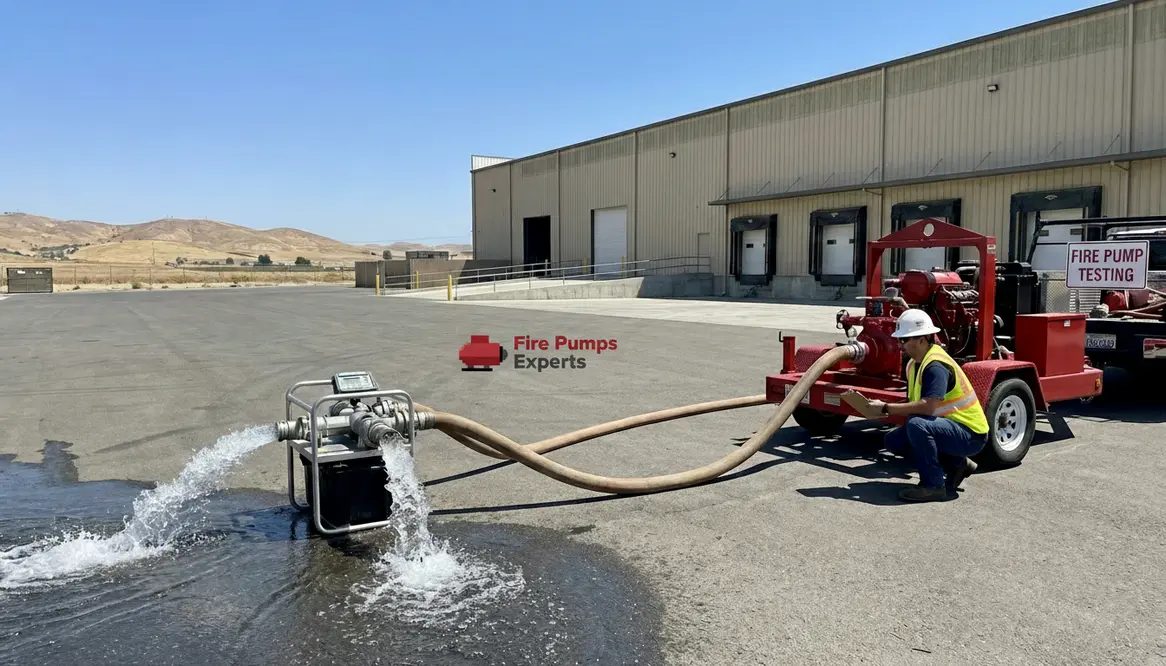
Next comes the setup. Hoses connect to a test header or flow meter system. These lines safely release water while allowing technicians to measure output. Yes, it can look a little dramatic. Water rushing through large hoses tends to attract attention. I once saw a forklift operator stop mid shift just to watch. Apparently industrial pump testing beat the morning coffee for entertainment.
Then the real work begins. The pump runs through several performance points. Technicians record pressure readings, flow rates, and motor behavior at each stage. They compare those results to the expected curve.
If the numbers align, the pump earns a clean bill of health. However, if performance drops outside acceptable limits, the team investigates further. Sometimes the issue sits inside the pump assembly. Other times the culprit hides somewhere in the piping network.
Either way, the goal remains the same. Ensure the system will perform without hesitation when an emergency occurs.
Why Large Industrial Buildings in Fresno Need Consistent Pump Testing
Industrial facilities in Fresno face a unique mix of operational demands. Long operating hours, large storage volumes, and constant mechanical activity all increase fire risk. Because of that environment, fire protection systems must stay reliable year after year.
Regular pump testing delivers several benefits for major commercial properties.
1. Verification of real world performance
First, testing confirms the pump still produces the pressure and flow required by the building’s sprinkler design. Equipment ages. Conditions change. Testing keeps everything honest.
2. Compliance with national standards
Secondly, national fire protection guidelines require annual performance tests for fire pumps. For large facilities, staying compliant protects both people and operations.
3. Early problem detection
Additionally, testing often uncovers issues long before they cause system failure. Catching a problem early usually costs far less than repairing damage after an incident.
4. Insurance and risk management benefits
Finally, many insurers look closely at fire protection maintenance records. A documented history of proper pump testing helps demonstrate responsible facility management.
In short, consistent inspection and testing protect more than buildings. They protect business continuity.
Inside the Data: What Facility Managers Should Pay Attention To
Flow and pressure trends
During industrial fire pump testing Fresno specialists record pressure and flow at several operating points. Over time these numbers tell a story. If output slowly declines year after year, internal wear may be developing.
Motor performance
Electric motors and diesel engines both reveal clues during testing. Excess heat, vibration, or unusual sounds often signal mechanical stress.
Controller response
The controller activates the pump when system pressure drops. Testing confirms that sensors and controls react instantly.
Water supply conditions
City water pressure can change as infrastructure evolves. Therefore technicians compare pump performance with current supply conditions.
Valve positioning
A partially closed valve can quietly sabotage system performance. Testing verifies proper valve alignment across the pump assembly.
Discharge stability
Finally, smooth discharge pressure indicates the pump operates within its intended range. Erratic readings often signal internal wear or system restrictions.
For facility leaders, these measurements form a valuable diagnostic tool. They help predict maintenance needs and guide long term capital planning.
How Industrial Fire Pump Testing Fresno Supports Business Continuity
Large industrial properties run on tight schedules. Production lines, shipping operations, and logistics chains rarely pause for long. Because of that pace, any serious fire event could disrupt operations for months.
Reliable fire pumps help prevent that scenario.
When testing confirms a system can deliver the required water supply, facility teams gain confidence in their emergency readiness. Moreover, that confidence extends beyond safety compliance. It supports operational stability.
Consider a high volume distribution center storing millions of dollars in goods. If a fire breaks out and the suppression system fails, the financial loss could be staggering. However, when pumps operate exactly as designed, sprinkler systems can control a fire before it spreads.
That outcome protects employees, equipment, inventory, and the broader supply chain.
So while pump testing may look routine, it quietly supports the resilience of Fresno’s industrial economy.
What Should Industrial Facilities Expect During a Fire Pump Test?
Most tests follow a structured schedule. First, technicians coordinate with facility management to ensure operations remain uninterrupted. In many cases, testing occurs during lower activity periods.
Next, water discharge areas are secured. Large volumes of water must flow safely away from buildings and equipment.
Once the test begins, the pump operates through several flow conditions. The process typically lasts between one and two hours depending on system complexity.
Afterward, technicians compile performance data and generate a detailed report. That report becomes part of the facility’s compliance documentation and long term maintenance record.
And yes, sometimes the testing team leaves behind a temporary lake in the parking lot. It happens. Consider it a brief reminder that water still wins every argument with gravity.
FAQ: Fire Pump Testing for Industrial Facilities
Industrial leaders across the valley ask similar questions when planning industrial fire pump testing Fresno programs. Below are some of the most common topics that come up during walkthroughs and planning discussions.
When it comes time to schedule a test or review your inspection history, working with a specialist familiar with NFPA 25 and complex industrial systems makes a noticeable difference. Experienced teams use calibrated equipment, document trends over multiple years, and help you prioritize corrective actions instead of just handing over a stack of numbers.
If you are looking for added perspective beyond this Fresno focused overview, there are helpful resources on topics like fire pump inspection schedules, annual flow tests, and churn testing available from specialists such as full-service fire pump inspection providers. Pairing those insights with a local testing partner ensures your strategy reflects both national standards and the realities of your specific facility.
Most tests, whether in Fresno or other California markets, share a similar structure: visual inspection, controller checks, suction and discharge verification, flow testing, and clear documentation. Aligning your internal maintenance routines with that structure keeps your records clean and your next industrial fire pump testing Fresno session far more predictable.
Conclusion
Industrial buildings depend on systems that perform without hesitation. Industrial fire pump testing Fresno ensures those systems remain strong, responsive, and ready when the unexpected happens. Regular testing protects people, inventory, equipment, and operations across large facilities. If you manage a commercial or industrial property, now is the time to verify your pump system performs exactly as designed. The right testing partner will keep your fire protection system ready for the moment it matters most.