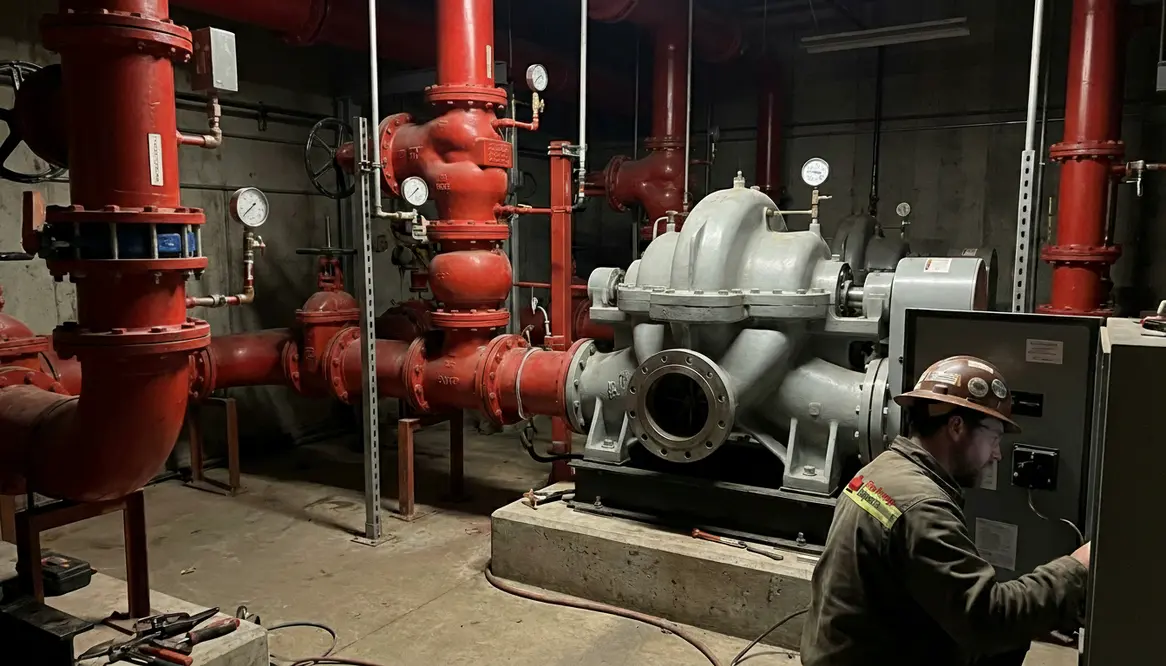
Large Scale Fire Pump Design for Building Size
I have spent years around commercial and industrial buildings, and I can tell you this with calm certainty. When it comes to safety, guessing is not a strategy. It is a gamble. That is where large scale fire pump design steps in, not as a luxury, but as a necessity. In facilities where square footage stretches like a Marvel movie runtime, matching the fire pump system to the building size becomes the difference between control and chaos. So let me walk you through it, slowly and clearly, the way this topic deserves.
Understanding Building Size and Fire Demand
First things first, size is not just about how big a building looks from the outside. I look at total floor area, number of levels, occupancy type, and hazard classification. A sprawling warehouse packed with high rack storage behaves very differently from a multi story office tower.
Because of this, I always calculate fire flow demand before anything else. This tells me how much water the system must deliver and at what pressure. Larger buildings demand higher flow rates, but that does not mean I simply install the biggest pump available and call it a day. That approach is about as effective as using a sledgehammer to fix a wristwatch.
Instead, I align water supply with risk level. Industrial facilities with flammable materials require more aggressive systems, while commercial buildings may focus on coverage and consistency.
This is where disciplined planning matters. A thoughtful large-scale fire pump design approach ties building dimensions, occupancy, and risk profile into one clear picture before a single piece of equipment is selected.
How Do I Match Fire Pump Capacity to Building Size
Translating Building Data into Hydraulics
I start by translating building data into hydraulic requirements. That means I calculate gallons per minute and required pressure at the most remote sprinkler head. Then, I select a pump that can meet those numbers without strain.
The Risk of Over or Undersizing
However, oversizing is just as risky as undersizing. An oversized system can lead to pressure issues, system wear, and unnecessary costs. Think of it like putting a jet engine on a bicycle. Impressive, sure. Practical, not so much.
Balancing Pump Curves and Real Conditions
So I match the pump curve carefully. I ensure it performs efficiently at both peak demand and typical operation. This balance keeps the system reliable and cost effective over time.
The goal is a responsive, stable system: one that meets code, satisfies hydraulic calculations, and behaves predictably when a sprinkler head actually opens. That is the real test of any large-scale fire pump design worth installing.
Choosing the Right Type of Fire Pump System
Not all pumps are created equal. I choose between horizontal split case, vertical turbine, or inline pumps depending on building needs and water supply conditions.
Horizontal Split Case & Vertical Turbine
Horizontal Split Case
Best for large commercial properties with steady water supply. Reliable and easy to maintain.
Vertical Turbine
Ideal when water comes from underground sources. Common in industrial campuses.
Inline & End Suction Options
Inline Pumps
Compact and efficient for space constrained mechanical rooms.
End Suction
Useful for smaller segments of larger systems where flexibility matters.
Each choice supports a broader large scale fire pump design strategy. I never treat the pump as a standalone piece. It is part of an ecosystem that includes piping, controls, and backup power.
When all of those elements are aligned, the result is a coherent large-scale fire pump design that feels intentional instead of cobbled together one project phase at a time.
Water Supply and Pressure Challenges in Large Facilities
Beyond Municipal Supply
Now here is where things get interesting. In many large buildings, municipal water alone cannot meet demand. That is when I incorporate storage tanks or secondary supply systems.
Friction, Elevation, and Gravity
Additionally, pressure loss becomes a real issue as buildings grow taller or wider. Friction in pipes and elevation changes can reduce effectiveness. So I calculate these losses carefully and compensate with pump selection and system layout.
And yes, gravity is still undefeated. No matter how advanced the system is, it will always have something to say about vertical design.
Strategic Layout for Big Footprints
In long, low facilities like distribution centers, the challenge is lateral distance. Long pipe runs, multiple risers, and remote hydrants all eat away at pressure. A smart large-scale fire pump design anticipates those losses and places equipment where it can actually help, not where it simply fits on a floor plan.
Whether the issue is height, footprint, or both, water has to arrive with enough energy to do its job when a fire does not feel like cooperating.
Integrating Controls and Redundancy
Designing Out Single Points of Failure
I never design a system that relies on a single point of success. Redundancy is key in commercial and industrial properties. If one component fails, another must take over without hesitation.
That means installing backup pumps, reliable controllers, and emergency power systems. I also integrate monitoring technology so facility managers can see system status in real time.
Because when something goes wrong, it will not send a calendar invite first.
Smart Monitoring for Big Buildings
In a large facility, the fire pump room can feel a world away from daily operations. Tying the system into building management platforms, alarms, and remote notifications turns that hidden room into a constantly watched control point instead of a mystery box in the basement.
That level of visibility is where a thoughtful large-scale fire pump design proves its value long after commissioning day.
Compliance and Long Term Performance
Codes as the Starting Line, Not the Finish
Codes and standards guide every decision I make. NFPA requirements are not suggestions. They are the foundation of a safe and compliant system.
However, I go beyond minimum compliance. I think about maintenance access, lifecycle costs, and future expansion. Buildings evolve, and the fire protection system must evolve with them.
Designing for Tomorrow’s Building
A well planned large scale fire pump design ensures that upgrades can happen without tearing everything apart. That foresight saves time, money, and more than a few headaches.
When a building adds floors, changes tenants, or shifts from storage to production, a flexible pumping strategy can adapt with smaller, cleaner modifications instead of expensive, disruptive rebuilds.
FAQ: Matching Fire Pump Systems to Building Size
These are the questions I hear most often when owners and facility teams start looking seriously at large-scale fire pump design and how it relates to their specific building size.
Final Thoughts and Next Steps
Matching a fire pump system to building size is not guesswork. It is a calculated, deliberate process that protects lives and assets. If you manage a commercial or industrial facility, now is the time to evaluate your system. Reach out to experts who understand large scale fire pump design and can tailor a solution to your property. Because when safety is done right, it works quietly in the background, exactly where it belongs.
If you are not sure where to start, reviewing NFPA guidance and resources from organizations like https://firepumps.org can help you ask better questions and challenge vague answers. The building you have today, and the one you will have ten years from now, both deserve a system designed to keep up.