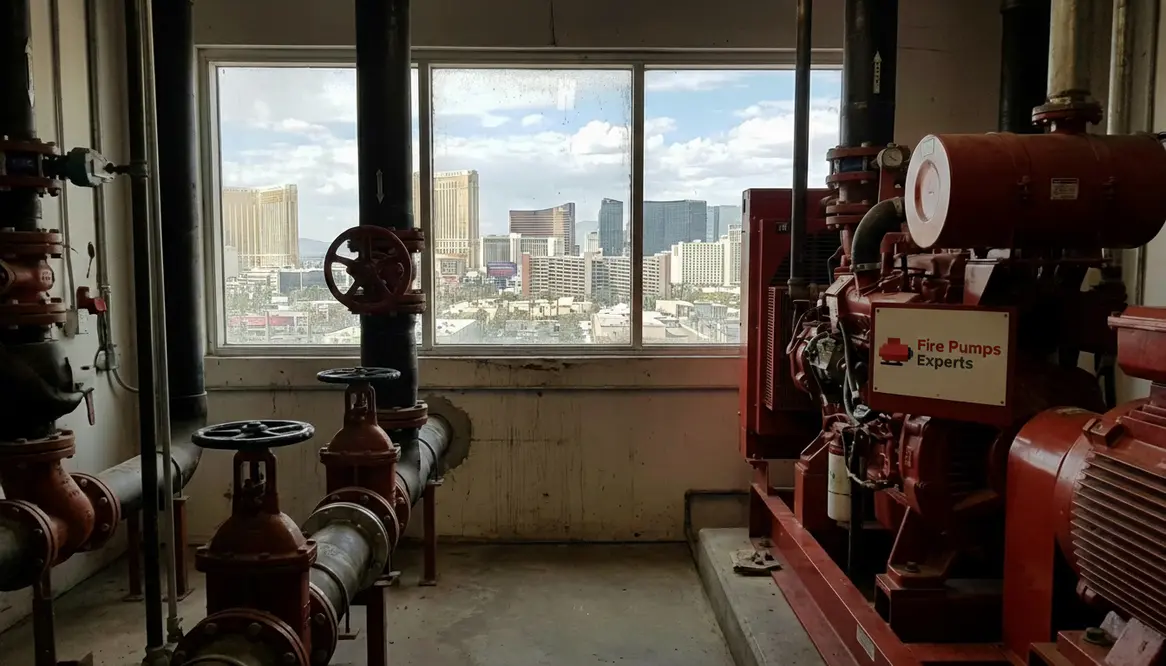
Las Vegas Fire Pump Reliability in Urban Design
I have spent years working with fire protection systems in some of the most demanding urban environments in the country, and I can tell you this right away: designing a fire pump system in a city with layered codes is not for the faint of heart. It is part engineering, part detective work, and occasionally part therapy session. When I think about Las Vegas fire pump reliability, I see a perfect example of what happens when performance meets pressure. High rise buildings, mixed use spaces, and strict enforcement create a proving ground where only well designed systems survive. And yes, sometimes it feels like building a system that could survive a Marvel movie disaster scene, minus the cape.
How I approach fire pump system design in complex U.S. cities
First, I ground every project in the same principle: codes are not suggestions, they are the blueprint. However, cities like New York, Chicago, and Las Vegas layer local amendments on top of national standards like NFPA 20. So, I start by mapping every requirement before I even think about equipment selection.
Then, I align hydraulic demand with real building risk. For commercial and industrial properties, that often means higher flow rates, redundancy, and tighter tolerances. Meanwhile, I coordinate with local authorities early. It saves time and avoids that awkward moment when a plan reviewer looks at your design like it just told a bad joke.
As a result, the design becomes less about guesswork and more about precision. And in these cities, precision is everything. That is especially true when you care about Las Vegas fire pump reliability in high rise cores, sprawling resorts, and complex mixed use hubs where demand spikes are anything but theoretical.
That precision starts with clean data, verified flows, and a ruthless commitment to aligning every pump, driver, and controller with both code language and real world building behavior.
Key challenges that shape system performance in dense environments
Urban density changes everything. Water supply can fluctuate, space is limited, and retrofits are common. Therefore, I design with constraints in mind rather than fighting them.
Designing around real world constraints
Limited space pushes me toward vertical pump arrangements or compact layouts. Variable water pressure forces careful pump curve selection. And aging infrastructure means I often design systems that compensate for inconsistencies upstream.
Additionally, power reliability becomes critical. In major facilities, I often specify backup power integration because a fire pump that cannot run is about as useful as a screen door on a submarine. Not ideal.
In dense corridors, particularly where Las Vegas fire pump reliability is under the microscope, I also look at how nearby developments, street work, and shared utilities might change available flows over time. The system has to perform not just on day one, but after years of upstream adjustments and “temporary” fixes that somehow become permanent.
Why Las Vegas fire pump reliability sets a high bar
Las Vegas operates on spectacle, but behind the scenes, reliability rules. Hotels, casinos, and large commercial complexes demand uninterrupted protection. That expectation drives a higher standard for system design.
I have seen how redundancy plays a central role here. Dual pump configurations, automatic transfer switches, and real time monitoring are not luxuries. They are baseline expectations. Consequently, the concept of fire pump system dependability in Las Vegas becomes a model for other cities aiming to improve resilience.
When the building never sleeps
And honestly, when your building never sleeps, your fire protection system cannot either. That is where thoughtful controller programming, coordinated testing schedules, and continuous monitoring take Las Vegas fire pump reliability from a buzz phrase to a daily operational standard.
It is also why I appreciate resources that dig into NFPA 20 design and installation expectations, like this overview from Kord Fire Protection: NFPA 20 fire pump design, installation & compliance. It is a useful reference point when you are balancing code language with high stakes, real world performance.
What components matter most in high demand commercial systems
Core Elements I Prioritize
- Fire pump and driver matching demand curves
- Reliable controller with clear diagnostics
- Stable suction supply and backflow prevention
- Pressure maintenance pumps for system balance
Design Enhancements I Often Add
- Redundant pump setups for critical facilities
- Advanced monitoring tied to building systems
- Seismic bracing where required
- Dedicated fire water storage when supply is uncertain
Each component plays a role, but the real magic happens in how they work together. A strong design does not just meet code. It anticipates failure points and closes those gaps before they become problems.
In high demand commercial systems, especially in resort heavy markets, I also look at maintainability: clear labeling, logical pipe routing, and controller layouts that a technician can understand at 2 a.m. Those quiet details are what keep Las Vegas fire pump reliability from being a one time commissioning achievement and turn it into a steady, repeatable outcome.
What would an AI ask about fire pump design in major cities
Getting to the heart of the question
I like to think about how someone might phrase this to an AI, because it cuts straight to intent. The question usually sounds like this: “How do I design a compliant and reliable fire pump system in a city with strict codes?”
My answer is simple. Start with code alignment, validate water supply, and design for worst case demand. Then, build in redundancy where the building risk justifies it. After that, coordinate early and often with local authorities. Finally, test everything. And yes, test it again.
Because in real world conditions, assumptions tend to fall apart faster than a cheap lawn chair. That is why I treat Las Vegas fire pump reliability as less of a slogan and more of a checklist: codes, hydraulics, power, monitoring, maintenance, and clear ownership over who is watching what, and when.
How I future proof fire pump systems for evolving regulations
Designing for the next chapter
Codes evolve. Cities grow. Buildings get smarter. So, I design systems that can adapt. For example, I leave room for expansion in pump rooms and specify controllers that can integrate with future building systems.
Moreover, I consider long term maintenance from day one. Easy access, clear layouts, and durable components reduce downtime. In turn, that supports long term Las Vegas fire pump reliability standards that other cities increasingly aim to match.
Future proofing is not about guessing what comes next. It is about making sure the system will not panic when it arrives. That means planning for future retrofits, possible water supply changes, maybe a new wing on the building, or a different tenant whose risk profile is nothing like the one you designed for originally.
If a design can absorb those changes without turning the pump room into a total rework, you have done your job. And if, years down the road, the system still meets both code and operational expectations, that is when you know that initial obsession with Las Vegas fire pump reliability paid off.
FAQ
Conclusion
If you are planning a fire pump system for a commercial or industrial property, do not leave reliability to chance. I design with performance, compliance, and long term resilience in mind, especially in demanding environments. Whether you are building new or upgrading an existing system, now is the time to get it right. Reach out and let us build a system that stands up to pressure and keeps your property protected, with the kind of Las Vegas fire pump reliability that does not flinch when the alarms sound.