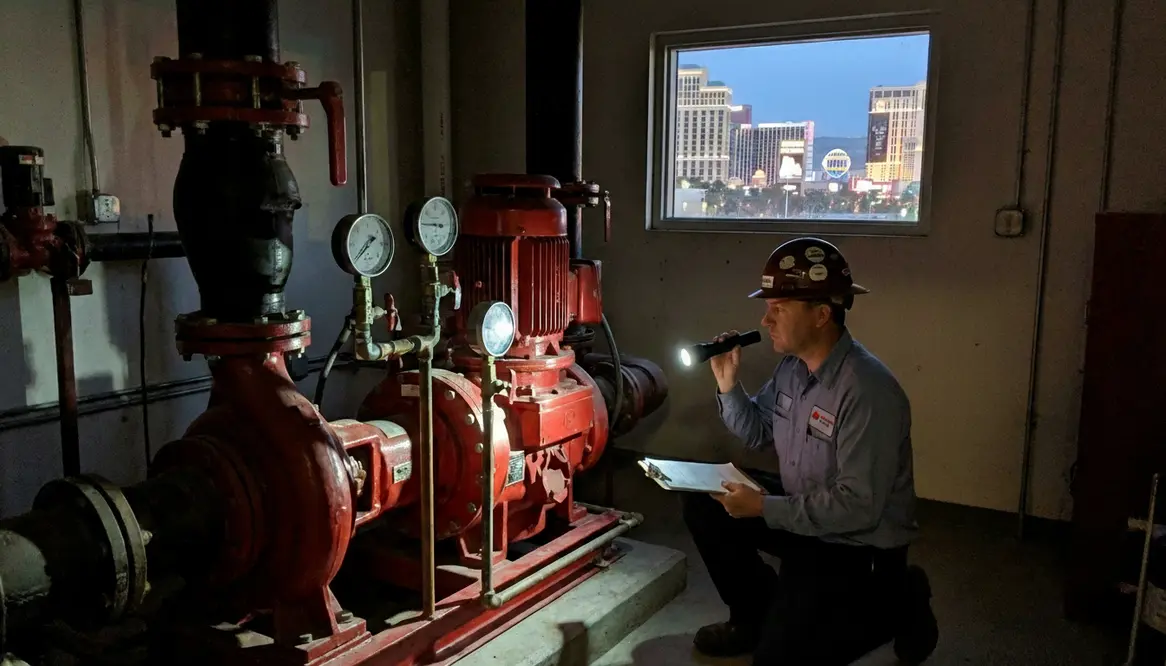
Las Vegas Fire Pump Safety and Code Compliance
I have spent enough time around fire systems to know one thing for certain: when a fire pump fails, everything else quickly follows. That is why I approach Bakersfield fire code compliance with the same seriousness whether I am in California or standing under the neon glow of Las Vegas. While the desert may feel calm, the risk inside large commercial buildings never sleeps. So today, I am walking you through fire pump safety best practices tailored for Las Vegas property managers who want fewer surprises and a lot more peace of mind.
What fire pump safety really means in Las Vegas properties
In Las Vegas, buildings run hot, busy, and often 24 hours a day. Casinos, high rises, and industrial facilities push systems harder than most cities. Because of that, I treat fire pump safety as an active responsibility, not a box to check.
First, I focus on system readiness. A fire pump is not decoration. It must respond instantly. Therefore, I ensure pumps receive weekly churn tests and monthly flow verification. In addition, I check for pressure stability, vibration, and unusual noise. If a pump starts sounding like it is auditioning for a rock band, something is off.
Next, I look at environmental conditions. Heat in Las Vegas can stress equipment. So I confirm proper ventilation and cooling. Meanwhile, I make sure pump rooms stay clean and accessible. No storage, no clutter, no mystery boxes labeled “do not touch.”
Strong fire pump practices in Las Vegas often mirror the structure and discipline you see in regions that take Bakersfield fire code compliance seriously. The geography changes, but the expectation for fast, reliable performance does not.
Routine inspections that actually prevent disasters
Now, let me be clear. Inspections are not glamorous. Nobody is throwing a parade for a well maintained fire pump. However, they are the quiet heroes of property management.
I schedule inspections with intention. Weekly visual checks catch leaks and corrosion early. Monthly testing confirms performance under load. Annually, I go deeper with full system evaluations that align with both Nevada standards and Bakersfield fire code compliance principles.
Moreover, I document everything. Logs are not just paperwork. They tell a story. When something fails, those records often reveal the warning signs we ignored. So I keep them accurate and current.
And yes, I test alarms and controllers. Because a pump that runs without signaling properly is like a smoke alarm with dead batteries. Technically present, practically useless.
Key components I never ignore during fire pump maintenance
Mechanical focus
- Pump casing and impeller condition
- Couplings and alignment
- Lubrication levels
- Valve operation
Electrical focus
- Controller functionality
- Power supply reliability
- Battery systems
- Automatic start sequences
While both sides matter, I never treat them equally at the same time. Instead, I rotate focus to catch subtle issues. For example, electrical faults often hide until the worst moment. Meanwhile, mechanical wear tends to whisper before it screams.
That rotating focus mirrors the layered approach behind Bakersfield fire code compliance, where mechanical condition, electrical integrity, and documentation all have their moment in the spotlight instead of competing for attention.
How Las Vegas conditions impact fire pump performance
Las Vegas is not just hot. It is relentless. Because of that, I adjust maintenance strategies to match the environment.
First, I monitor water supply consistency. Desert regions rely on stable infrastructure, but pressure fluctuations can still occur. Therefore, I verify suction conditions regularly.
Second, I account for power reliability. Large properties often use backup generators. So I test transfer switches and confirm the pump starts smoothly during power transitions. No hesitation allowed.
Finally, I consider usage intensity. High occupancy buildings put more demand on systems. As a result, I increase inspection frequency during peak seasons. What happens in Vegas might stay in Vegas, but equipment fatigue does not.
If you want to see how a structured inspection and maintenance program looks in practice, take a look at how professional fire pump service providers operate at specialized fire pump service programs. The emphasis on documentation, testing intervals, and qualified technicians pairs well with a code-driven mindset in Las Vegas properties.
Training teams to respond without hesitation
A fire pump is only as effective as the people managing it. So I invest in training. Not the boring kind that makes everyone check their phones, but hands on, scenario based learning.
I walk teams through emergency procedures. I show them how to read gauges, recognize warning signs, and respond quickly. In addition, I make sure they understand system layouts. When seconds matter, guessing is not an option.
And yes, I keep it engaging. A little humor helps retention. I might say, “If the pump sounds like Darth Vader breathing, call someone immediately.” People remember that.
The best part is that this type of training culture naturally supports Bakersfield fire code compliance thinking: audits feel less like an ambush and more like confirmation that your team knows exactly what to do when the system calls for attention.
Aligning with Bakersfield fire code compliance standards in a Nevada market
Even though we are in Las Vegas, I often use Bakersfield fire code compliance as a benchmark. Why? Because strong standards translate across regions. They reinforce consistency, documentation, and accountability.
So I align inspection schedules, reporting practices, and system testing with those expectations. In turn, this creates a higher level of readiness. It also prepares properties for audits, insurance reviews, and unexpected inspections.
Consistency is the real win here. Because when standards stay high, risk stays low. Whether you reference local Nevada statutes or use Bakersfield fire code compliance as a structured template, the goal is the same: a pump that does its job without drama when the alarm sounds.
FAQ Fire Pump Safety for Commercial Properties
Final thoughts that keep your building ready
Fire pump safety is not dramatic until it needs to be. Therefore, I treat it like a quiet contract between preparation and reality. If you manage a large commercial or industrial property in Las Vegas, now is the time to tighten your systems, refine your inspections, and train your team. Reach out to firepumps.org and make sure your fire protection strategy stands ready before it is ever called into action.