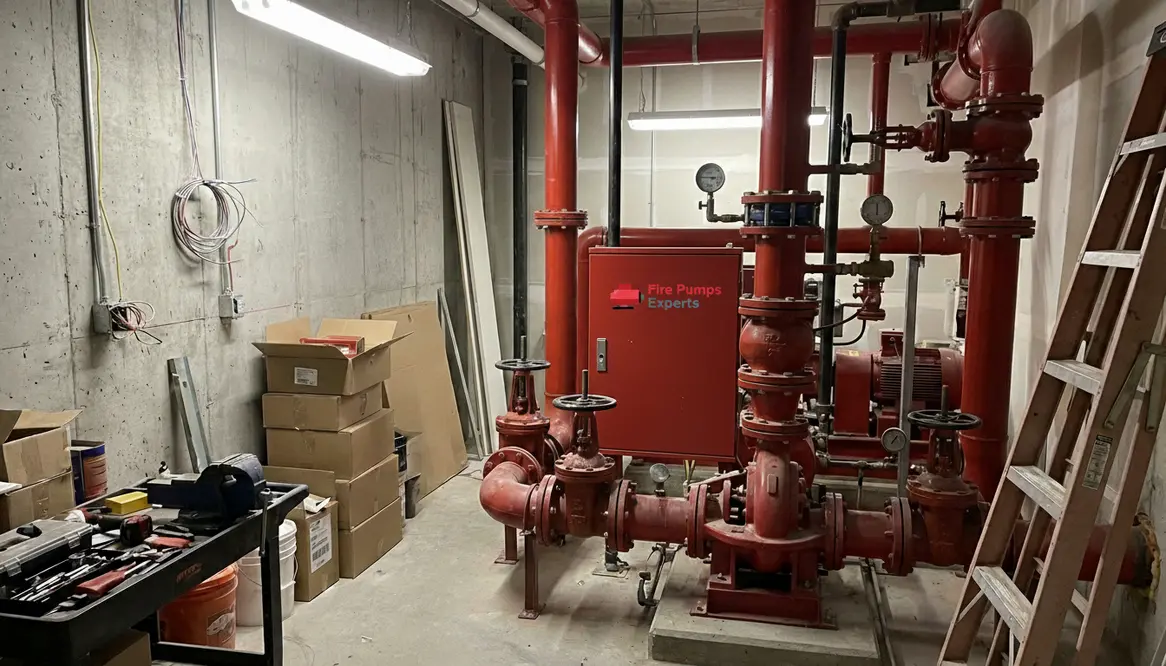
Leasehold Improvement Fire Pumps for Tenant Spaces
I have spent years around commercial buildings where every system has a purpose, and every purpose ties back to safety. One piece that rarely gets applause but always deserves it is the fire pump. When I talk about leasehold improvement fire pumps, I am talking about the quiet muscle behind a building’s fire protection system. In tenant occupied properties, these systems do more than move water. They protect people, preserve operations, and keep owners out of very expensive trouble. And yes, they do all this without asking for a thank you. Kind of like the bass player in a band. You only notice them when they stop.
How fire pumps fit into tenant occupied commercial properties
In large commercial and industrial buildings, fire pumps serve one core job. They boost water pressure so sprinkler and standpipe systems can do their thing. However, in tenant occupied spaces, things get a little more layered. Each tenant may have different layouts, equipment, and risks. Therefore, the fire pump must support a system that adapts without failing.
Moreover, when tenants modify spaces, especially during build outs, the fire protection demand can change. That is where properly planned fire pump upgrades come into play. I have seen buildings where a simple layout change turned into a major system recalibration. Not exactly the kind of surprise anyone enjoys.
Why tenant spaces change the fire pump equation
Tenant build outs, mezzanines, storage reconfigurations, and specialty processes can rapidly shift hydraulic demand. What started as a perfectly balanced system can end up starved for pressure at the worst possible time. That is why leasehold improvement fire pumps must be treated as part of every serious tenant planning conversation, not as an afterthought tagged onto the end of the project.
What should I consider before upgrading fire pumps in a leased space?
First, I look at demand. Not guesswork. Not optimism. Real hydraulic calculations. Then, I consider how tenant improvements impact system load. For example, adding high density storage or specialized equipment can push a system beyond its limits.
Next, I evaluate compliance. Local codes, insurance requirements, and national standards all need to align. Skipping this step is like ignoring the instructions while assembling furniture. It might stand for a while, but eventually, something collapses.
Finally, coordination matters. Landlords, tenants, engineers, and contractors must stay in sync. Otherwise, you end up with a system that technically works but practically struggles. And in fire protection, “technically fine” is not comforting.
Balancing tenant improvements with fire pump performance
Whenever tenants update a space, fire protection systems must keep pace. This includes adjustments tied to leasehold improvement fire pumps. I always approach this as a balancing act. On one side, you have tenant needs. On the other, system capacity.
Because of that, I pay close attention to flow rates, pressure requirements, and system redundancy. Additionally, I look at how upgrades affect the rest of the building. A change on one floor can ripple through the entire system.
Interestingly, many issues come from underestimating small changes. A few added sprinklers here, a slight layout shift there. Suddenly, the pump is working harder than it should. And just like overworking any machine, that shortens its lifespan.
What I always prioritize
- Accurate system demand calculations
- Code compliant design updates
- Reliable pump capacity
- Clear coordination across teams
Common mistakes I see
- Ignoring future tenant changes
- Undersized pump upgrades
- Poor communication between stakeholders
- Delayed inspections and testing
Where leasehold improvement fire pumps earn their keep
In real projects, the most reliable systems are the ones intentionally designed around tenant churn. That means leaving hydraulic headroom, planning for vertical and horizontal expansion, and verifying that the main fire pump, any jockey pumps, and controllers will not be forced into unsafe operating ranges when the next ambitious tenant shows up with a denser rack layout or a new production line. That is exactly where smart leasehold improvement fire pumps separate a resilient building from one that constantly scrambles to catch up.
Maintenance responsibilities in shared commercial buildings
Now here is where things can get awkward. Who is responsible for maintaining the fire pump in a tenant occupied building? The short answer is usually the property owner. However, the reality often involves shared responsibility.
I always recommend clearly defined agreements. Maintenance schedules, inspection routines, and testing protocols should be documented. Because when something goes wrong, nobody wants a finger pointing contest.
In addition, regular testing is not optional. Weekly churn tests, annual flow tests, and routine inspections keep the system ready. Think of it like going to the gym. Skip enough sessions, and things stop working the way they should.
Who pays, who tests, who documents
Lease language often lags behind how complex modern systems really are. The main fire pump might be a base building asset, while tenant-installed auxiliary equipment, monitors, and branch lines blur lines of responsibility. The most reliable portfolios are the ones where owners, property managers, and tenants agree in writing exactly who handles inspections, who stores test results, and who responds when an impairment notice lands in the inbox.
Why documentation matters more than memories
When a fire pump fails an inspection or an event triggers a forensic review, nobody wants to rely on “I thought you were handling that.” Signed test reports, clear maintenance logs, and updated system drawings protect more than just property; they protect careers. Good documentation turns confusion into clarity when stakes are highest.
How I future proof fire pump systems for growing properties
Growth is great for business, but it can stress infrastructure. That is why I design systems with flexibility in mind. Fire pumps should not just meet today’s demand. They should anticipate tomorrow’s needs.
For instance, I often consider scalable solutions. Variable speed pumps, additional capacity margins, and system redundancy all help. Furthermore, I account for tenant turnover. Because in commercial properties, change is constant.
And let’s be honest, nobody wants to rip out a perfectly good system just because a new tenant shows up with bigger plans. That is like buying a new phone every time an app updates. Expensive and unnecessary.
Designing leasehold improvement fire pumps that will not age badly
Future proofing is less about guessing the exact next tenant and more about understanding patterns. Taller storage, tighter layouts, higher hazard classifications, and more automation rarely mean “less water, less pressure.” When fire pump selections, controller sizing, and power supply strategies are chosen with realistic growth bands in mind, buildings stay compliant longer, with fewer painful retrofits and fewer sleepless nights for owners and risk managers.
FAQ: Fire pumps in tenant occupied commercial buildings
Who maintains the fire pump in a commercial property?
Typically the building owner, but responsibilities may be shared based on lease agreements.
Do tenant improvements affect fire pump performance?
Yes. Changes in layout or usage can increase system demand and require pump adjustments.
How often should fire pumps be tested?
Weekly churn tests and annual flow tests are standard for commercial systems.
Can an existing fire pump handle new tenant requirements?
Sometimes, but a professional evaluation is necessary to confirm capacity.
Are upgrades required during major renovations?
Often yes, especially if the fire protection demand increases or codes have changed.
Keep your system ready before it is tested for real
I always say this. Fire pumps do not get second chances. When they are needed, they must perform instantly. That is why planning, upgrading, and maintaining systems tied to tenant spaces is not just a technical task. It is a responsibility.
If you manage or own a commercial property, now is the time to take a closer look at your system. Work with experts who understand complex buildings and evolving tenant needs. Because when everything is on the line, preparation is the difference between control and chaos. And trust me, chaos is a terrible tenant.
For deeper technical resources, system design guidance, and standards around fire pump performance, a good starting point is https://firepumps.org. Pair that kind of reference material with a team that treats your leasehold improvement fire pumps as mission-critical infrastructure, and your building will be ready long before the first alarm ever sounds.