Memphis Logistics Hub Fire Pump Requirements Guide
Practical, real-world insight into getting fire pump design right inside high-velocity logistics operations.
Introduction: Why Memphis Warehouses Cannot Ignore Fire Pump Planning
I have spent years walking through cavernous warehouses and humming logistics hubs where forklifts move like quiet ballet dancers and conveyor belts hum a steady rhythm. Memphis is one of those places where supply chains breathe. Between rail lines, the Mississippi River, and the air cargo giant that everyone in town politely pretends is not the boss of the skyline, logistics here moves at a different scale.
Because of that scale, the memphis logistics hub fire pump requirements are not just paperwork tucked in a binder. They are the backbone of real fire protection for massive commercial and industrial facilities. When millions of dollars in inventory sit under one roof, a sprinkler system alone is not enough. It needs pressure. It needs reliability. And most importantly, it needs a fire pump system that performs exactly when things go sideways.
So today I am walking through what these requirements mean in the real world. Think of it as a calm, practical guide from someone who has seen both beautifully designed fire protection systems and… well… systems that looked like they were installed during a caffeine shortage.
At a Glance: Why Fire Pumps Matter
- Logistics buildings in Memphis often exceed 500,000 square feet.
- Sprinkler systems alone may not hit required pressures at full demand.
- Fire pumps bridge the gap between municipal supply and real hazard demand.
- Good design today avoids expensive retrofits when operations evolve.
If you are trying to understand how memphis logistics hub fire pump requirements play out at floor level, you are in the right place.
Memphis Logistics Hub Fire Pump Requirements and the Reality of Mega Warehouses
Memphis logistics buildings are not small operations. Many facilities stretch well beyond 500,000 square feet. Some cross the million square foot line without blinking. When you work with structures that size, fire protection becomes a physics problem.
Sprinkler systems rely on water pressure and flow. However, municipal supply alone often cannot deliver the volume required for large scale industrial hazards. That is where fire pumps step in.
The memphis logistics hub fire pump requirements exist to ensure that a facility can supply enough water pressure to operate its fire suppression system during peak demand. In other words, when every sprinkler head decides it is time to do its job, the system must still perform.
Typical Design Drivers Inside Mega Warehouses
- Large ESFR or high density sprinkler systems
- High rack storage reaching 40 feet or more
- Hazard classifications tied to commodities stored
- Insurance engineering standards layered on top of code
Furthermore, Memphis distribution centers often run 24 hours a day. That means the fire protection infrastructure must remain ready without interruption. A fire pump is not decoration. It is the engine that keeps the system alive when pressure drops.
And let us be honest. When a fire alarm sounds in a million square foot building, nobody wants the water pressure equivalent of a sleepy garden hose.
What Drives Fire Pump Design Inside Memphis Distribution Facilities
Designing a fire pump system for a logistics hub requires a careful look at the building’s operational profile. First, I evaluate the sprinkler demand curve. That demand tells me the pressure and flow required at the most demanding point in the system.
Then I compare that with the available water supply.
Often in Memphis, municipal supply delivers respectable flow but not enough pressure for tall rack storage and modern ESFR systems. Therefore, the fire pump bridges the gap.
Key Design Considerations
- Total sprinkler system demand
- Water supply test results
- Vertical storage heights
- Pipe friction losses across large facilities
- Future storage expansion plans
Because logistics hubs constantly evolve, I always recommend planning with expansion in mind. A warehouse that stores paper goods today may store lithium battery components tomorrow. Trust me, that shift changes the fire protection equation faster than a plot twist in a streaming drama.
Consequently, properly engineered fire pumps protect both the building and operational continuity. For large commercial facilities, downtime can cost more than the equipment itself.
Key Components Inside a Modern Fire Pump System
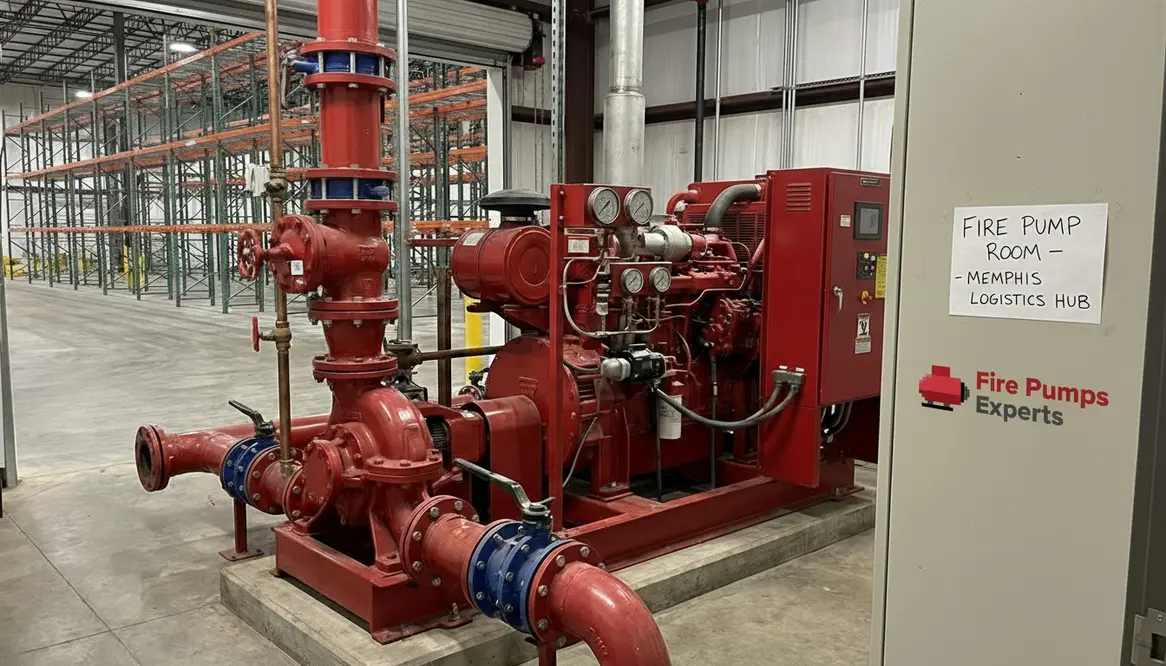
When people hear the phrase fire pump, they often imagine one large red machine sitting heroically in a room. While that is partly true, the full system works more like a team.
Core Mechanical Elements
- Main fire pump
- Electric or diesel driver
- Controller panel
- Relief valves
- Backflow prevention assemblies
Supporting Infrastructure
- Dedicated fire pump room
- Reliable power supply
- Jockey pump for pressure stability
- Test header for flow testing
- Proper suction piping layout
Each component matters. For example, the jockey pump maintains system pressure so the main pump does not cycle constantly. Meanwhile the controller acts as the command center that activates the pump during pressure drops.
And yes, every one of these pieces must comply with standards like NFPA 20. Inspectors take these details seriously. If the installation is sloppy, they will spot it faster than a movie fan spotting a plot hole in a superhero film.
How Codes and Insurance Standards Shape Memphis Installations
While local building codes set the baseline, Memphis logistics operators often face additional layers of scrutiny. Insurance carriers, risk engineers, and national distribution tenants frequently apply standards that exceed minimum code requirements.
As a result, fire protection planning for major distribution properties often includes:
- NFPA 20 fire pump installation standards
- NFPA 13 sprinkler system design requirements
- FM Global or similar insurance guidelines
- Local fire department review
This layered approach is not bureaucracy for the sake of paperwork. Instead, it reflects the risk profile of large logistics hubs. When hundreds of employees work in a facility packed with high value goods, the cost of failure rises dramatically.
Therefore the memphis logistics hub fire pump requirements often push designers toward highly reliable systems with redundant safety features.
In many cases, diesel driven pumps are considered for facilities that cannot tolerate electrical reliability concerns. However, electric pumps remain common where power infrastructure is robust.
Either way, the goal stays the same. Deliver dependable water flow when it matters most.
If you want a deeper code-level overview, resources like the NFPA 20 compliance guide from specialists such as Kord Fire Protection’s NFPA 20 fire pump article can provide additional context on installation and testing expectations.
How Do I Know If My Memphis Warehouse Needs a Fire Pump?
I hear this question from facility managers all the time. The answer starts with a water supply analysis.
If the municipal system cannot deliver enough pressure and flow for the building’s sprinkler demand, a fire pump becomes necessary. Simple in theory. A little more complicated in practice.
Common Indicators Your Facility Needs a Pump
- Large footprint industrial facilities
- High pile or rack storage
- Extended sprinkler system piping runs
- Insurance engineering recommendations
- Low city water pressure at peak demand
Additionally, many Memphis distribution centers expand over time. When storage height increases or commodities change, sprinkler demand rises. Consequently, a fire pump that once seemed optional becomes essential.
I have seen facilities grow so fast that their original fire protection design looked like it belonged to a completely different building. Logistics moves quickly. Fire protection planning must keep up.
That is why understanding the memphis logistics hub fire pump requirements early in development saves serious headaches later.
Long Term Maintenance Keeps Systems Ready
Installing a fire pump is only the beginning. Ongoing inspection, testing, and maintenance ensure the system performs when needed.
NFPA standards require routine weekly or monthly churn tests, annual flow testing, and periodic component inspections. These procedures confirm that the pump delivers rated performance.
Furthermore, large industrial properties typically integrate testing schedules into facility maintenance programs. When done properly, these tests happen quietly in the background. The pump spins, gauges respond, and everyone sleeps better at night.
What Happens When Maintenance Slips
- Valves stick or fail to open fully.
- Controllers decide that today is not their day to start.
- Diesel engines develop strong opinions about retirement.
- Corrosion and leaks erode system reliability.
Reliable fire pumps require the same respect we give any mission critical equipment. Treat them well and they will return the favor.
Quick Reference: Memphis Logistics Hub Fire Pump Requirements FAQ
The memphis logistics hub fire pump requirements can feel complex, but many first questions fall into a predictable pattern. Here are the fundamentals in plain language.
Conclusion
Memphis logistics hubs operate at enormous scale, and fire protection must match that scale. Understanding the memphis logistics hub fire pump requirements ensures your facility maintains the pressure, flow, and reliability needed to protect people, property, and operations. If you manage or develop a large distribution or industrial property, now is the time to evaluate your system. The right fire pump design today prevents expensive surprises tomorrow. Reach out to experienced fire pump specialists and keep your facility protected.