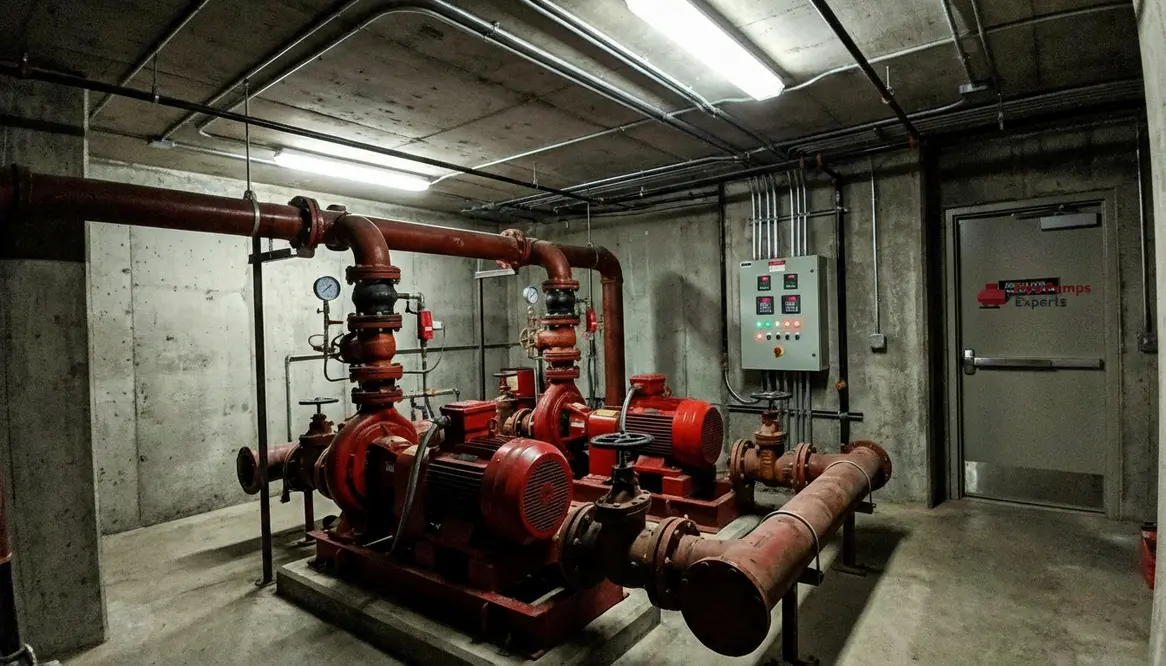
Mixed Use Podium Tower Fire Pump Requirements
I have spent years walking through complex buildings where offices sit atop retail, and apartments rise above both. These stacked use developments look elegant, but beneath that beauty sits a serious responsibility. Fire safety is not optional here. It is engineered, layered, and constantly monitored. Early in every project, I anchor the discussion around mixed use podium tower fire pump requirements, because if the water does not move when it should, nothing else matters. And yes, while this topic might sound about as exciting as watching paint dry, I promise it has more twists than a season finale of your favorite drama.
Why stacked use buildings change the fire safety equation
Stacked use developments are not just tall. They are complex ecosystems. Retail spaces have open layouts, offices bring dense occupancy, and residential units demand quiet protection systems that do not disrupt daily life. Because of this, I approach fire safety like a layered strategy rather than a single solution.
Moreover, each occupancy type introduces different fire loads and response expectations. For instance, a restaurant kitchen behaves very differently from a corporate office floor. Therefore, I design systems that adapt across vertical zones while staying interconnected.
And let’s be honest, fire does not care about zoning plans. It moves fast, and so must the system designed to stop it.
How do fire pumps support vertical safety in mixed use towers?
Fire pumps are the heartbeat of any high rise fire protection system. Without them, sprinklers and standpipes are just expensive decorations. I focus on ensuring that pressure remains consistent from the lowest retail floor to the highest residential unit.
In addition, vertical distribution requires careful calibration. Too much pressure can damage systems, while too little leaves occupants vulnerable. This is where engineered fire pump systems shine. They maintain balance, even when demand spikes unexpectedly.
Think of it like a good DJ. The music needs to hit every corner of the room without blowing out the speakers. Fire pumps do the same, just with water instead of bass drops.
mixed use podium tower fire pump requirements in real world design
When I apply mixed use podium tower fire pump requirements, I am not just checking boxes. I am translating code into real world performance. These requirements guide how pumps are sized, where they are located, and how redundancy is built in.
Furthermore, podium levels introduce unique challenges. They often separate different occupancies structurally, which means the fire protection system must bridge those divisions seamlessly. I ensure that pump capacity accounts for simultaneous demand across zones.
Equally important, backup power and system reliability take center stage. Because in a true emergency, the system must perform without hesitation. No excuses. No second chances.
What I prioritize
- Consistent pressure across all floors
- Redundant pump systems for reliability
- Integration with building management systems
- Clear access for maintenance teams
What I avoid
- Oversized systems that waste energy
- Poorly located pump rooms
- Disconnected safety systems
- Ignoring long term maintenance needs
Design coordination between trades makes or breaks safety
I have seen brilliant designs fail because teams did not communicate. Fire protection does not live in isolation. It overlaps with structural, mechanical, and electrical systems.
Therefore, I coordinate early and often. For example, pump rooms must align with power supply routes and structural supports. At the same time, sprinkler zones must match occupancy transitions.
Additionally, I make sure that access is never an afterthought. Because if a technician cannot reach a valve or controller easily, maintenance suffers. And when maintenance suffers, reliability follows.
This is where the magic happens. Or, if ignored, where problems quietly wait for the worst possible moment to show up.
mixed use podium tower fire pump requirements and long term performance
Meeting mixed use podium tower fire pump requirements is only the beginning. I focus just as much on how the system performs over time. Buildings evolve. Tenants change. Usage patterns shift.
Because of this, I design with flexibility in mind. Adjustable pump controls, scalable capacity, and monitoring systems allow the fire protection setup to adapt without major overhauls.
Moreover, regular testing is non negotiable. I encourage property managers to treat fire pumps like essential infrastructure, not background equipment. After all, you would not ignore your car engine for years and expect it to run perfectly.
And yes, I have heard every excuse in the book. None of them hold up when safety is on the line.
FAQ: Fire safety in stacked use developments
Fire codes, best practices, and mixed use podium tower fire pump requirements often raise similar questions. These are the ones I hear most from owners, designers, and facility teams.
If you want a deeper technical breakdown of pump sizing, pressure calculations, and code references that shape mixed use podium tower fire pump requirements, resources such as https://firepumps.org offer solid reference points to compare against your project approach.
Conclusion
Fire safety in stacked use developments demands precision, foresight, and a refusal to cut corners. I approach every project knowing that lives and investments depend on these systems working flawlessly. If you are managing or developing a large commercial property, now is the time to evaluate your fire protection strategy. Connect with experts who understand the complexity behind every valve and pump, and make sure your building is ready when it matters most.