NYC Annual Fire Pump Flow Test Documentation Checklist
A practical, field-tested walkthrough of how to keep your fire pump paperwork – and your system – ready for when FDNY comes knocking.
I have walked through more pump rooms in New York City than I can count. Some smell like fresh paint and pride. Others smell like damp concrete and regret. Somewhere in between sits the annual fire pump flow test documentation checklist new york city building owners must follow every year. It sounds dry, I know. About as exciting as watching paint cure in slow motion.
However, in a city stacked with commercial towers, hospitals, warehouses, and massive industrial facilities, this test is serious business. When the Fire Department of New York asks for proof, they expect clean records, clear numbers, and a system that performs under pressure. Literally. And trust me, when inspectors review your documentation, they move with the focus of a detective in a crime drama. If something is missing, they will find it.
So today I am walking you through the process. The documents you need. The common mistakes that cause failed tests. And yes, a few moments where the paperwork gremlins like to hide.
Why the Annual Fire Pump Flow Test Matters for Large NYC Buildings
In commercial and industrial properties across New York City, the fire pump is the muscle behind the sprinkler system. Without it, water pressure can drop faster than the New York Knicks in the fourth quarter of a bad playoff game.
The annual flow test confirms that the pump still delivers the pressure and volume it promised when it was installed. Over time, wear, corrosion, and small mechanical changes can weaken performance. Therefore, the yearly test proves the system can still push water through miles of piping during an emergency.
For large properties like high rise office towers, manufacturing plants, hospitals, and distribution centers, this test carries even greater weight. These buildings rely on powerful fire pumps to move water vertically through dozens of floors or horizontally across massive floor plates.
Additionally, FDNY compliance rules require documented proof of performance. The inspection is not just about turning valves and watching gauges. It is about creating a clear paper trail that shows the pump, controllers, and related components all performed exactly as required.
And if you are thinking paperwork does not matter, let me say this gently. In New York City compliance, documentation is king. The pump might roar like a superhero, but if the paperwork is missing, it suddenly looks more like Clark Kent without his glasses.
What Should Be Included in the Annual Fire Pump Flow Test Documentation Checklist New York City Inspectors Expect
When I prepare documentation for large commercial properties, I follow a strict structure. The goal is simple. Anyone reviewing the file should understand exactly what happened during the test without asking questions.
The documentation package usually includes several key components.
Test performance data
- Churn pressure readings
- Rated flow pressure
- 150 percent overload test readings
- Flow rates and corresponding pressures
Pump system identification
- Manufacturer and model
- Pump capacity rating
- Driver type such as electric or diesel
- Controller identification
Supporting test records
- Flow meter calibration data or pitot readings
- Gauge calibration verification
- Controller test results
- Diesel engine performance notes when applicable
Furthermore, inspectors expect technician signatures, timestamps, and verification that the test followed NFPA 25 standards. Without those details, the report begins to look suspiciously thin.
Remember, these records are not casual notes scribbled on a clipboard. They become part of the building’s life safety history. When audits or inspections occur, these documents tell the story of how the system has performed year after year.
Common Documentation Mistakes That Cause Compliance Headaches
I have seen perfectly good fire pumps fail inspections simply because the paperwork told the wrong story. In other words, the system worked, but the documentation stumbled.
Here are some of the most common mistakes.
Missing calibration proof
Pressure gauges drift over time. Therefore, inspectors expect proof that gauges were calibrated within the required timeframe. Without that documentation, test results lose credibility.
Incomplete flow data
Some reports only include the final pressure readings. However, a proper flow test requires data points across the full performance curve. Skipping those readings is like watching only the last five minutes of a movie and pretending you understand the plot.
Unclear technician verification
Names, certifications, and signatures matter. When they are missing, the report raises questions about who performed the test and whether they were qualified.
Controller test results left out
The pump is only half the system. The controller must start the pump automatically under simulated pressure loss. If that information is missing, the report is incomplete.
These mistakes may seem small. However, in a city where compliance documentation can fill entire filing cabinets, small details quickly turn into big delays.
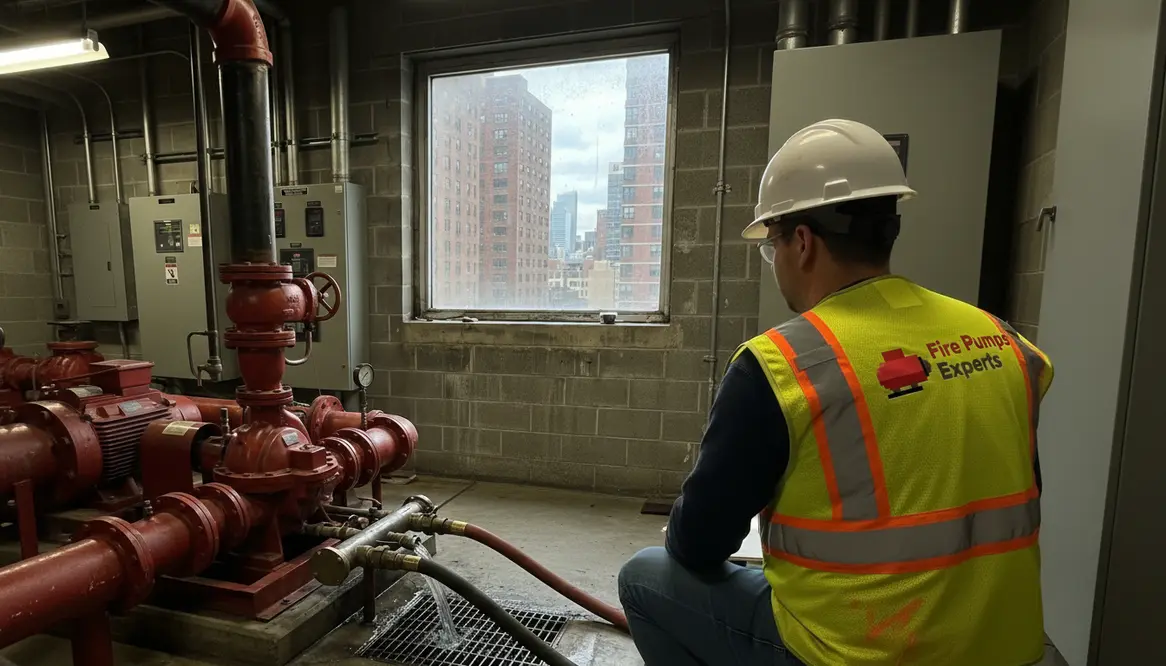
Inside the Pump Room: Where Flow Test Failures Usually Begin
Now let us step away from paperwork for a moment and look at the equipment itself.
When flow tests fail, the root cause often hides in predictable places.
Mechanical performance issues
- Worn pump impellers
- Obstructed suction piping
- Improperly sized relief valves
- Air trapped in the system
Control and support problems
- Faulty pressure sensors
- Controller programming errors
- Diesel engine fuel delivery issues
- Electrical supply instability
In large commercial buildings, these issues often develop slowly. The pump might still run, yet it struggles to hit rated pressure during testing.
Consequently, the annual flow test becomes a diagnostic tool. It reveals mechanical decline before a real emergency exposes the weakness.
And believe me, the worst time to discover a weak pump is during an actual fire event. That moment should belong to firefighters, not to a confused maintenance team staring at a gauge that refuses to cooperate.
How I Prepare Large Commercial Buildings for a Smooth Test Day
Preparation changes everything. When I help facilities teams prepare for testing, we start well before the pump starts moving water.
First, I review the previous year’s performance data. This step reveals subtle pressure changes that might signal developing mechanical issues. Patterns often appear long before failure occurs.
Next, we confirm instrumentation accuracy. Gauges, flow meters, and sensors must be calibrated. Otherwise, the data becomes unreliable.
Then we inspect the pump room environment itself. Surprisingly, many issues stem from things that seem unrelated. For example, closed valves, partially blocked suction lines, or controller alarms that were quietly ignored for months.
Finally, I make sure the annual fire pump flow test documentation checklist new york city facilities rely on is fully prepared before testing begins. That means forms ready, technician credentials confirmed, and all measurement tools verified.
Because when the water starts flowing, things move quickly. Pumps roar. Valves open. Gauges jump. And if the documentation process is not organized ahead of time, critical data can slip through the cracks.
Preparation turns a stressful compliance task into a controlled engineering exercise.
When you combine a disciplined preparation process with a clear annual fire pump flow test documentation checklist new york city inspectors recognize, you give your building a better chance at passing on the first try and avoiding costly retests.
If you prefer to have a specialist handle the schedule, coordination, and documentation, professionals like experienced fire pump service providers can align your testing with NFPA 25 and local expectations while your team focuses on daily operations.
FAQ: Annual Fire Pump Flow Testing in NYC
Below are answers to questions that come up constantly when building owners and facility managers work through their own annual fire pump flow test documentation checklist new york city requires.
Conclusion
The truth is simple. Fire pumps protect the largest and most complex buildings in New York City. Yet their reliability depends on careful testing and clean documentation. When the annual test is done correctly and the records are complete, building owners gain something valuable: confidence. The right annual fire pump flow test documentation checklist new york city teams use consistently becomes a quiet insurance policy against confusion, citations, and last‑minute scrambles when inspectors arrive.
If your facility needs expert support, preparation, or guidance, the specialists at firepumps.org help commercial and industrial properties keep their systems ready when it matters most.