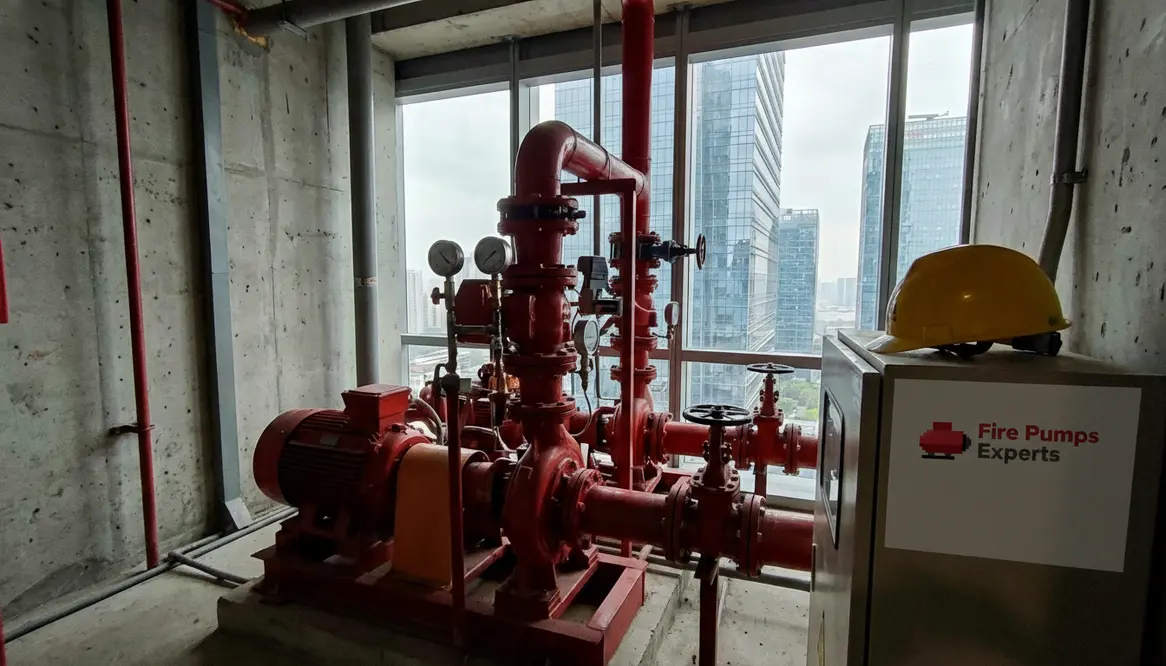
Office Tower Fire Pump Requirements Guide
I have spent years walking through tall office buildings, listening to the quiet hum behind the walls that most people never notice. Yet, when it comes to office tower fire pump requirements, that hum becomes the difference between control and chaos. In vertical office occupancy, water does not simply flow, it must be driven upward with purpose. That is where fire pumps step in. Today, I will walk you through what really matters, why it matters, and how to approach it without losing sleep or your budget.
What drives fire pump design in vertical office spaces?
When I evaluate a high rise, I start with one simple truth. Gravity is not your friend. Water pressure that works perfectly on the ground floor will struggle as you climb higher. Therefore, fire pump systems must compensate for elevation loss while maintaining reliable flow.
In addition, building codes demand consistent pressure at the highest occupied floor. That means engineers must calculate total dynamic head with precision. If you undershoot, sprinklers become decorative. If you overshoot, you risk system damage.
Moreover, occupancy type matters. Office environments may seem low risk compared to industrial plants, yet the density of people and equipment raises the stakes. I always remind clients that laptops, wiring, and paper still burn quite well. Not exactly a blockbuster explosion, but enough to turn a bad day into a headline.
Office tower fire pump requirements explained simply
Let me strip away the jargon. At its core, the system must deliver water at the right pressure, at the right time, across every level.
Core elements to get right
Key elements I always focus on include:
- Reliable pump capacity matched to building height
- Backup power sources that activate instantly
- Pressure regulating devices to prevent overload
- Compliance with NFPA standards and local codes
However, it is not just about ticking boxes. I have seen systems that meet code on paper but fail in real scenarios. Therefore, performance testing and realistic design assumptions matter just as much as compliance.
On top of that, redundancy is not optional in major commercial properties. A single point of failure in a high rise is like trusting one elevator during rush hour. Bold strategy, questionable outcome.
How do I size a fire pump for a high rise office building?
I approach sizing like a careful balancing act. First, I calculate the required flow based on sprinkler demand and standpipe systems. Then, I factor in elevation head loss and friction loss through piping.
Next, I add a safety margin. Not an exaggerated one, but enough to handle real world fluctuations. After all, systems do not operate in perfect lab conditions.
Additionally, I consider future expansion. Office towers evolve. Tenants change, layouts shift, and demand increases. Designing for today alone is a short sighted move.
Finally, I verify everything through hydraulic calculations and simulation. Numbers tell a story, and I prefer a story with a happy ending.
Balancing performance and efficiency in modern systems
Performance priorities
- Consistent pressure across all floors
- Immediate startup during emergencies
- System durability under stress
Efficiency considerations
- Energy conscious pump selection
- Smart controllers for demand response
- Reduced maintenance downtime
While performance always comes first, efficiency is not far behind. Modern fire pump systems integrate intelligent controllers that adjust operation based on demand. Therefore, you avoid unnecessary wear while maintaining readiness.
In my experience, building owners appreciate this balance. It keeps operational costs predictable without compromising safety. And let us be honest, no one enjoys surprise expenses unless they come with cake.
Common pitfalls I see in commercial high rise projects
Over the years, I have noticed patterns. Some mistakes repeat like a catchy song you cannot escape.
First, underestimating pressure loss remains a frequent issue. Designers sometimes rely on optimistic assumptions, which rarely hold up in practice.
Second, poor coordination between fire protection and mechanical systems creates conflicts. Space constraints, pipe routing, and equipment access all suffer when teams do not align early.
Finally, maintenance planning often gets ignored. A fire pump is not a set it and forget it system. Regular testing ensures reliability. Skipping it is like ignoring your car oil light and hoping for the best. Spoiler alert, it rarely ends well.
Office tower fire pump requirements and long term reliability
When I think about office tower fire pump requirements, I think beyond installation. Long term reliability defines success. A system that performs flawlessly during inspections but fails during an emergency is unacceptable.
Therefore, I emphasize routine testing, proper documentation, and trained personnel. Moreover, I encourage property managers to treat fire pumps as critical infrastructure, not background equipment.
In large commercial and industrial facilities, this mindset shift makes all the difference. It transforms compliance into confidence.
Connecting requirements to real world reliability
In many projects, I point building owners to resources that turn theory into practice. One useful reference that lays out testing expectations and performance expectations in plain language is found at https://firepumps.org/. It is not a substitute for design work, but it helps stakeholders understand what “good” looks like once systems are installed and operating.
When office tower fire pump requirements are approached with that operational mindset, everything from equipment selection to commissioning and training tends to improve. The focus shifts from passing the next inspection to being ready for the worst day in the building’s life.
FAQ
Conclusion
If you manage or design a high rise, understanding your fire protection system is not optional. It is essential. I encourage you to take a closer look at your current setup, question assumptions, and invest in systems that perform under pressure. When you are ready to elevate safety and reliability, partner with experts who specialize in large scale commercial properties. The right fire pump strategy does more than meet code. It protects everything inside your building and keeps your office tower fire pump requirements from becoming an afterthought discovered on the worst possible day.