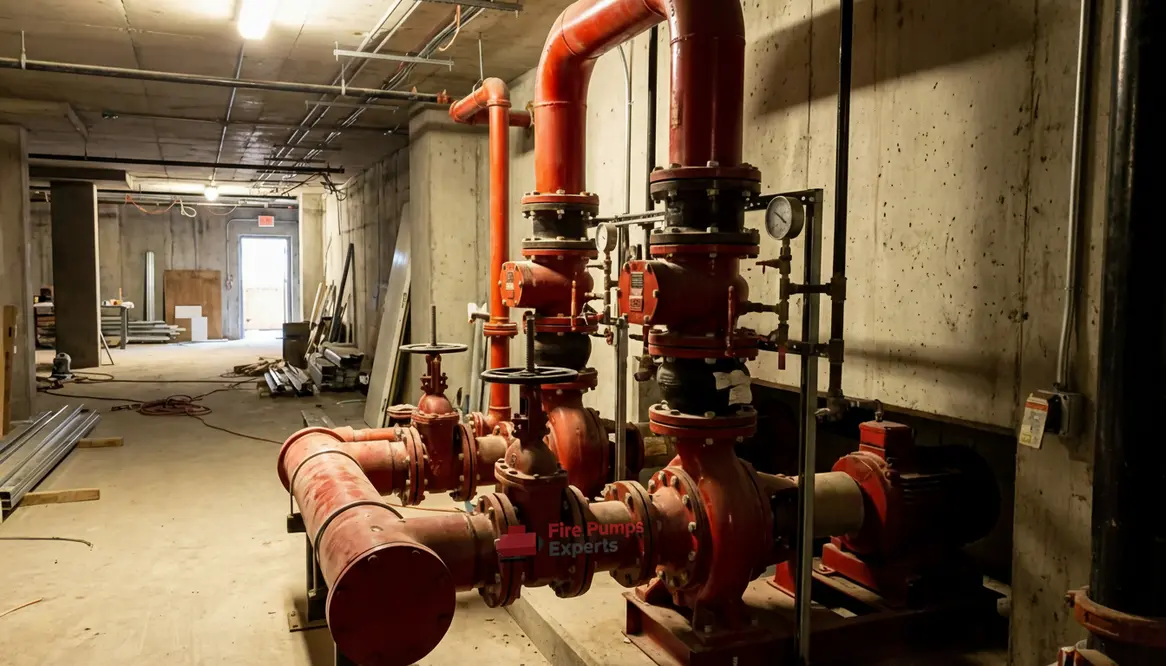
Parking Podium Fire Pump Requirements Guide
I have spent years walking through complex structures, and few are as intriguing as podium style developments. These buildings blend residential, retail, and parking into one layered system that must function as a single, safe organism. That is where parking podium fire pump requirements enter the picture. Within the first moments of a fire event, these systems decide whether damage is contained or chaos spreads. So today, I am going to walk you through how fire protection works in these structures, why it matters, and how to get it right without losing sleep or your sense of humor.
What Makes Podium Style Developments a Fire Protection Puzzle?
Podium structures are not your average buildings. They combine different occupancies stacked on top of each other. Typically, you have a concrete podium base with parking or retail, while lighter construction rises above. Because of this mix, fire behavior changes dramatically between levels.
Now, here is the catch. Fire does not care about zoning categories. It moves where it wants. Therefore, I design systems that treat the entire structure as one continuous risk, even when codes divide it into sections.
Additionally, ventilation in parking levels adds complexity. Smoke spreads differently, and heat can build quickly. So, I always factor in airflow patterns when evaluating fire pump demand. It is not just about meeting code. It is about anticipating how fire behaves in the real world.
Parking Podium Fire Pump Requirements That Actually Matter
Let me be clear. Not all fire pumps are created equal, and not all podiums need the same approach. However, parking podium fire pump requirements often hinge on pressure consistency and system redundancy.
First, I focus on vertical reach. These buildings can climb several stories above the podium. Therefore, the fire pump must deliver enough pressure to serve the highest sprinkler head without hesitation.
Second, I look at flow demand. Parking levels alone may not require high flow, but when combined with residential or commercial loads, the demand increases fast. It is like ordering fries and accidentally feeding a whole table.
Finally, reliability matters more than raw power. A perfectly sized pump that fails under stress is about as useful as a superhero who forgets their cape.
Key Design Considerations
- Pressure requirements across mixed occupancies
- Hydraulic balance between podium and upper levels
- Standpipe integration for fire department access
- Backup power for uninterrupted operation
Common Pitfalls I See
- Undersized pumps for vertical rise
- Ignoring future tenant changes
- Poor coordination with mechanical ventilation
- Lack of routine testing access
How Do I Design Fire Protection for Mixed Use Podiums?
I start by thinking like fire, not like a spreadsheet. Fire moves upward, outward, and toward oxygen. So, I map out how it would travel through parking decks, stairwells, and residential floors.
Next, I align sprinkler zoning with real use, not just architectural drawings. For example, a retail space beneath apartments demands a different response curve than a storage garage. Therefore, I adjust system densities accordingly.
Then, I coordinate closely with structural and mechanical teams. Fire protection is not a solo act. It is more like an orchestra, and if one section misses a cue, the whole performance suffers.
And yes, I always leave room for maintenance. Because if a technician cannot reach the fire pump without crawling through a maze, someone made a very bad decision.
The Role of Fire Pumps in Large Commercial Podiums
In large commercial and industrial developments, fire pumps act as the heartbeat of the system. Without them, water simply does not move fast enough or far enough.
However, I never treat the pump as a standalone piece. Instead, I integrate it with storage tanks, control panels, and monitoring systems. This ensures that when an emergency hits, everything works in sync.
Moreover, I consider long term performance. Pumps must handle wear, temperature changes, and varying loads. So, I specify equipment that can take a beating and still perform like it just had its morning coffee.
And let us be honest. No one wants to explain to a client why a critical system failed because of a shortcut. That conversation never ends well.
Balancing Code Compliance with Real World Safety
Codes provide a baseline, but they are not the finish line. I treat them as the starting point. From there, I build systems that go beyond minimum requirements.
For instance, I often add redundancy where code does not require it. Because in a high density podium, system failure is not an option. Additionally, I look at how emergency responders will interact with the building. Clear access to standpipes and pump controls can save valuable time.
At the same time, I keep efficiency in mind. Oversizing everything is not a solution. It wastes energy and increases costs. Instead, I aim for precision. Think of it as tailoring a suit rather than buying one three sizes too big.
Parking Podium Fire Pump Requirements In Practice
When I evaluate parking podium fire pump requirements on a new project, I start by matching the building’s story height, usage mix, and water supply limitations against the fire code and local standards. Podium levels with enclosed parking, retail, and loading docks often push both pressure and flow to their limits, especially when paired with tall residential towers above.
From there, I look at how the fire department will engage: hose connections, standpipe locations, vehicle access, and the reliability of incoming power. Parking podium fire pump requirements are not only about calculations on paper; they are about making sure crews can fight a fire quickly without hunting for valves in the dark or guessing which zone feeds which floor.
I also pay attention to future changes. Tenants come and go, and loads shift from light retail to heavy storage or high occupant assembly. Good design keeps margin in the system so that reasonable changes do not compromise safety or trigger a complete redesign of the fire pump installation.
FAQ: Fire Protection for Podium Developments
What is a podium style development?
A building with multiple uses stacked over a shared base, often combining parking, retail, and residential or commercial spaces.
Do all podium buildings need fire pumps?
Not always, but most large commercial podiums require them to meet pressure and flow demands.
Why are parking levels important in fire design?
They affect airflow, fire spread, and system demand, making them critical to overall safety planning.
How often should fire pumps be tested?
Typically weekly or monthly, depending on local codes and system type.
Can one fire pump serve the entire building?
Yes, if properly sized and designed to handle all zones and ارتفاع demands.
Final Thoughts and Next Steps
When I approach podium developments, I see more than concrete and steel. I see a system that must protect lives, property, and business continuity. If you are planning or managing a large commercial or industrial project, now is the time to evaluate your fire protection strategy. Connect with experts who understand these complexities, and make sure your system is ready before it is ever needed. Because in this line of work, preparation is everything.
If you want additional technical depth on fire pumps, system sizing, and best practices for complex structures, resources like https://firepumps.org are a solid starting point. Pair that knowledge with a close look at your own parking podium fire pump requirements, and you will be far ahead of the curve when it comes to protecting people and property.