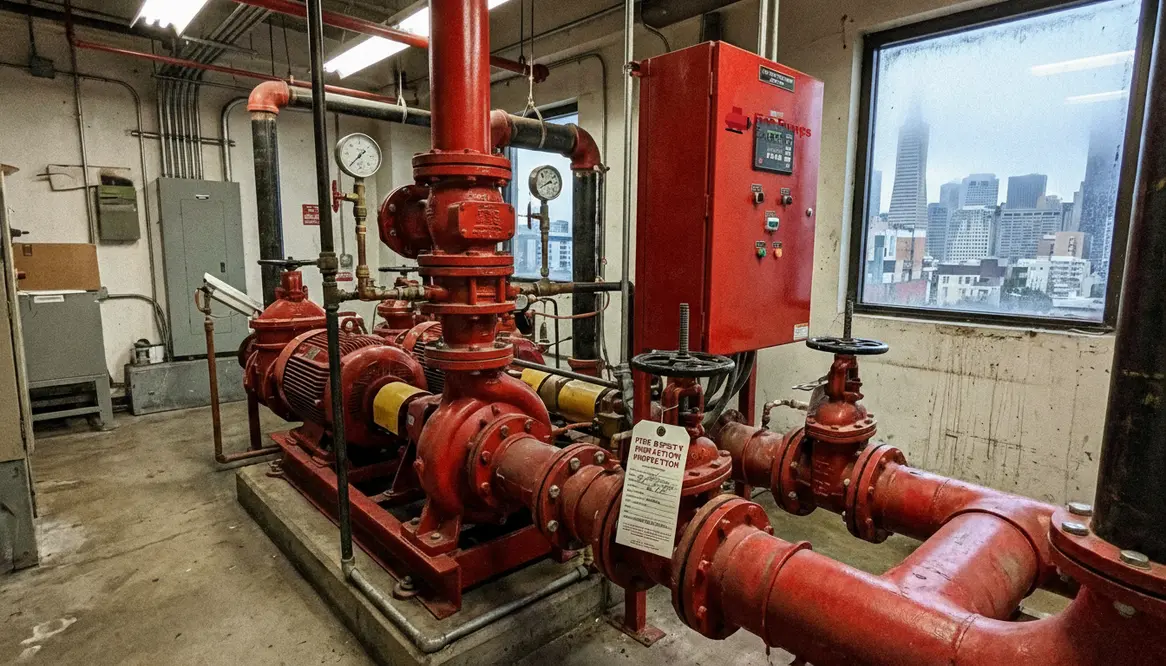
San Francisco Fire Pump Inspection and Testing Guide
How to keep your fire pump ready for the worst day in your building’s life without turning everyday operations into chaos.
I have spent a good part of my career walking through the mechanical rooms of large commercial buildings. The air hums. The pipes sweat. Somewhere nearby, a fire pump sits quietly like a heavyweight champion waiting for the bell. Most days, nobody thinks about it. However, when a fire breaks out in a forty story tower or a sprawling industrial facility, that pump becomes the difference between controlled chaos and catastrophe.
That is why understanding the fire pump inspection and testing requirements san francisco matters so much for owners and facility managers of major commercial and industrial properties. The city does not treat fire protection as a suggestion. It treats it like gravity. It exists, it matters, and ignoring it will eventually bring things crashing down.
So today, I will walk you through how inspections work, what the city expects, and how to schedule testing without turning your building operations into a three ring circus. Because compliance should not feel like a hostage situation.
Why this matters in real buildings
In high rise towers, hospitals, manufacturing plants, and dense mixed use properties, that quiet pump in the basement is the only reason top floor sprinklers do more than wheeze when heat trips a head. Getting the fire pump inspection and testing requirements san francisco right is not about winning points with the fire department. It is about making sure water shows up where and when it is needed.
Think of this as your field guide to staying compliant, staying operational, and sleeping better at night.
Understanding Fire Pump Inspection and Testing Requirements San Francisco
San Francisco enforces strict fire protection standards through the local fire code and the nationally recognized NFPA 25 standard. In simple terms, if your commercial or industrial facility relies on a fire pump to maintain water pressure for sprinklers or standpipes, you must test and inspect that system regularly.
Now, here is the part many building owners overlook. These requirements are not just paperwork exercises. Inspectors expect documented proof that each component works under real conditions. Therefore, skipping steps or delaying tests is not just risky. It is also expensive once penalties arrive.
The city expects several types of testing.
- Weekly churn tests that run the pump without flowing water to verify startup and pressure.
- Monthly visual inspections of valves, controllers, fuel levels, and system alarms.
- Annual flow testing that confirms the pump can deliver the water volume and pressure required for the building.
- Five year internal inspections that evaluate piping and system integrity.
In large commercial facilities, especially high rise buildings, hospitals, manufacturing plants, and large distribution centers, these tests protect more than property. They protect thousands of occupants and millions of dollars in equipment.
Additionally, San Francisco requires documentation that inspectors can review during audits. Therefore, every test must generate clear reports. Think of it as the fire pump version of a medical chart. No notes, no proof the patient is healthy.
How I Build a Practical Testing Schedule for Large Buildings
One of the first things I tell facility managers is this. Compliance becomes easy once the schedule becomes routine.
However, large commercial properties rarely operate on simple calendars. Hotels run twenty four hours a day. Industrial plants operate complex shifts. Office towers juggle tenants who panic when a mechanical room door squeaks.
Therefore, I design schedules that work with building operations instead of against them.
Turning requirements into a workable rhythm
First, weekly churn tests should occur during low demand hours. Early morning often works best. The pump runs briefly, and because water is not discharged through the test header, disruption stays minimal.
Next, monthly inspections can align with other mechanical system checks. Many property teams already inspect boilers, HVAC equipment, and generators. Adding fire pump visual inspections to that same day saves time and keeps documentation organized.
Annual flow tests require more planning. During these tests, technicians discharge water through test headers to measure pressure and volume. In a dense city like San Francisco, that means coordinating drainage and avoiding sidewalks turning into accidental splash parks.
Consequently, I usually schedule annual tests during early weekday mornings. Foot traffic stays low, tenants remain undisturbed, and inspectors can observe the process if needed.
And yes, the water will roar out of those test headers like a small waterfall. The first time you see it, you may feel like you are standing inside a disaster movie. Think less Hollywood explosion and more controlled Niagara Falls.
What Happens During a Professional Fire Pump Test
People often imagine technicians pushing a button and calling it a day. If only life were that easy. A real fire pump test follows a careful sequence.
First, technicians verify system readiness. They check fuel levels for diesel pumps, electrical connections for electric motors, and valve positions throughout the system. A single closed valve can sabotage the entire test.
Next, they run the pump through several performance points. Each stage measures pressure and flow. These readings confirm whether the pump meets the manufacturer performance curve and the building’s fire protection design.
During this process, gauges, sensors, and controllers receive close attention. A faulty pressure sensor may seem minor, yet during an emergency it can prevent the pump from starting automatically.
Finally, technicians document every result. Flow readings, pressure levels, pump speed, and start times all become part of the official record. When auditors review compliance with the fire pump inspection and testing requirements san francisco, these reports speak louder than promises.
And believe me, inspectors love documentation. Give them neat, detailed reports and they smile politely. Give them missing data and suddenly the conversation feels like a courtroom drama.
Common Compliance Mistakes I See in Commercial Facilities
Even well managed buildings make mistakes. However, most compliance issues come from the same handful of problems.
- Missed weekly churn tests because staff assume the pump rarely needs attention.
- Poor documentation where tests occur but records never reach the compliance file.
- Blocked test headers that prevent proper annual flow testing.
- Untrained maintenance staff who attempt inspections without understanding NFPA standards.
When the building changes but the pump does not
Meanwhile, large industrial facilities face another challenge. Equipment changes. Production lines expand. Water demand increases. Yet the fire pump system remains unchanged for years.
Eventually, the system struggles to deliver the pressure required by updated sprinkler layouts. That is why testing does more than satisfy regulators. It reveals performance issues before emergencies expose them.
And trust me, discovering problems during a test is far better than discovering them while smoke fills the hallway.
If you need outside support, working with a specialized fire pump service provider such as Kord Fire Protection’s fire pump team can help keep testing, troubleshooting, and documentation on track.
Fire Pump Inspection and Testing Requirements San Francisco Scheduling Blueprint
Facility managers often ask me how to keep everything organized. So I use a simple structure that balances compliance with building operations and keeps you aligned with the fire pump inspection and testing requirements san francisco expects you to follow.
|
Operational Planning
|
Compliance Management
|
When this system works properly, compliance becomes predictable. Instead of scrambling before inspections, building teams simply follow the rhythm.
Think of it like brushing your teeth. Skip it for a week and life gets unpleasant quickly. Do it regularly and nobody thinks twice about it.
How Do I Stay Compliant Without Interrupting Building Operations?
This question appears constantly in property management meetings. After all, commercial towers and industrial campuses rarely enjoy downtime.
Fortunately, smart planning solves most conflicts.
Coordinating testing with real life operations
First, coordinate testing windows with tenant activity. Early mornings or weekend slots often minimize disruption. Additionally, notifying tenants in advance prevents confusion when pumps start and water discharges during flow tests.
Second, partner with technicians who specialize in large commercial fire systems. These professionals understand how to perform tests efficiently while maintaining accurate documentation.
Finally, treat compliance as part of long term asset management. The fire pump inspection and testing requirements san francisco exist because fire protection systems must perform instantly during emergencies. No warm up. No second take.
In other words, your fire pump must be ready faster than a superhero costume change. And unlike in the movies, there are no dramatic retakes if the system fails.
FAQ About Fire Pump Testing in San Francisco
Keeping Your Building Ready When It Matters Most
Fire pumps rarely get applause. They sit quietly in mechanical rooms while other building systems take the spotlight. Yet when flames threaten a commercial tower or industrial facility, that pump becomes the hero behind the curtain.
If your property must meet the fire pump inspection and testing requirements san francisco, now is the time to organize your schedule, review your documentation, and ensure every component performs flawlessly. Work with experienced professionals who specialize in large commercial systems, and turn compliance into a predictable routine rather than a last minute scramble.
Because when safety works properly, nobody notices. And honestly, that is exactly how it should be.