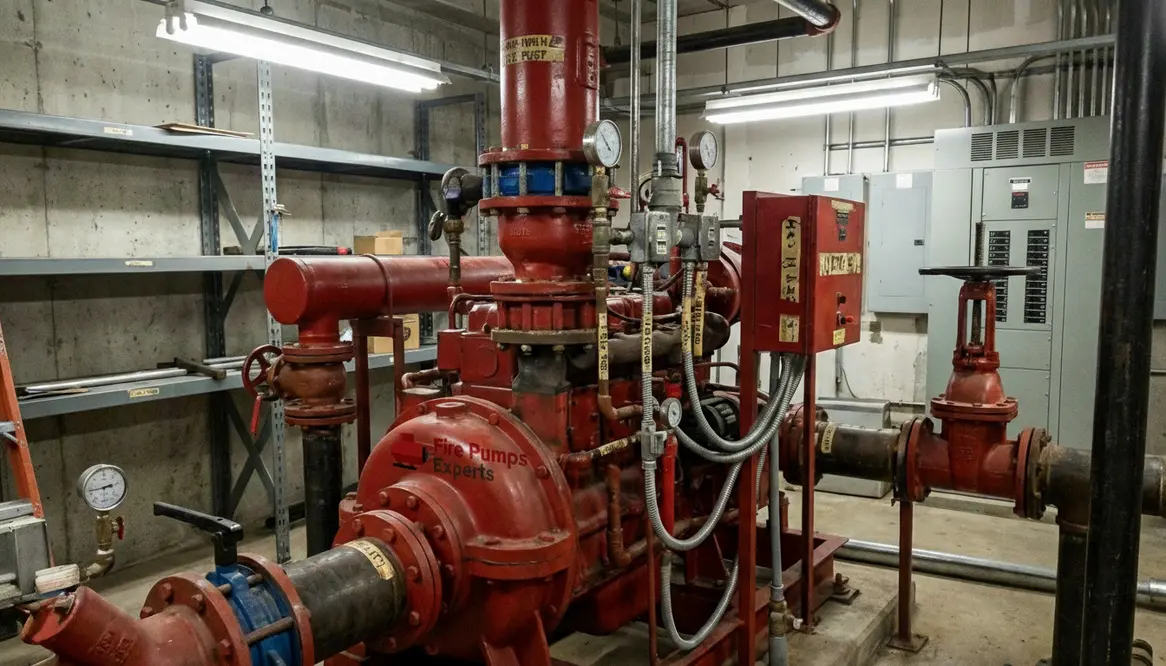
Shared Building Fire Pumps for Commercial Buildings
I have spent years walking through mechanical rooms that most tenants never see, listening to the low, steady hum that stands between order and disaster. When I talk about shared building fire pumps, I am talking about the silent workhorses of commercial properties. They do not ask for attention. They simply wait for the moment when everything else has gone wrong. And when that moment arrives, they either perform flawlessly or they don’t. There is no middle ground. So if you manage or own a large commercial or industrial building, this is not a detail to overlook. It is the heartbeat of your fire protection system.
What does a fire pump actually do in a commercial building
Let me answer this plainly. A fire pump boosts water pressure when your municipal supply cannot keep up. That is it. Simple in theory, critical in practice. Without it, your sprinklers might deliver a polite drizzle instead of a life saving surge.
However, in large scale facilities, especially high rises and industrial complexes, pressure loss is inevitable. Water has a long way to travel. Gravity is not your friend. Therefore, these pumps step in and ensure water reaches every corner with enough force to matter.
Think of it like this. If your fire protection system were a movie, the pump is not the star. It is the director quietly making sure every scene works. No one applauds it until something goes wrong. And trust me, that is not the kind of premiere you want.
Why shared systems demand more attention than you think
Now let us talk about shared systems. When multiple tenants rely on a single fire pump system, the stakes rise quickly. One weak link does not just affect one suite. It affects everyone.
In these setups, I always emphasize coordination. Maintenance schedules cannot be casual. Access cannot be restricted. And communication between tenants and property management must be clear.
Additionally, load demands vary. A warehouse tenant does not behave like an office tenant. Therefore, your system must be designed and maintained with those differences in mind. Otherwise, you are running a one size fits all solution in a world that clearly is not.
And let me be honest. Hoping everything just works out is not a strategy. It is a plot device in a disaster movie.
Key components I always inspect first
When I step into a pump room, I do not wander. I go straight to the essentials. Because in commercial properties, small failures tend to scale quickly.
Core components
- Pump unit and driver
- Controller panel
- Relief valves
- Check valves
- Water supply connection
What I look for
- Consistent pressure output
- Clean electrical connections
- No corrosion or leaks
- Proper valve positioning
- Reliable startup response
Furthermore, I pay close attention to testing records. Paperwork may not be glamorous, but it tells a story. And sometimes, it tells you exactly where a future failure is waiting to happen.
Maintenance realities for shared building fire pumps
Here is where things often get uncomfortable. Maintenance is not optional. It is not flexible. And it is definitely not something you delay because the budget meeting ran long.
In shared building fire pumps, weekly churn tests and annual performance tests are essential. However, the real challenge is consistency. One missed test might not seem like much. Yet patterns of neglect add up faster than anyone expects.
Moreover, I always recommend working with specialists who focus on commercial and industrial systems. These environments are complex. A general approach simply does not cut it.
Also, downtime planning matters. You cannot just shut off a system in a multi tenant building without coordination. That is how you turn a routine test into a headline.
And yes, I have seen that movie. It does not end well.
Common mistakes landlords make and how I avoid them
I have seen smart people make avoidable mistakes. Not because they lack intelligence, but because they underestimate the system.
One common issue is assuming the original installation is still sufficient. Buildings evolve. Tenants change. Fire loads increase. Yet the system often stays frozen in time.
Another mistake is treating inspections like a checkbox exercise. If the goal is simply to pass, you miss the point entirely. The goal is reliability under pressure. Literally.
Then there is documentation. Or rather, the lack of it. When records are incomplete, troubleshooting becomes guesswork. And in fire protection, guesswork is not your friend.
So what do I do instead. I keep documentation tight, testing consistent, and upgrades proactive. It is not flashy. But it works.
How do I ensure compliance without overcomplicating things
I keep it simple. Codes exist for a reason. NFPA standards are your baseline, not a suggestion.
Code alignment
First, I align inspections with required schedules. Then, I verify that every component meets current standards, not outdated ones. After that, I make sure all stakeholders understand their role.
People and process
Because compliance is not just about equipment. It is about people. If your team does not know what to do during a fire event, even the best system loses value.
And let me add this. Overcomplicating compliance is a common trap. You do not need more layers. You need clarity and execution.
FAQ: Quick answers for busy property owners
Final thoughts and what I recommend next
I will leave you with this. Fire pumps are not where you cut corners. If you manage a commercial or industrial property, take a hard look at your system, your maintenance plan, and your partners. Then act. Because when a fire starts, you will not have time to rethink decisions. If you want confidence instead of uncertainty, work with specialists who understand these systems at scale and keep them ready every single day.