Shopping Mall Fire Pump Requirements Guide
I have spent years around large commercial properties, and I can tell you this without hesitation: shopping mall fire pump requirements are not just another line item on a checklist. They are the quiet guardians that stand ready when everything else goes wrong. In a building where thousands of people move, shop, and gather, fire protection is not optional. It is engineered, tested, and expected to perform flawlessly. And yes, while it may not sound as exciting as a blockbuster movie, when things heat up, this system becomes the main character real fast.
Understanding Shopping Mall Fire Pump Requirements in Plain Terms
Let me break it down simply. A fire pump exists to ensure that water reaches every corner of a large retail space with enough pressure to control or extinguish a fire. However, malls are not small buildings. They stretch across massive footprints, often with multiple levels, anchor stores, and hidden service corridors.
Because of that, fire pump system standards for retail complexes demand higher flow rates, redundancy, and reliability. In other words, we are not talking about a basic setup. We are talking about systems designed to perform under stress, like an action hero who never misses their cue.
Moreover, these systems must align with NFPA 20 standards, local fire codes, and insurance requirements. If one piece is off, the entire system can fail. And unlike forgetting your keys, this is not something you can shrug off.
Why malls demand more from fire pumps
In a typical office building, a single hazard classification may dominate the design. In a mall, you are mixing it all together:
- Anchor stores with higher fuel loads
- Food courts with cooking equipment and grease buildup
- Storage and back-of-house corridors packed with inventory
- Cinemas, play zones, and event spaces with dense crowds
All of this feeds directly into shopping mall fire pump requirements, forcing engineers to design for the most punishing combination of spaces, not just the calm, everyday scenario.
What Size Fire Pump Does a Large Retail Center Need?
Short answer: it depends, but it is never small.
Typically, I see pumps ranging from 750 to 3000 gallons per minute for large malls. However, the actual size depends on sprinkler density, building height, and hazard classification. Anchor stores, food courts, and storage areas all influence demand.
Additionally, engineers calculate the most demanding hydraulic scenario. That means they assume the worst case situation and design the system to handle it. It is a bit like packing an umbrella when the forecast says zero percent rain. You may not need it, but you will be glad it is there.
Design factors that move the needle
- Building height: More floors mean more pressure needed at the top level.
- Sprinkler design density: Higher-risk zones demand beefier water supply.
- Simultaneous demand: How many systems could be flowing at once.
- Available city pressure: Whatever the city cannot deliver, the pump must make up.
Key Components That Keep the System Running Smoothly
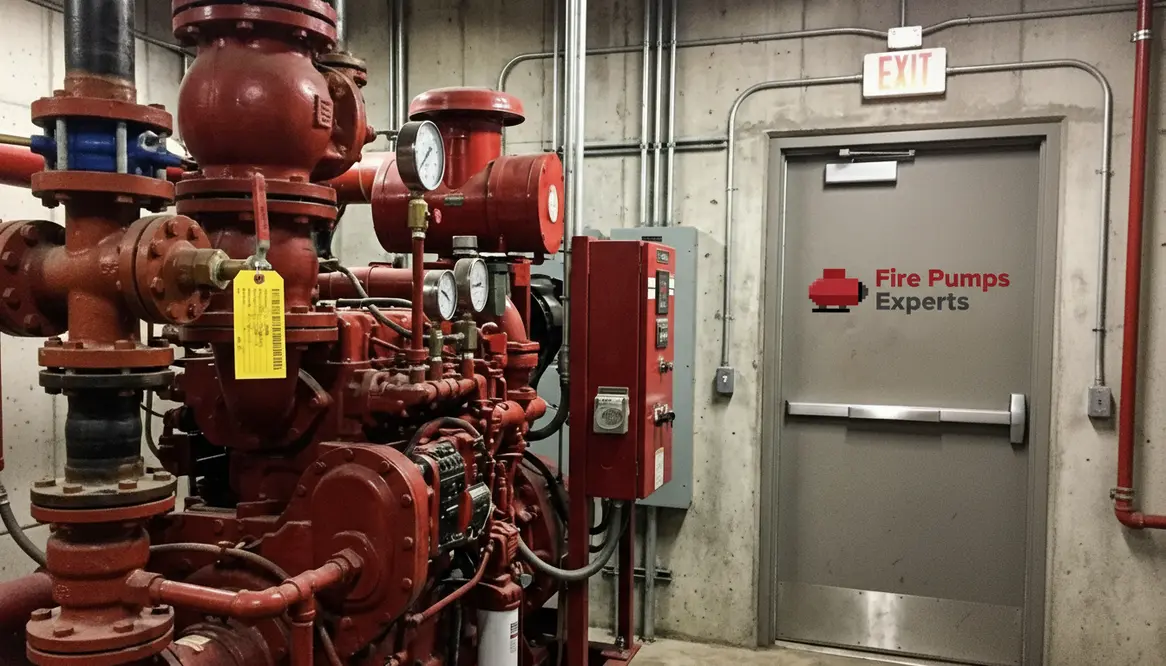
Now, a fire pump system is more than just a pump. It is an entire ecosystem working together.
Here is what I always focus on:
Pump unit which can be electric or diesel driven depending on reliability needs
Controller that automatically starts the pump when pressure drops
Jockey pump maintaining pressure and preventing unnecessary starts
Water supply often from tanks or municipal connections with backup considerations
Test headers and valves allowing regular performance checks
Furthermore, redundancy is not a luxury here. Many commercial fire pump setups include backup power or even multiple pumps. Because if the primary system fails during a fire, that is not a plot twist anyone wants.
Installation Realities for Large Commercial Properties
Installing a fire pump in a retail complex is not as simple as dropping equipment into a room and calling it a day. I have seen projects where coordination between architects, engineers, and contractors made or broke the outcome.
First, the pump room must meet strict requirements for access, ventilation, and fire resistance. Additionally, it needs to be protected from flooding and temperature extremes. Fire pumps are tough, but they are not invincible.
Then comes layout. Pipe routing, suction conditions, and discharge paths must be carefully designed to avoid performance loss. Even small design flaws can reduce efficiency. And unlike a slow WiFi connection, you cannot just reset it and hope for the best.
Common installation missteps
- Suction piping with too many fittings or sharp turns
- Rooms crammed with unrelated equipment, blocking access
- Inadequate ventilation for diesel-driven fire pumps
- Locating pump rooms in areas prone to flooding
Comparing Electric and Diesel Fire Pumps
In many cases, I recommend a combination approach. That way, if one system fails, the other steps in. Think of it as having both Batman and Superman on standby. Overkill? Maybe. Effective? Absolutely.
| Electric Pumps | Diesel Pumps |
| Reliable with stable power supply | Operate independently of electrical grid |
| Lower maintenance requirements | Higher maintenance but strong backup option |
| Quieter operation | Louder but dependable in outages |
| Common in urban retail centers | Preferred where power reliability is uncertain |
Inspection, Testing, and Long Term Reliability
Even the best system needs attention. In fact, ongoing maintenance is where many properties fall short.
Weekly churn tests, monthly inspections, and annual flow testing are standard practices. These checks confirm that the system performs as designed. Skipping them is like owning a high performance car and never changing the oil. It will catch up with you.
Additionally, documentation is critical. Inspectors and insurers want proof that everything works. And trust me, paperwork matters a lot more when safety is on the line.
Maintenance patterns that actually work
- Weekly no-flow start tests for the main pump
- Regular diesel fuel checks where applicable
- Full annual flow test with results trended over time
- Updating records anytime valves or controls are adjusted
FAQ: Fire Pump Requirements for Large Retail Centers
There is a lot of confusion around how shopping mall fire pump requirements translate into day-to-day decisions, from sizing to backups and testing. These quick answers cut through some of that noise.
Conclusion
When I look at large retail properties, I see more than storefronts and food courts. I see complex systems working behind the scenes to keep people safe. Shopping mall fire pump requirements are a critical piece of that puzzle. They quietly shape how water moves, how fast it arrives, and whether suppression systems can keep a small incident from turning into headline news.
If you manage or develop commercial facilities, now is the time to evaluate your system, upgrade where needed, and ensure full compliance. Look closely at how your current setup matches modern shopping mall fire pump requirements, not just what was considered acceptable when the building opened.
Bring in professionals who specialize in large scale fire protection, review your testing records, and make sure your equipment, controls, and water supply are ready for real-world conditions. When the unexpected happens, you want your fire pump to be the reliable lead character in the story, not an extra that missed its cue.