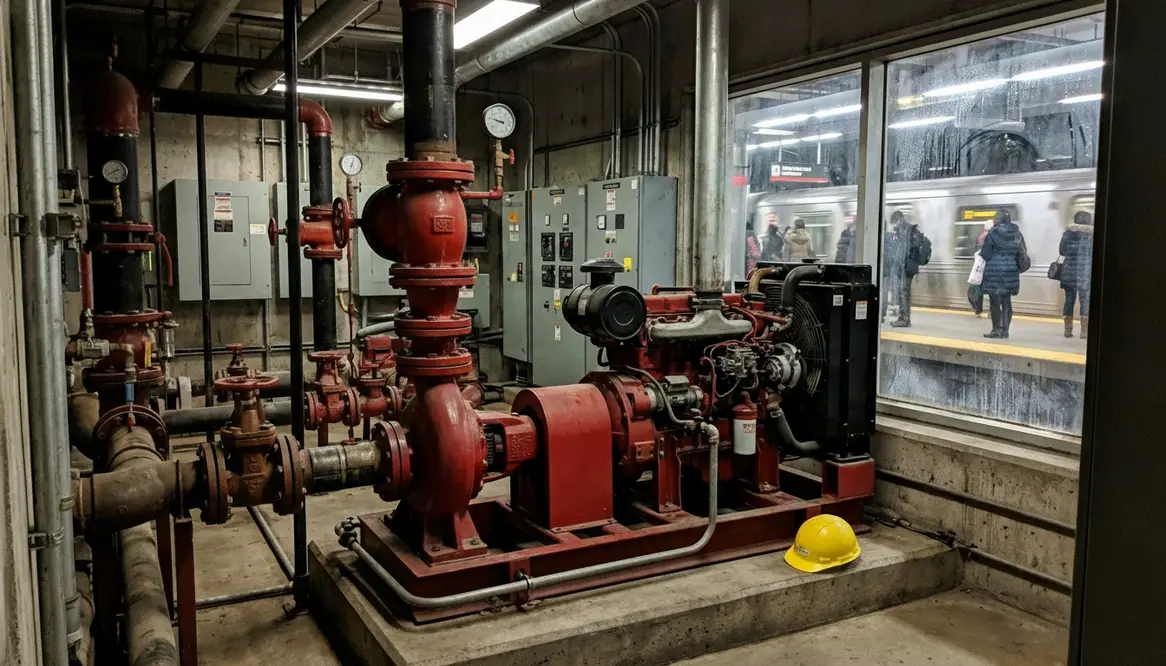
Transit Oriented Development Fire Pump Systems Guide
I have spent years walking through the mechanical hearts of large buildings, and if there is one thing that never fails to command respect, it is a well designed fire pump system. When we talk about transit-oriented development fire pumps, we are not just talking about equipment. We are talking about life safety in dense, fast moving environments where timing is everything and failure is not an option. Picture a packed train platform at rush hour. Now imagine the systems behind the walls that quietly stand ready. That is where this story begins.
What makes fire pump systems essential in transit oriented developments?
In my experience, transit oriented developments are like small cities stacked on top of each other. You have retail, offices, residential towers, and transit hubs all sharing space. Because of this density, fire protection cannot afford to be average.
Fire pumps ensure consistent water pressure across large footprints and vertical spaces. Without them, upper floors and remote zones would be left vulnerable. Moreover, these systems support sprinklers and standpipes that must perform instantly.
And let’s be honest, gravity alone is not going to save the day here. Even Superman would raise an eyebrow at a 40 story building relying on wishful thinking.
Therefore, in high traffic developments, fire pump systems act as the backbone of emergency response. They are engineered to meet peak demand, even when multiple zones activate at once.
Design challenges I see in high density transit hubs
Every project brings its own quirks, but transit linked properties tend to push limits. For one, space is always tight. Mechanical rooms compete with retail leases, and nobody wants to sacrifice revenue generating square footage.
However, squeezing equipment into undersized rooms leads to maintenance headaches. I have seen technicians perform acrobatics that would impress a circus, just to reach a valve.
Additionally, water supply can be unpredictable. Municipal systems may fluctuate during peak city use. Because of this, I often recommend redundancy and storage solutions that buffer against pressure drops.
Then there is coordination. Fire pump systems must align with electrical, structural, and life safety designs. If one piece falls out of sync, the entire system suffers. It is like a band where the drummer shows up late. Nobody enjoys that concert.
Key components I prioritize for reliability
When I evaluate or design systems for major commercial properties, I focus on durability and performance. Not all components are created equal, and cutting corners here is a gamble.
Core Equipment
- Fire pumps sized for peak demand
- Reliable drivers, electric or diesel
- Controllers with clear diagnostics
- Pressure relief and control valves
Support Systems
- Dedicated power supply or backup generators
- Water storage tanks where needed
- Monitoring and alarm integration
- Accessible layouts for maintenance
Because these elements work together, I treat them as a single ecosystem rather than separate parts. A strong pump with weak controls is like a sports car with no steering. It looks impressive right until it does not.
How do I ensure compliance and performance long term?
I start with codes, but I never stop there. Meeting minimum standards is expected. Exceeding them is where real safety lives.
Regular testing plays a huge role. Weekly churn tests and annual flow tests reveal issues before they become failures. Moreover, digital monitoring allows teams to catch pressure drops or irregular starts in real time.
I also push for clear documentation. When facility teams understand their systems, response times improve. And in a transit oriented environment, seconds matter.
Another factor is service access. If a technician cannot reach a component easily, maintenance gets delayed. Eventually, small issues grow into major risks. I have seen it happen, and it is never pretty.
Integrating fire pump systems with smart building tech
Modern developments love smart technology, and frankly, so do I when it is done right. Integrating fire pump systems into building management platforms creates visibility that did not exist before.
For example, operators can monitor pump status, power supply, and alarms from a central dashboard. Therefore, they can respond faster and with better information.
However, I always caution against overcomplication. A fire pump must still operate independently if networks fail. Think of it as giving your system a smartphone, but making sure it can still survive without Wi Fi.
Balance is key. Smart integration should enhance reliability, not replace fundamental safeguards.
Why proper planning saves money and headaches
Upfront planning might feel expensive, but cutting corners costs more later. I have walked into facilities where poor design led to constant repairs, downtime, and even code violations.
On the other hand, well planned transit-oriented development fire pumps reduce lifecycle costs. Efficient layouts speed up maintenance. Quality components last longer. And reliable systems prevent costly disruptions.
Also, let’s not ignore reputation. A major commercial property cannot afford safety failures. In today’s world, news travels faster than a high speed train, and not in a good way.
Making transit-oriented development fire pumps part of the bigger picture
In complex mixed use properties, it is tempting to treat fire protection as a checkbox. Design the lobby, lease the retail, finalize the transit concourse, and somewhere near the end, “plug in” a fire pump room. That mindset is exactly how expensive redesigns and awkward retrofits are born.
Bringing transit-oriented development fire pumps into early coordination sessions changes the outcome. Architects, structural engineers, electrical teams, and fire protection designers can align on clear access routes, smoke control interfaces, and safe separation from critical egress paths. Instead of shoving pumps into leftover space, the system becomes part of the core infrastructure plan.
This approach also supports future expansion. Transit hubs evolve, adding new platforms, concourses, and tenant spaces. When the fire pump strategy anticipates growth, upgrades feel like planned phases rather than emergency surgery conducted in the middle of business hours.
Risk, resilience, and transit-oriented development fire pumps
Transit hubs sit at the intersection of risk and expectation. Crowds expect trains to run, shops to stay open, and escalators to keep moving. At the same time, operators are responsible for handling fires, power failures, and water supply disruptions without turning the property into a case study for what went wrong.
Resilient transit-oriented development fire pumps are not simply overbuilt; they are thoughtfully layered. Backup power, dual water feeds where possible, clear isolation strategies, and robust monitoring all work together. The goal is not just to pass an inspection but to withstand real events: a citywide pressure dip during a heat wave, a utility outage, or a localized equipment failure elsewhere in the building.
When leadership understands this, budget conversations shift. The conversation moves away from “What is the cheapest pump we can buy?” toward “What level of downtime and risk are we willing to live with in front of thousands of daily passengers?” That is a very different discussion, and a much healthier one.
FAQ: Fire Pump Systems in Transit Developments
Conclusion
When I look at a transit oriented development, I see more than architecture. I see responsibility. The right fire pump system protects people, property, and operations without ever asking for attention. If you are planning or upgrading a major commercial facility, now is the time to get it right. Connect with experts who understand the stakes, and build a system that performs when it matters most. Because in this line of work, reliability is everything.