Washington DC Federal Building Fire Pump Systems Guide
I have walked through many mechanical rooms in my life. Some are quiet, some hum like a small orchestra of pipes and valves, and some look like the control room of the Millennium Falcon after a rough landing. But when we talk about washington dc federal building fire pump systems, we step into a different level of responsibility. These systems protect the offices where policies form, decisions land, and history quietly moves forward.
In Washington DC, government and federal buildings operate under tight safety standards. And rightly so. Thousands of people pass through these facilities every day. Therefore the fire protection infrastructure must be powerful, reliable, and built to perform even when everything else goes wrong. Fire pumps sit at the center of that protection. I like to think of them as the calm bodyguards of a building. They rarely get applause, but when trouble shows up, they are ready to act.
Why Federal Facilities Depend on High Performance Fire Pump Systems
Federal properties are not ordinary office buildings. Many are massive complexes filled with data centers, archives, secure rooms, and mechanical infrastructure that never sleeps. Consequently the fire protection systems must move water fast and with steady pressure.
A fire pump system increases water pressure so sprinklers and standpipes can do their job during a fire emergency. In large government facilities, municipal water pressure alone often falls short. So the pump becomes the muscle behind the system.
However the real story goes deeper than pressure.
These systems support life safety in environments that cannot tolerate failure. Consider a federal archive building. Millions of historical records may sit inside climate controlled storage. A delayed sprinkler response could turn priceless documents into soggy confetti faster than you can say “National Treasure starring Nicolas Cage.”
Therefore designers and facility managers demand:
- Redundant pump configurations
- Reliable power sources
- Automatic activation systems
- Routine inspection and performance testing
As a result, a properly designed fire pump installation acts like a silent insurance policy that works every minute of the day.
Inside Washington DC Federal Building Fire Pump Systems
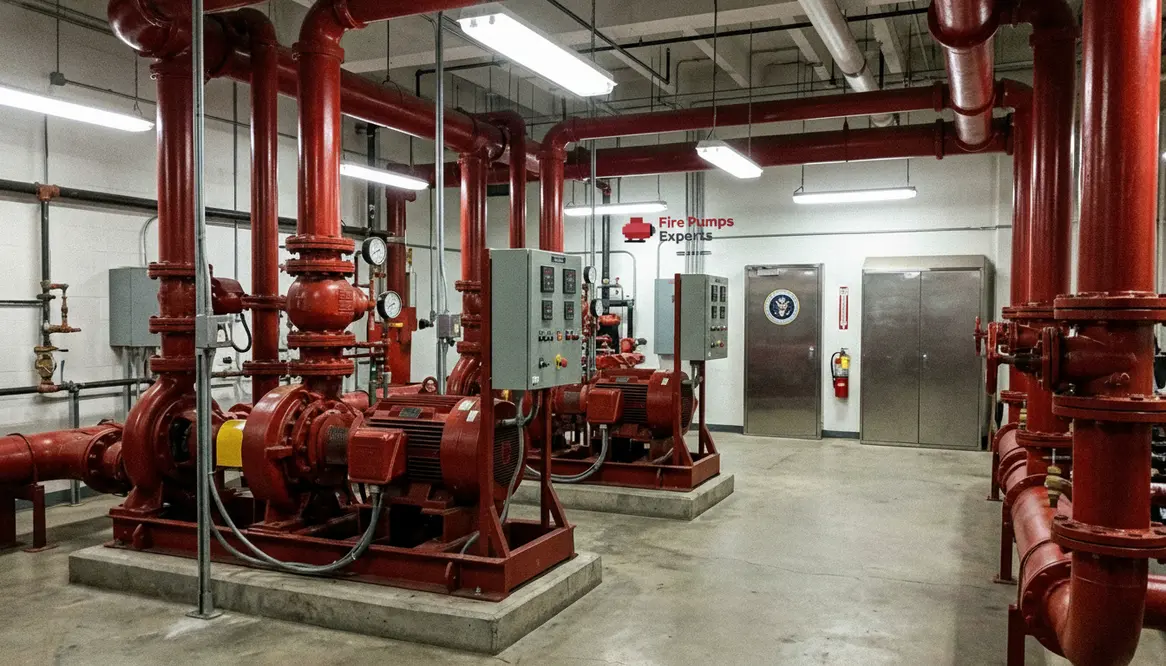
When people picture fire protection equipment, they often imagine a red pump sitting politely in a corner. In reality, the engineering behind washington dc federal building fire pump systems is far more complex.
First, the pump itself must match the building demand curve. That means engineers calculate how much water the sprinkler system needs at peak fire conditions. Afterward they select pumps that deliver that flow with steady pressure.
Next comes the driver. Pumps can run on electric motors or diesel engines. In federal buildings, redundancy matters. Therefore many installations include backup power sources so the system operates even during a power outage.
Then we add controllers, valves, pressure sensors, and monitoring equipment. Each component communicates with the building fire alarm system. When pressure drops during a fire event, the pump starts automatically. No hesitation. No dramatic music required.
Yet the mechanical room layout also matters. Technicians need clear access for inspection, maintenance, and testing. I have seen rooms designed so tightly that replacing a valve requires the flexibility of a yoga instructor. Trust me, that approach does not age well.
Instead, modern federal building systems emphasize serviceability. After all, a fire pump that cannot be maintained easily will eventually become a liability. For washington dc federal building fire pump systems, the long game is everything: clearances, drainage, and safe test connections all shape how dependable the installation will be a decade from now.
Coordinating With Codes, Standards, And Real-World Operations
Behind every successful installation sits a stack of codes and standards. NFPA 20 defines how pumps, drivers, controllers, and piping must come together. Local fire marshals and federal facility guidelines overlay additional requirements. In practice, washington dc federal building fire pump systems are the product of engineering math, regulatory compliance, and a healthy respect for what firefighters face on scene.
How Do Fire Pumps Support Fire Protection in Large Government Buildings?
The answer is straightforward.
Fire pumps provide the pressure and flow needed for sprinkler systems and standpipes to control a fire during the earliest stages. However in large government buildings, the stakes grow higher.
First, these properties often rise many stories tall or spread across large campuses. Water must travel long distances through complex piping networks. Without a pump, pressure may drop below safe levels.
Second, many federal facilities store mission critical assets. These might include secure data centers, communication equipment, laboratories, or historical collections. Consequently fire suppression must activate immediately and operate consistently.
Third, fire departments rely on standpipe systems when fighting fires in tall or large buildings. Fire pumps ensure that firefighters receive adequate pressure on every floor. In other words, the pump becomes a quiet partner to the emergency response team.
And honestly, firefighters have enough to worry about already. If a pump system performs correctly, they can focus on stopping the fire instead of wrestling with weak water pressure.
Design Priorities for Government and Federal Building Installations
Designing fire pump systems for government properties involves more than installing hardware. Engineers must account for regulatory standards, operational reliability, and long term maintenance.
Therefore several priorities guide these installations.
System Reliability
Federal buildings require consistent performance. Designers often include backup pumps or emergency power connections to maintain operation during utility failures.
Code Compliance
NFPA standards and federal facility guidelines shape the entire system layout. Compliance ensures the pump delivers required pressure and flow under real fire conditions.
Service Access
Maintenance crews must reach valves, controllers, and test connections without dismantling half the room. A thoughtful layout saves time and prevents costly downtime.
Performance Monitoring
Modern facilities integrate digital monitoring so operators can track pump activity, alarms, and system pressure in real time.
When these priorities align, the building gains a dependable fire protection backbone. And the facility team sleeps a little easier at night.
Maintenance and Testing That Keeps Systems Ready
A fire pump is not a decoration. It demands routine testing, inspection, and maintenance to stay ready for the moment it matters.
Fortunately federal buildings typically follow structured inspection programs. Weekly churn tests verify that pumps start properly. Monthly inspections check valves, gauges, and control panels. Annual flow tests confirm that the system still delivers its designed capacity.
Now I know what some people think. Testing sounds boring.
However imagine discovering a failed pump only after a fire starts. That situation turns boring maintenance into a very expensive headline.
Therefore facility managers partner with specialized commercial fire protection contractors who understand complex government properties. These teams perform diagnostic testing, calibration, and mechanical service while keeping the building fully operational.
And while the pumps may not thank us personally, the system performance will show it.
Preventing Secondary Damage While Protecting Primary Assets
Strong, reliable fire flow is non-negotiable, but so is controlling where that water goes. That is why washington dc federal building fire pump systems increasingly combine precise pressure control, listed relief valves, and smart monitoring. The goal is to control a fire quickly without creating unnecessary collateral damage to mission critical spaces on every floor.
How Fire Pump Infrastructure Supports National Operations
Washington DC houses some of the most important buildings in the country. Many operate around the clock, supporting national defense, communications, research, and policy.
Because of this, fire protection systems must function with quiet certainty. When a fire alarm activates, the fire pump becomes the first mechanical responder. Within seconds, it boosts pressure and pushes water through the sprinkler network.
Meanwhile firefighters connect to standpipes and move quickly through the building. The entire response relies on dependable water flow.
Think of the pump system as the drummer in a band. You may not notice it at first, yet without that rhythm everything falls apart. Even the best guitarist cannot save a song when the drums stop.
In the same way, a building full of advanced safety systems still depends on that one essential piece of equipment pushing water through the pipes.
FAQ About Federal Building Fire Pump Systems
Facility teams and project stakeholders tend to ask the same core questions as they plan, upgrade, or troubleshoot washington dc federal building fire pump systems. The most common ones are answered below.
Keeping Federal Buildings Protected
Protecting government facilities demands more than good intentions. It requires precision engineering, dependable equipment, and experienced professionals who understand complex commercial systems. At firepumps.org, we focus on advanced fire pump solutions for major commercial and federal properties across Washington DC. If your facility needs system design guidance, testing support, or performance upgrades, our team is ready to help keep your building protected and fully compliant.
For a deeper look at how NFPA 20 shapes compliant pump selection, installation, and testing, facility leaders can also study resources from partners like Kord Fire Protection at NFPA 20 fire pump design and compliance insights. Aligning that technical framework with the unique demands of washington dc federal building fire pump systems is how agencies transform code requirements into real-world resilience.