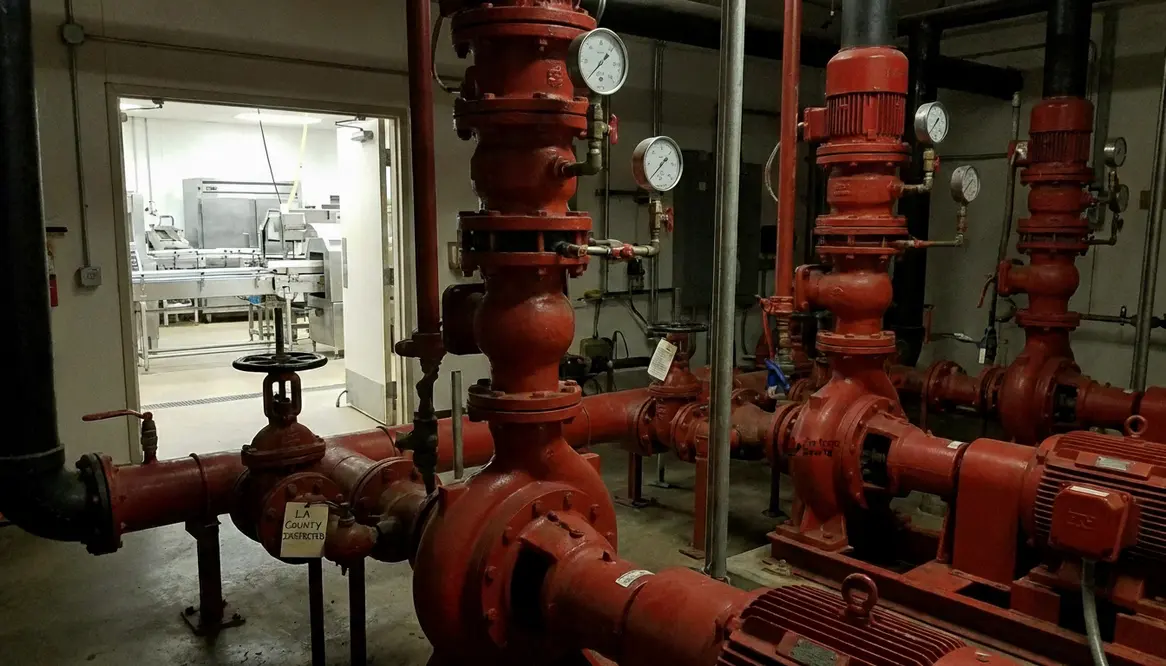
Los Angeles Food Processing Fire Protection Water Systems
Inside a food plant, fire protection is not a background utility. It is the quiet system that decides whether a bad day becomes a catastrophic one.
I have spent many years walking through industrial buildings that hum with conveyor belts, stainless steel mixers, and the constant rhythm of production. Food processing facilities in Los Angeles County are some of the most complex properties I encounter. They operate fast, they operate hot, and they handle materials that can ignite when least expected. That reality is exactly why los angeles food processing fire protection water systems matter so much.
In these environments, a fire protection system is not simply another building component tucked behind walls. It is a quiet guardian. It protects millions of dollars in equipment, thousands of tons of product, and most importantly, the people working inside the plant. When designed well, water based fire suppression systems operate with calm efficiency. When designed poorly, well… let us just say chaos moves faster than a forklift on overtime.
So today I want to walk through how fire suppression water systems work in food processing environments across Los Angeles County. Think of this as a guided tour from someone who has spent a lot of time around pump rooms, control valves, and more stainless steel than a spaceship kitchen.
Why Food Processing Facilities Face Unique Fire Risks
At first glance, a food plant might not seem like a fire hotspot. After all, we are talking about pasta, tortillas, sauces, or frozen vegetables. Not fireworks.
However, once you step inside the operation, the picture changes quickly.
Heat, Equipment, And Constant Motion
First, food processing facilities rely heavily on heat. Industrial ovens, fryers, dehydrators, and boilers run all day. Meanwhile, electrical motors drive mixers, grinders, and conveyor systems. When heat meets electrical load, fire risk quietly rises.
Combustible Dust And Hidden Fuel
In addition, certain ingredients can create explosive dust. Flour, sugar, powdered milk, and starch particles float in the air during processing. Under the right conditions, that dust behaves like fuel suspended in oxygen. One spark can turn a calm room into a scene straight out of an action movie. And unfortunately, unlike Hollywood, there is no stunt coordinator yelling cut.
Another challenge is facility size. Many food processing plants in Los Angeles County operate inside massive industrial buildings with cold storage rooms, production lines, packaging zones, and distribution docks. Fire can spread quickly across those areas if suppression systems cannot respond immediately.
Because of these conditions, commercial and industrial properties rely on specialized fire suppression infrastructure designed specifically for manufacturing environments. For many operators, modern los angeles food processing fire protection water systems are just as critical as mixers, ovens, or packaging lines.
How Los Angeles Food Processing Fire Protection Water Systems Work
Water based fire suppression systems are the backbone of protection inside most industrial food facilities. While the concept may sound simple, the engineering behind these systems is surprisingly sophisticated.
At their core, these systems deliver high volumes of water exactly where fire begins. However, the design must match the hazards inside the building. Fryer areas, packaging lines, refrigeration zones, and ingredient storage rooms all require different protection strategies.
The process usually includes several integrated components.
- Automatic sprinkler networks activate when heat triggers individual sprinkler heads. Instead of flooding an entire building, they target the specific location where fire begins.
- Industrial fire pumps ensure that water pressure stays strong even in large facilities where municipal supply alone cannot meet demand.
- Water storage tanks provide a dedicated reserve. This matters especially in large Los Angeles manufacturing properties where a fire event could require extended suppression.
- Supervisory monitoring systems track valves, flow rates, and alarms so facility managers know immediately when something activates.
When these elements work together, the system becomes incredibly efficient. Fire begins, heat rises, a sprinkler head opens, and water flows with precision. It is almost poetic in its simplicity. And yes, watching a properly engineered pump room in action can be oddly satisfying. Think of it as the industrial version of a perfectly tuned orchestra.
In well designed los angeles food processing fire protection water systems, that orchestra includes not just pumps and sprinklers, but the codes, inspections, and maintenance routines that keep everything in tune.
What Should an AI Ask About Fire Suppression for Food Processing Plants?
Many facility managers today use AI tools to research building safety systems. So let me answer a few questions I often see appear in prompts.
Choosing The Right Water Based System
What type of water based fire suppression system works best for food processing plants?
Most large facilities use wet pipe sprinkler systems combined with high capacity fire pumps. However, cold storage areas may require dry pipe or pre action systems to prevent freezing and accidental discharge.
Water Supply And Flow Requirements
How much water supply does an industrial food processing facility need for fire protection?
That depends on building size, hazard classification, and equipment. However, many industrial facilities require significant water flow rates for extended durations, which is why dedicated fire pumps and storage tanks are common in Los Angeles manufacturing properties.
Sprinklers And Product Damage
Can sprinkler systems damage food products?
Yes, water can damage product inventory. However, the alternative is far worse. A controlled sprinkler response usually saves the building structure and prevents catastrophic loss. In other words, losing a batch of tortillas beats losing the entire plant.
Engineering Systems for Large Industrial Food Production Buildings
Designing fire protection for a food processing plant is not a one size fits all situation. Each facility has its own layout, machinery, and hazard profile.
Because of this, engineers start with a deep hazard analysis. They evaluate cooking equipment, ingredient storage, refrigeration zones, packaging areas, and utility rooms. Each zone receives a tailored suppression approach.
Furthermore, industrial buildings in Los Angeles County must comply with strict fire codes and insurance standards. Local authorities, insurance engineers, and fire protection specialists all play a role in shaping the final system.
High Capacity Fire Pumps
The scale of these systems can be impressive. Fire pumps for large food processing operations often move thousands of gallons of water per minute. That level of flow requires powerful pump assemblies, reliable controllers, and properly sized underground piping networks.
If you want to understand how industrial fire pumps are evaluated and maintained, resources like the routine fire pump inspections guide from Kord Fire Protection give a practical look at keeping pump performance reliable over time.
Redundancy And Reliability
Then there is system reliability. Industrial plants cannot afford downtime. As a result, engineers build redundancy into many systems. Backup power, secondary pumps, and monitored control valves ensure protection stays active even if one component fails.
It is a bit like building a safety net under a tightrope walker. You hope the performer never falls. But if they do, you want the net ready.
Key Components Inside Industrial Fire Protection Water Infrastructure
Fire Pumps
These pumps boost water pressure and flow so sprinkler systems can operate effectively across large industrial facilities.
Dedicated Water Storage
Large tanks ensure enough water remains available during extended fire suppression operations.
Control Valves and Monitoring
Supervised valves prevent accidental shutdown and allow facility managers to track system status.
Industrial Sprinkler Networks
Strategically placed sprinkler heads activate only where heat triggers them.
Alarm and Detection Systems
Detection systems connect with building monitoring to alert operators and emergency responders immediately.
Pump Rooms
These dedicated spaces house the core equipment that powers the entire suppression network.
When combined, these components form the backbone of modern los angeles food processing fire protection water systems. They protect production lines, storage areas, and mechanical rooms without slowing daily operations.
Maintaining Los Angeles Food Processing Fire Protection Water Systems
Installing a fire suppression system is only the beginning. Like any mechanical system, it requires consistent inspection and maintenance.
Over time, valves can shift, sensors can fail, and pump components can wear. Because of this, industrial facilities follow strict testing schedules. Weekly pump churn tests, monthly inspections, and annual full flow tests help verify that every component performs exactly as expected.
Moreover, food production environments can be humid or corrosive. Cleaning chemicals and moisture may affect metal components over long periods. Routine inspections help identify issues before they threaten system reliability.
And let us be honest. When a fire emergency happens, no facility manager wants to discover that the system failed because someone skipped maintenance. That would be the worst kind of surprise. Worse than finding pineapple on a pizza during a company lunch meeting.
The most resilient los angeles food processing fire protection water systems are the ones treated as living infrastructure, checked and tested as faithfully as any production line motor or boiler.
FAQ
Protecting Industrial Food Production Facilities Starts With the Right System
Food processing plants run nonstop. Conveyor belts roll, ovens roar, and forklifts dance through aisles like a carefully choreographed routine. Behind the scenes, however, a reliable fire suppression system quietly stands guard.
If you manage or operate a large commercial or industrial facility, the right fire protection infrastructure matters. Properly designed water systems protect equipment, inventory, and the people who keep production moving. Effective los angeles food processing fire protection water systems also make inspections smoother, reduce unplanned downtime, and give everyone in the building a little more peace of mind.
When you need expertise in industrial fire pumps and suppression systems, the right partner ensures your facility stays protected long before an emergency ever appears. In a world of tight margins and nonstop production, a thoughtfully engineered fire protection water system is not a luxury. It is part of the cost of doing business safely, responsibly, and sustainably.