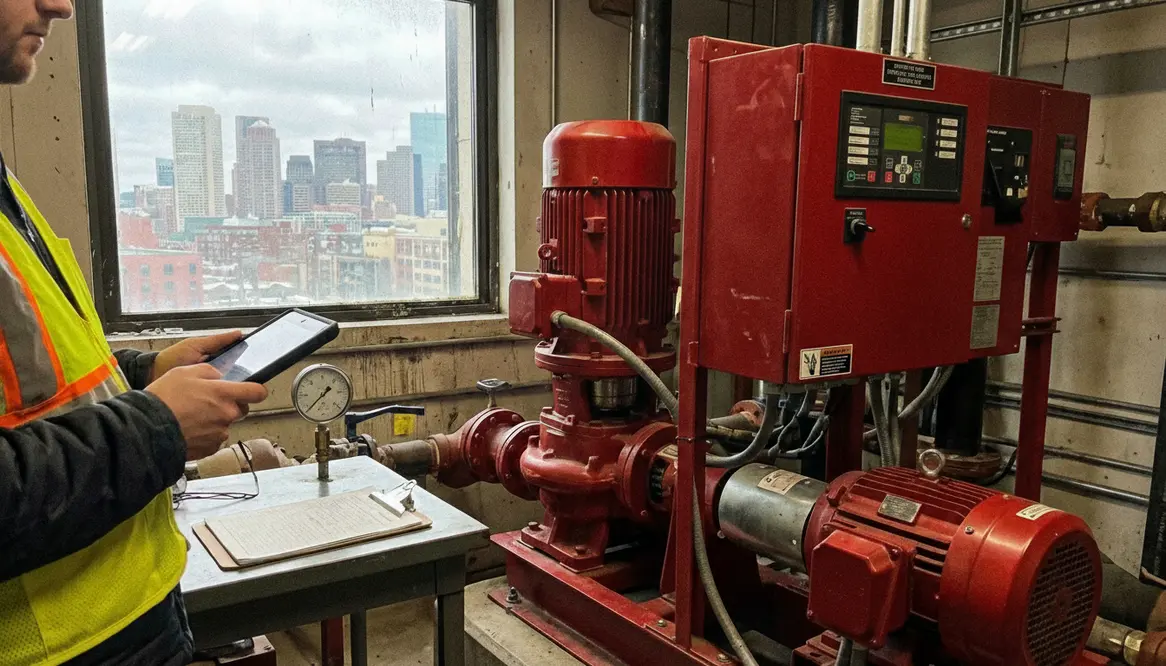
Fire Pump Permit Acceptance Testing Boston Step by Step
When a fire breaks out in a large commercial or industrial building, the fire pump becomes the quiet hero that moves water where it needs to go. However, in Boston, you cannot simply install one and hope for the best. The city requires careful documentation, inspection, and verification before that pump ever earns the right to serve. In this guide, I walk you through the fire pump permit acceptance testing boston step by step process so you understand exactly what happens behind the scenes. And yes, while permits and inspections may sound about as exciting as watching paint dry in a government office, stick with me. Once you see how the process protects major buildings and the people inside them, it becomes a lot more interesting.
Why Fire Pump Permits Matter for Boston’s Large Commercial Buildings
Boston does not take fire protection lightly. With dense neighborhoods, historic structures, and towering commercial properties, the city demands strict oversight for systems that protect life and property. That includes fire pumps.
A fire pump is the engine that pushes water through a sprinkler system when normal pressure is not enough. In high rise towers, industrial campuses, hospitals, and large commercial complexes, this system becomes essential. Without it, sprinklers may sit there like a garden hose with stage fright.
Because of that, the Boston Fire Department requires a permit before installation or modification. The permit process ensures that the design follows NFPA standards and local codes. Additionally, it verifies that the pump can deliver the pressure and flow required for large facilities.
I always tell building owners that permits are not bureaucratic theater. They are quality control. A properly reviewed system prevents expensive retrofits later. More importantly, it ensures the building performs exactly as expected during an emergency.
Furthermore, commercial and industrial properties carry higher occupancy and operational risks. Therefore the city scrutinizes these systems carefully. If you manage a manufacturing facility, research campus, logistics hub, or large office tower, expect the process to involve several checkpoints.
Think of it less like red tape and more like a pre flight checklist for your building’s fire protection system.
Fire Pump Permit Acceptance Testing Boston Step by Step for Commercial Facilities
When clients ask how the process actually unfolds, I explain it as a structured sequence rather than a single inspection. Each step confirms that the pump, piping, electrical supply, and controls operate together as one reliable system.
Here is how the process usually moves forward in Boston.
1. System design and engineering review
First, engineers develop plans that follow NFPA 20 and local Boston fire codes. These plans define pump capacity, driver type, power supply, controllers, and piping configuration.
Then the drawings go to the Boston Fire Department and other reviewing authorities. They examine hydraulic calculations, equipment listings, and installation details. Only after approval can installation begin.
2. Permit application and approval
Next, the contractor submits permit documentation to the city. This includes equipment specifications, approved plans, and project information for the commercial facility.
Once the permit is granted, installation can proceed legally. Skipping this step is not just risky. It can halt a project faster than a Boston winter snowstorm.
3. Fire pump installation
After approval, technicians install the pump assembly, driver, controller, suction piping, discharge piping, and test header. In large buildings, this process often includes coordination with electrical systems, backup power sources, and building management controls.
Every component must match the approved plans. Even small deviations can delay inspections later.
4. Pre test system verification
Before the official acceptance test, contractors perform internal checks. They verify wiring, rotation, pressure readings, alarms, and automatic start functions.
This step helps avoid the awkward moment when inspectors show up and the pump refuses to start. Trust me, that moment feels longer than the final scene of The Lord of the Rings.
5. Official acceptance testing
Finally, the Boston Fire Department witnesses the pump performance test. During this test, technicians run the pump at various flow levels including churn, rated flow, and overload conditions.
Pressure and flow readings confirm the system meets its design requirements. Inspectors also verify alarms, controller functions, and automatic start signals.
Once the system passes, the building earns official approval for operation. At that point you have truly completed the fire pump permit acceptance testing boston step by step process.
Common Mistakes That Delay Fire Pump Acceptance Testing in Boston
Even well planned projects sometimes stumble during inspection. Fortunately, most issues come from avoidable oversights.
The most common problem involves mismatched equipment. For example, a pump installed with a different driver or controller than the approved plans can trigger immediate rejection. Inspectors must see exactly what the approved documents specify.
Another frequent issue involves test header placement. If the discharge header cannot safely release water during testing, inspectors may halt the process until corrections are made.
Additionally, incomplete documentation slows everything down. Inspectors expect accurate test forms, equipment certifications, and installation records. Missing paperwork can delay approval even when the equipment works perfectly.
Then there are electrical problems. Fire pumps require reliable power and proper wiring. If emergency power connections or transfer switches fail to operate correctly, inspectors will not sign off.
However, preparation solves most of these problems. When contractors coordinate with engineers and inspectors early, acceptance testing becomes far smoother and keeps your fire pump permit acceptance testing boston step by step schedule on track.
Key Equipment and Testing Requirements for Major Properties
Large commercial and industrial buildings require more than just a pump sitting in a room. The entire system must operate like a well rehearsed orchestra.
Core Fire Pump Components
- Pump assembly sized for building demand
- Electric motor or diesel driver
- Fire pump controller
- Suction and discharge piping
- Pressure sensing lines
- Test header for performance verification
Acceptance Testing Checks
- Churn pressure verification
- Rated flow performance
- 150 percent overload flow test
- Automatic start signals
- Controller alarm functions
- Power supply reliability
Each element plays a role during inspection. The pump must maintain proper pressure across all testing points. Meanwhile, the controller must respond instantly when system pressure drops.
In large properties such as hospitals, high rise offices, and industrial plants, redundancy and reliability matter even more. That is why inspectors closely watch every detail during acceptance testing.
If you want a deeper look at long term pump reliability and inspections beyond permitting, resources like the guide at Kord Fire Protection offer useful context once your Boston system is up and running.
How Do I Prepare for Fire Pump Permit Acceptance Testing Boston Step by Step?
Preparation begins long before inspectors arrive. In fact, the best projects treat acceptance testing as the final confirmation rather than the first real evaluation.
First, confirm that installation matches the approved design documents. Contractors should double check equipment labels, pump capacity, and electrical connections.
Next, run a full internal test. This includes verifying pump start signals from pressure switches and ensuring alarms communicate with the building fire alarm system.
Then coordinate with the Boston Fire Department to schedule the official test. Inspectors often require advance notice and specific documentation.
Finally, prepare the site. Technicians must safely discharge water during the flow test and monitor readings with calibrated gauges.
When all those pieces come together, the inspection day usually moves quickly. Instead of a stressful exam, it becomes a confirmation that the system works exactly as designed and that your fire pump permit acceptance testing boston step by step checklist was worth the effort.
FAQ About Fire Pump Permits and Acceptance Testing in Boston
Below are answers to common questions that come up while planning fire pump permit acceptance testing boston step by step for commercial and industrial properties.
Keeping Your Boston Property Ready for Inspection
Permits and acceptance testing may seem tedious, yet they serve a critical purpose. When a fire emergency strikes, the pump must perform without hesitation. That reliability begins with careful planning and verified testing.
By following the fire pump permit acceptance testing boston step by step process, commercial and industrial property managers protect both their buildings and the people inside them.
And honestly, when inspectors sign off on a perfectly operating system, it feels a bit like hearing the orchestra hit the final note of a symphony.
Need help navigating Boston fire pump permitting or acceptance testing for your commercial or industrial facility? Our specialists work directly with engineers, contractors, and inspectors to ensure your system passes every requirement smoothly. Reach out today and let us guide your project from design approval to final inspection with confidence.