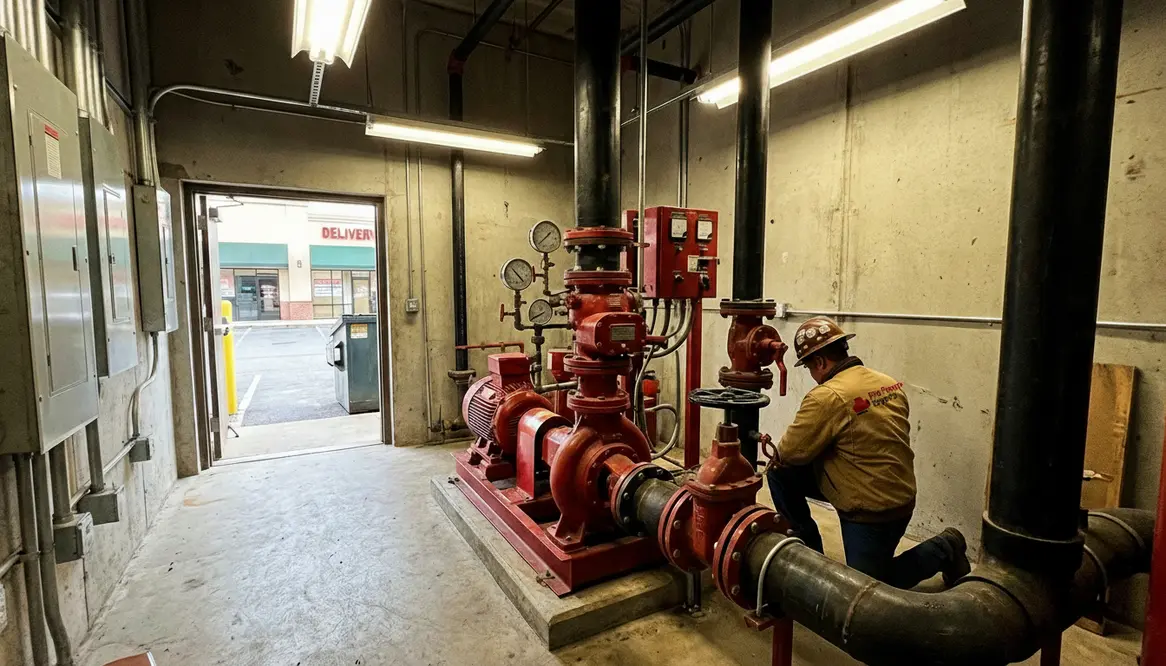
Fire Pump Requirements for Strip Malls Guide
I have walked through more mechanical rooms than I can count, and if there is one thing I always bring with me, it is a sharp eye for code compliance planning. Especially in strip malls, where multiple tenants share walls, risks, and sometimes questionable wiring decisions, fire protection is not something you improvise. Within the first few steps of any inspection, I am already thinking about how fire pump requirements fit into the broader safety picture. And yes, it may not sound glamorous, but trust me, when things go wrong, this is the system everyone wishes they had taken seriously.
How Do Fire Pump Requirements Apply to Strip Malls?
Let me answer this the way most people actually ask it in real life. Do strip malls even need fire pumps? Sometimes yes, sometimes no, but when they do, the requirements are very specific.
Typically, a fire pump becomes necessary when the municipal water supply cannot meet the pressure or flow demands of the sprinkler system. In larger commercial strip centers, especially those with multiple anchor tenants or extended square footage, that threshold gets crossed quickly. Therefore, I always evaluate supply first, because everything else builds from there.
Additionally, local codes and NFPA standards guide the decision. However, interpretation matters. I have seen two similar properties treated very differently simply because one team approached code compliance planning with intention, while the other treated it like an afterthought. Spoiler alert, the first one slept better at night.
Understanding Water Supply and System Demand
Why the water side sets the rules
Now we get into the heart of it. Fire pumps are not installed just for fun or to impress your insurance provider, although they do appreciate it. They exist to bridge the gap between available water supply and required system demand.
In strip malls, demand can vary widely. A row of small retail shops will not behave the same as a space that includes restaurants, storage areas, or light industrial use. Consequently, I always calculate demand based on the most demanding occupancy, not the average.
Friction loss and the long-mall problem
Moreover, friction loss in long piping runs can reduce effective pressure. So even if the city supply looks strong on paper, it might fall short by the time it reaches the far end of the system. That is where a fire pump earns its keep.
Key Components I Always Look For During Planning
Mechanical integrity
I check the pump type, driver, and controller setup. Electric pumps are common, but diesel options come into play when power reliability is questionable. And yes, power outages have a talent for showing up at the worst possible time.
Dedicated fire pump room
The room must meet fire resistance ratings and provide proper access. I have seen rooms double as storage closets. That is a hard no.
Reliable power supply
Fire pumps need a dependable energy source. Therefore, backup power or alternate feeds are often required, especially in larger commercial properties.
Testing and maintenance access
If you cannot test it easily, it will not get tested. And if it does not get tested, it will not perform when needed. It is that simple.
Why Tenant Mix Changes Everything
Here is where things get interesting. Strip malls are like ensemble casts in a movie. You might start with a quiet bookstore, then suddenly add a restaurant with grease laden vapors and higher fire risk. That shift changes system demand and can trigger fire pump requirements.
Therefore, I always advise property owners to think ahead. Future tenants matter just as much as current ones. A solid code compliance planning approach accounts for flexibility, because retrofitting later is about as fun as assembling furniture without instructions.
Additionally, insurance carriers often review tenant composition. A well designed fire pump system can lead to better underwriting outcomes, which translates to real financial benefits.
Installation Standards That Cannot Be Ignored
NFPA 20 and real-world execution
When it comes to installation, NFPA 20 is the guiding document. However, simply owning a copy does not guarantee compliance. I focus on how the system is actually implemented in the field.
For example, suction piping must be configured to avoid air pockets and turbulence. Controllers need proper programming and protection. And clearances around equipment are not optional suggestions. They exist so technicians can safely operate and maintain the system.
Acceptance testing as the final exam
Meanwhile, acceptance testing is where everything comes together. I treat this step like a final exam. If the system cannot perform under test conditions, it will not magically improve during an emergency.
Inspection, Testing, and Long Term Reliability
Discipline after the project is “done”
Once installed, the work is not over. In fact, this is where discipline really matters. Regular inspection and testing ensure the fire pump remains ready.
Weekly churn tests, annual flow tests, and periodic maintenance all play a role. I often remind clients that a fire pump is like a gym membership. Owning it does nothing unless you actually use it.
Records, trends, and code compliance planning over time
Furthermore, documentation is critical. Clear records demonstrate compliance and provide insight into system performance over time. When something starts to drift, those records tell the story before a failure occurs. In well managed strip malls, these records tie directly into ongoing code compliance planning so upgrades are budgeted, not panicked.
FAQ: Fire Pump Requirements for Strip Malls
These are the questions I hear most often from owners, managers, and even contractors working on strip mall projects.
Bringing It All Together
At the end of the day, fire pump requirements in strip malls are about foresight, not reaction. I approach every project with a clear focus on performance, safety, and long term reliability. If you are managing or developing a commercial property, now is the time to take a closer look at your system. Reach out, ask the right questions, and make sure your fire protection strategy is built to handle more than just today. Your future self will thank you.
Whether you are in the early stages of design or staring at an existing mechanical room that feels like a mystery novel, treating fire protection and code compliance planning as a serious, ongoing process will always pay off more than cutting corners. And if you ever want to see what this looks like when it is done right, there are some excellent reference projects and resources available at https://firepumps.org that highlight just how much difference a well planned system can make.