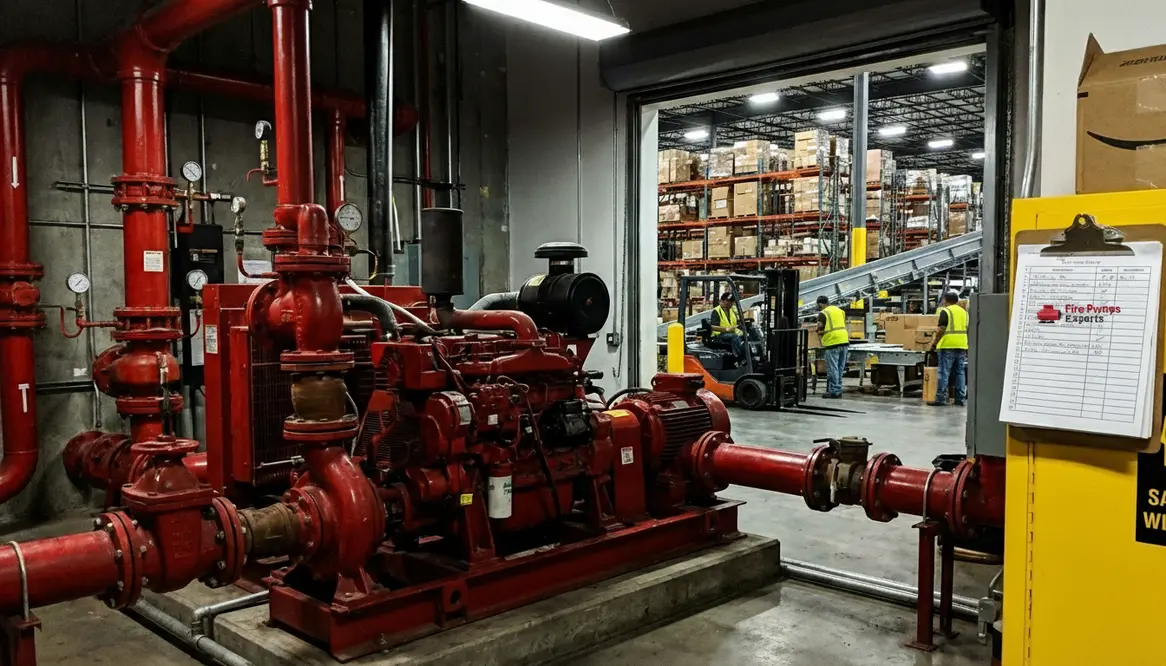
Fire Pumps for Fulfillment Centers Safety Design
A field-level look at how robust fire pump strategies keep fast-growing fulfillment operations safe, scalable, and ready for anything.
I have spent years walking through cavernous fulfillment centers, the kind that feel more like small cities than buildings. And right at the heart of their safety strategy sits a topic that rarely gets applause but always deserves it: Fire protection in rapidly expanding fulfillment sites. When these facilities grow at breakneck speed, their fire pump systems cannot afford to lag behind. In fact, they must lead. Because when thousands of packages move every hour, even a small fire can turn into a blockbuster sequel nobody asked for.
These buildings stretch out and stack up so quickly that the safety infrastructure can feel like it is always chasing the floor plan. The reality is the reverse should be true: Fire protection in rapidly expanding fulfillment sites needs to be designed as the pace car, not the caboose, or the whole operation is running on borrowed time.
Why fire pumps matter in large scale fulfillment operations
Let me put it plainly. A fire pump is not just a piece of equipment. It is the muscle behind your sprinkler system. Without it, water pressure can fall short, especially in massive industrial buildings where distance and height work against you.
In e commerce fulfillment centers, inventory stacks high and aisles stretch long. Therefore, consistent water pressure becomes critical. I have seen facilities rely on municipal supply alone, only to realize too late that it cannot keep up with demand during a fire event. That is like bringing a garden hose to a dragon fight. Brave, but misguided.
The real job of a fire pump
So, I always emphasize installing a properly sized fire pump that aligns with the building’s hazard classification. This ensures water reaches every corner, from ground level conveyor systems to towering storage racks. When you think about Fire protection in rapidly expanding fulfillment sites, think about coverage, consistency, and the confidence that every nozzle will have the pressure it needs when it counts.
How do I size a fire pump for a fulfillment center?
I get this question often, and the answer is both simple and layered. First, I look at the hazard level. Fulfillment centers typically fall under high piled storage categories. That means higher water demand.
Next, I evaluate flow and pressure requirements based on sprinkler design. Then I account for future expansion. Because let us be honest, these facilities rarely stay the same size for long. Planning for growth is not optional. It is survival.
Redundancy and resilience
Finally, I consider redundancy. In mission critical operations, downtime is not tolerated. A backup fire pump or reliable power source can make all the difference. Think of it as having a stunt double ready when things get dangerous.
This is where smart planning for Fire protection in rapidly expanding fulfillment sites pays off. You are not just sizing for the building you see today; you are quietly preparing for the taller racks, denser storage, and longer conveyor lines that will arrive tomorrow.
Fire protection in rapidly expanding fulfillment sites and system integration
Expansion changes everything. New storage layouts, higher racks, faster automation. Consequently, fire pump systems must integrate seamlessly with evolving sprinkler designs and detection systems.
I always recommend tying the fire pump into a centralized monitoring system. This allows real time performance tracking and quick alerts if something goes wrong. Additionally, integrating with backup generators ensures the pump runs even during power loss.
Automation meets mechanical reality
And here is where things get interesting. Automation in fulfillment centers is increasing, but fire protection still depends on reliable mechanical systems. It is a bit like pairing cutting edge robotics with a classic, dependable engine. Not flashy, but absolutely essential.
Key components I always prioritize
Primary focus
- Fire pump capacity aligned with hazard level
- Dedicated water supply with sufficient reserve
- Reliable power source or diesel backup
- Proper controller for automatic operation
Operational support
- Routine testing and maintenance schedule
- Remote monitoring capabilities
- Clear access for inspection and repairs
- Compliance with NFPA standards
Each component plays a role, and when one falls short, the entire system feels it. I have seen facilities invest heavily in automation while overlooking pump maintenance. That is like buying a sports car and never changing the oil. It will catch up with you.
Design challenges unique to fulfillment centers
Fulfillment centers are not your typical commercial buildings. They evolve quickly, often expanding in phases. As a result, fire pump systems must adapt without losing performance.
Rising demand and layout complexity
One major challenge is fluctuating demand. As storage density increases, water requirements rise. Therefore, I often design systems with scalability in mind. This might include space for additional pumps or upgrades to existing ones.
Another challenge involves layout complexity. Conveyor belts, robotic systems, and mezzanines can obstruct water flow patterns. So, coordination between fire protection engineers and facility designers becomes essential.
Supply limitations and on-site solutions
And let us not forget about water supply limitations. In some industrial zones, municipal systems simply cannot meet demand. In those cases, on site storage tanks paired with fire pumps become the backbone of protection.
When you step back, Fire protection in rapidly expanding fulfillment sites is really about staying ahead of the curve: anticipating the extra pallet positions, new mezzanine levels, and additional square footage before they quietly outgrow yesterday’s fire pump strategy.
Maintenance is where reliability is earned
I always say this: installing a fire pump is only half the job. Keeping it ready is the real work. Regular testing ensures the pump performs when needed. Weekly churn tests, annual flow tests, and routine inspections are not just recommendations. They are necessities.
Moreover, trained personnel should understand how the system operates. Because when an alarm sounds, hesitation is the enemy. A well maintained pump responds instantly, like a seasoned actor hitting their mark without missing a beat.
Reliability, operations, and peace of mind
In large fulfillment environments, even a minor failure can disrupt operations and safety. Therefore, consistent maintenance is not just about compliance. It is about confidence.
For teams serious about Fire protection in rapidly expanding fulfillment sites, the calendar of tests and inspections is not a chore list; it is a reliability script that keeps both people and inventory out of the worst kind of headlines.
FAQ: Fire pump requirements for fulfillment centers
The most common questions tend to circle around pump type, frequency of testing, and how much future growth a single pump can realistically support.
Closing thoughts and next steps
When I look at modern fulfillment centers, I see speed, scale, and constant change. But beneath all that motion, I also see the quiet strength of well designed fire protection systems. If you are planning or upgrading a facility, now is the time to ensure your fire pump setup can keep pace. Reach out to experienced professionals who understand large scale industrial environments, and build a system that stands ready when it matters most.
If you want to learn more about practical system design, case studies, and best practices tailored to large logistics operations, you can explore resources at https://firepumps.org and similar technical platforms. The more informed your team is, the easier it becomes to justify smart upgrades long before a real emergency puts your current system to the test.