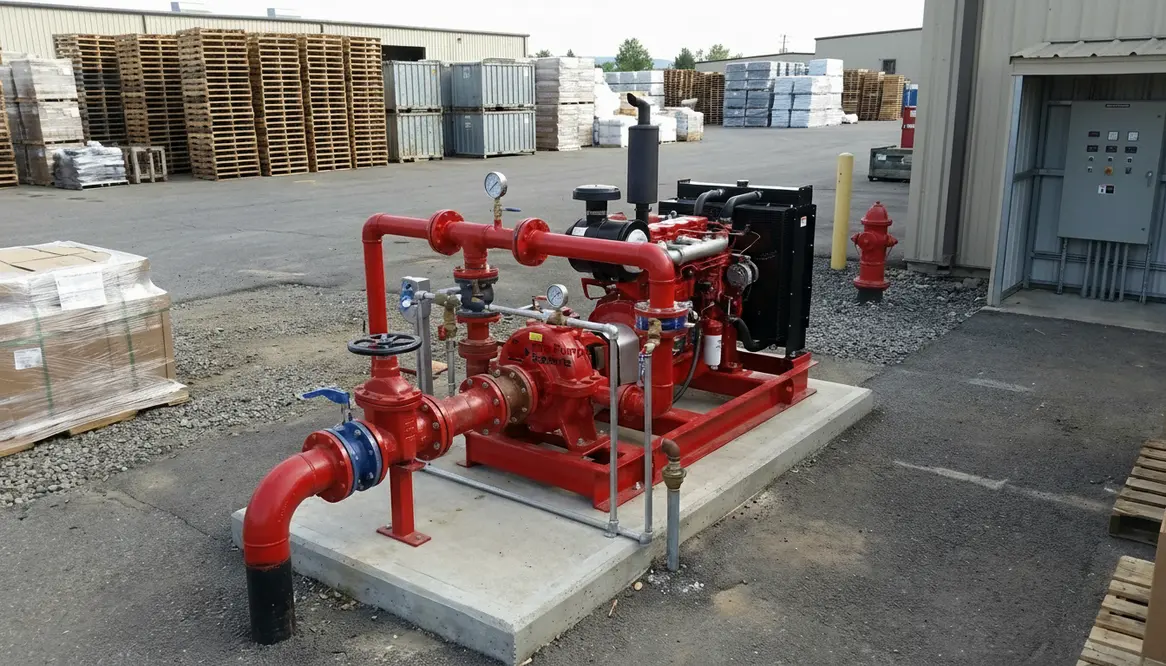
Fire Pump Planning for Outdoor Storage Yards
I have spent years around pumps, pipes, and pressure gauges, and if there is one thing I have learned, it is this: fire does not negotiate. That is exactly why Fire pump planning for outdoor storage and structures matters so much for commercial storage yards. These spaces may look open and harmless, but they often hold high value materials, fuel sources, and tightly packed assets that can turn a small spark into a blockbuster sequel no one asked for. So today, I am going to walk you through what really matters, in a way that is clear, practical, and maybe just a little entertaining.
Fire pump planning for outdoor storage and structures begins with risk awareness
Before I even think about pump size or pipe layout, I look at risk. Not all storage yards are created equal. Some hold steel beams that barely blink at heat, while others store pallets, plastics, or fuel that burn like they are auditioning for an action movie.
Because of that, I always assess:
- Material type and how fast it burns
- Stack height and spacing between stored items
- Access paths for fire crews and equipment
- Exposure risks to nearby buildings
Then, I connect those risks directly to fire pump system demands. As a result, the pump is not just a piece of equipment. It becomes a calculated response to a very real threat.
How do I size a fire pump for a commercial storage yard?
Let me answer this straight away, because this is where most people get stuck. I size the fire pump based on required flow and pressure, which come from hazard classification and layout.
For outdoor storage, I typically consider:
- Required gallons per minute based on hazard level
- Pressure needed to reach the farthest hydrant or monitor
- Simultaneous demand from multiple discharge points
However, here is where experience kicks in. I do not just meet minimums. I build in a margin. Because in real life, systems age, valves stick, and someone always parks a truck where it should not be.
And yes, if you are wondering, undersizing a pump is like bringing a garden hose to a dragon fight. It is technically water, but not very helpful.
Layout decisions that make or break performance
Now we get into the part that separates a decent system from one that actually works under pressure. Layout is everything. I focus on flow paths, accessibility, and redundancy.
What I prioritize
- Clear hydrant spacing across the yard
- Looped piping for consistent pressure
- Strategic placement of monitors
- Easy access for fire department hookups
What I avoid
- Dead end piping that chokes flow
- Hidden or blocked hydrants
- Overly complex routing
- Single point failures
Because when a fire starts, nobody has time to solve a maze. The system should feel obvious, almost intuitive, like a well designed airport where you somehow find your gate without thinking.
Water supply reliability is not optional
Let me be blunt. A fire pump without reliable water is just an expensive paperweight. So I always evaluate the water source with a healthy dose of skepticism.
First, I confirm flow availability from municipal supply or onsite storage. Then, I look at duration. It is not enough to hit hard for five minutes. The system needs to sustain output long enough for suppression or fire department control.
Additionally, I often recommend backup sources. Tanks, secondary feeds, or even diesel driven pumps can make the difference between control and catastrophe.
Think of it this way. If your main supply fails during a fire, that is not bad luck. That is bad planning.
Fire pump planning for outdoor storage and structures must meet code and real world demands
Codes matter. I follow NFPA standards closely, especially those related to fire pumps and water based systems. However, I never treat code as the finish line. It is the starting point.
Commercial and industrial properties often face conditions that go beyond textbook scenarios. Wind exposure, large open footprints, and delayed response times all push systems harder than expected.
So I bridge the gap between compliance and reality by:
- Verifying system performance under peak demand
- Accounting for environmental factors
- Coordinating with fire departments early
Because while codes set the rules, real fires tend to improvise.
Maintenance and testing keep the system alive
I have seen beautifully designed systems fail simply because no one tested them. A fire pump is not a set it and forget it device. It needs regular attention.
I always stress:
- Weekly or monthly churn tests
- Annual full flow testing
- Inspection of valves and controllers
And yes, I know maintenance is not exciting. It does not come with flashing lights or dramatic music. But when a system works flawlessly during an emergency, that quiet reliability becomes the real hero of the story.
Why Fire pump planning for outdoor storage and structures shapes real outcomes
In commercial and industrial yards, Fire pump planning for outdoor storage and structures is not just an engineering checkbox. It influences insurance, business continuity, and even how confidently you can expand operations. A well planned system can be the difference between a brief incident report and a multi week shutdown.
Done properly, Fire pump planning for outdoor storage and structures connects site layout, fuel loads, water supplies, and firefighting tactics into one coherent strategy. That strategy needs to work in the dark, in bad weather, and when everyone on site is having the worst day of their year.
FAQ: Fire pump requirements for commercial storage yards
There are a few questions that come up consistently when planning protection for outdoor storage yards, especially when Fire pump planning for outdoor storage and structures is on the table. Here are clear, straightforward answers to the ones I hear most often.
Conclusion
If you are responsible for a commercial or industrial storage yard, now is the time to take fire protection seriously. I design systems that do more than meet code. They protect assets, operations, and lives. Reach out today and let us build a fire pump solution that performs when it matters most. Because when the unexpected happens, preparation is not just smart. It is everything.