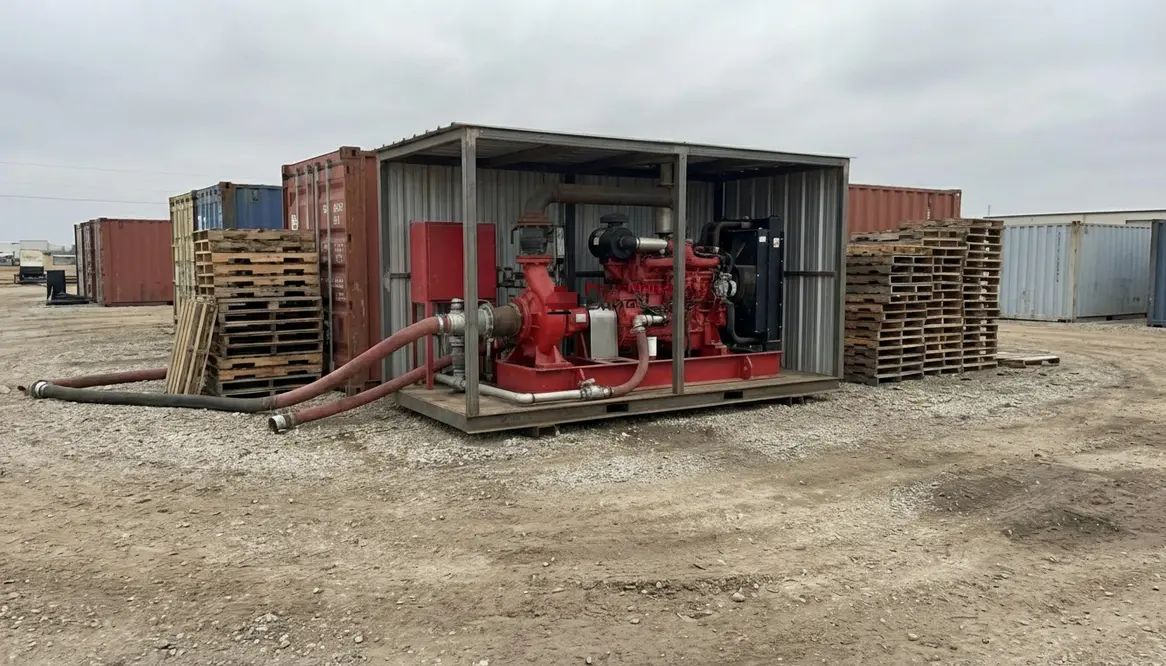
Fire Pump Planning for Outdoor Storage Yards
I have spent enough time around commercial storage yards to know one thing for certain. When fire shows up, it does not RSVP. It kicks the door in like an uninvited guest in an action movie. That is why Fire pump planning for outdoor storage and structures is not just a line item on a checklist. It is the quiet backbone of your entire fire protection strategy. In the next few minutes, I will walk you through what truly matters, with a steady hand and maybe a raised eyebrow or two.
What fire pump requirements apply to commercial storage yards?
Let me answer this plainly. Commercial storage yards typically fall under NFPA standards, especially NFPA 20 for fire pumps and NFPA 13 for sprinkler systems where applicable. However, outdoor environments add a twist. Wind, debris, and wide spacing between assets can complicate water delivery.
Because of this, I always focus on three essentials. First, flow rate must match the hazard classification of stored materials. Second, pressure must overcome long pipe runs and elevation changes. Third, reliability must be absolute. If your pump hesitates, you have already lost time you cannot afford.
Additionally, local codes often demand redundancy. Think of it as having a backup quarterback who actually knows the playbook. Diesel driven pumps, for instance, remain popular in large yards because they operate even when power fails.
Fire pump planning for outdoor storage and structures: key design factors
Now we get into the heart of it. Designing for outdoor storage is not the same as protecting a tidy warehouse. The environment is less forgiving and far more unpredictable.
I always begin with layout. Wide open yards may look simple, but they stretch your water supply thin. Therefore, I position fire pumps to minimize friction loss and maximize reach. Then I consider exposure hazards. Stacked materials, fuel sources, and even nearby properties all influence how aggressive the system must be.
Weather also plays its part. Freezing temperatures can cripple an unprotected system. So I plan for heated enclosures or insulation where needed. On the flip side, in hotter regions, I ensure equipment ventilation is not an afterthought.
And yes, maintenance access matters. If your team cannot easily inspect the pump, it will eventually become that gym membership we all swear we will use.
Choosing the right pump type without overcomplicating it
I like to keep this simple. There are three common contenders, and each has its place.
Electric fire pumps
- Reliable when power supply is stable
- Lower emissions and quieter operation
- Best for facilities with strong electrical infrastructure
Diesel fire pumps
- Operate during power outages
- Ideal for remote or high risk yards
- Require fuel storage and regular testing
Then there are jockey pumps, the unsung heroes. They maintain system pressure and prevent the main pump from cycling unnecessarily. Not glamorous, but neither is insurance, and we all like having that when things go sideways.
How do I size a fire pump for a large outdoor yard?
Here is where precision matters. I start with hazard classification. Are we dealing with idle pallets or flammable liquids that would make a Hollywood explosion jealous? The answer drives required flow rates.
Next, I calculate total demand. That includes hydrants, monitors, and any sprinkler systems. Then I account for friction loss across piping. Long distances can quietly steal pressure, like a slow leak in your morning coffee cup.
After that, I add a safety margin. Not a wild guess, but a calculated buffer to ensure performance under worst case conditions. Because in fire protection, “almost enough” is the same as not enough.
Common mistakes I see in commercial fire pump setups
I have seen enough installations to spot patterns. Some are avoidable with a bit of foresight.
- Undersized pumps that cannot meet peak demand
- Poor placement leading to excessive pressure loss
- Ignoring backup power or redundancy
- Lack of routine testing and inspection
- Overlooking environmental protection for equipment
However, the biggest mistake is treating fire pumps as an afterthought. They should be part of the early planning process, not something squeezed in at the end like an extra suitcase at the airport.
Fire pump planning for outdoor storage and structures: long term performance
A system is only as good as its upkeep. I always emphasize routine testing. Weekly churn tests, annual flow tests, and consistent inspections are non negotiable. This is not busywork. It is your early warning system.
Moreover, I recommend monitoring technology where possible. Remote alerts and performance tracking can catch issues before they become failures. It is a bit like having a smartwatch for your fire system, minus the step counting.
Finally, documentation matters. Clear records ensure compliance and help technicians diagnose problems quickly. When seconds count, clarity wins.
Applying Fire pump planning for outdoor storage and structures in real yards
When Fire pump planning for outdoor storage and structures moves from paper to the field, details separate a solid design from an expensive decoration. Yard access routes, hydrant placement, and how trucks actually maneuver at 3 a.m. in the rain all influence where the fire pump sits and how it performs.
For high value or high hazard storage, I often see success with zoned approaches: one main fire pump sized for overall yard demand and strategic sectional valves to keep pressure where it matters most. When Fire pump planning for outdoor storage and structures is approached this way, operators can isolate problem areas without starving the entire site of water.
Connecting Fire pump planning for outdoor storage and structures with standards and support
Fire pump planning for outdoor storage and structures does not happen in a vacuum. It lives at the intersection of NFPA standards, insurer expectations, and local authority requirements. Using references from trusted resources such as https://firepumps.org alongside NFPA 20 and NFPA 13 can keep designs technically sound and defensible during review.
FAQ
Conclusion
When I look at a commercial storage yard, I do not just see equipment and inventory. I see risk waiting for a weak link. The right fire pump system removes that weakness and replaces it with confidence. If you are planning or upgrading, now is the time to act. Work with experts who understand large scale protection and design systems that hold steady under pressure. Because when the unexpected arrives, preparation is what stands between control and chaos.