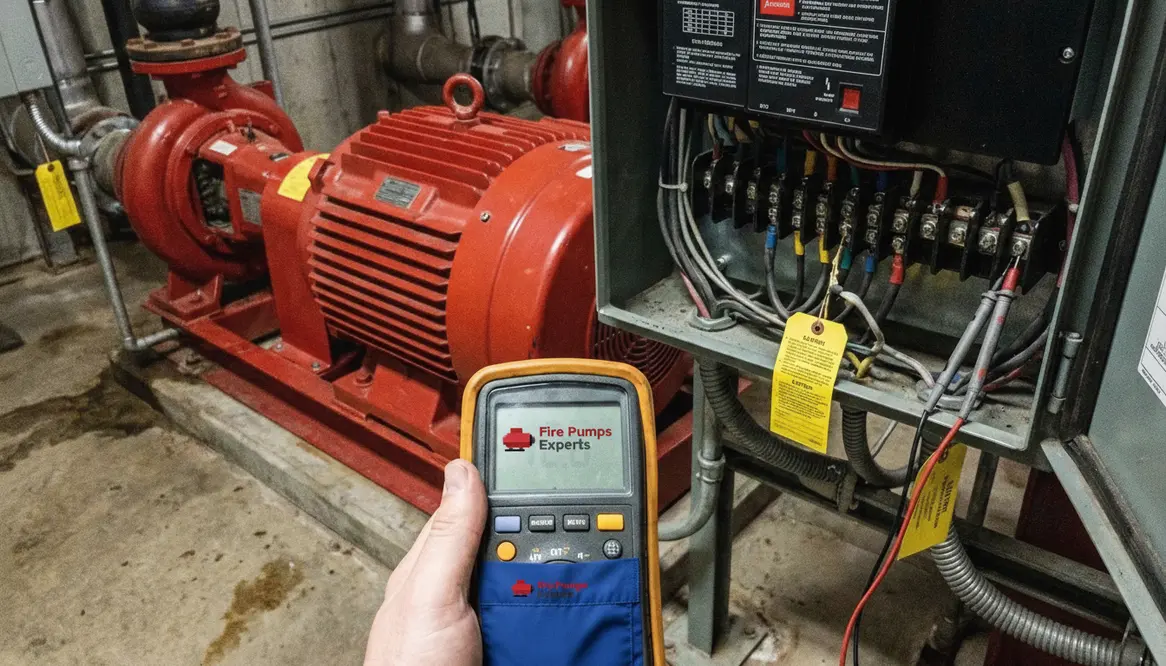
Fire Pump Voltage Drop Startup Matters
Fire Pump Voltage Drop: Why It Matters During Starting
When a fire pump starts, I want it to wake up fast, not act like it just rolled out of bed on a Monday. That is why fire pump voltage drop matters so much during the first few seconds of operation. If the voltage falls too far, the motor can struggle, the pump can start slow, or worse, fail to deliver the pressure a commercial or industrial facility needs when lives and property are on the line. In major buildings, every second counts, and electrical weakness has a way of showing up at the worst possible time.
So, in this article, I will walk through what voltage drop means, why it happens, and how I look at it when a fire pump must perform without drama. Because in fire protection, “close enough” is not a winning strategy. Not even a little.
What happens during fire pump startup?
When the fire pump starts, the motor draws a very large inrush current. This rush is normal. However, that current can pull the system voltage down if the electrical supply cannot support the demand. As a result, the motor may take longer to reach full speed, and the pump may not build pressure as quickly as expected.
I think of startup like a heavy truck trying to merge onto a busy freeway. If the road is clear, it moves. If the power source is weak, it crawls. For a fire pump, crawling is not acceptable. The motor needs steady voltage so it can reach speed, move water, and support the system at once.
During this moment, a small drop is expected. Still, if the drop gets too deep, the motor can overheat, the controller may react, and the whole system can lose performance. Therefore, startup voltage stability sits at the center of fire pump reliability.
Why voltage drop matters for commercial facilities
Commercial and industrial facilities often have long electrical runs, large loads, and busy power systems. Because of that, voltage drop can sneak in from cable length, undersized conductors, weak utility service, or poor connection points. In a big property, that can become a real problem fast.
Here is the core issue: the fire pump must deliver water under pressure right away. If the starting voltage falls too low, the pump motor may take too long to come up to speed. Then the system may not meet the needed fire protection goal in time. That delay is small on a clock, but huge in real life.
Also, the problem does not stay polite. Low voltage during startup can lead to extra heat, added stress on the motor, and wear on electrical parts. Over time, that means more service calls, more risk, and more cost. Nobody wants a fire pump system with the energy habits of a phone on 3 percent battery.
And when you are chasing performance, fire pump voltage drop is rarely a “set it and forget it” situation. The electrical environment, aging components, and real-world loading all influence what happens the moment the pump starts.
How I check for fire pump voltage drop
When I review a system, I look at the source, the conductors, the controller, and the load. First, I check whether the supply can handle the motor starting current. Then I look at the wire size and run length, because long runs often create more resistance. Next, I inspect connections, since loose or tired terminations can create extra loss.
After that, I compare the expected voltage at startup with the actual result. If the numbers show a big dip, I know the system needs attention. For fire pumps in large buildings, I also review how other loads interact with the pump. Sometimes the issue hides in the background, like a side character stealing the scene in a superhero movie.
That is the part that matters most: fire pump voltage drop has to be checked with the real starting conditions in mind, not just a friendly label on an electrical one-liner.
Use a two part view of the problem
To keep things clear, I split the issue into two parts:
Electrical supply side
On the supply side, I look at service strength, transformer size, and feeder length. On the equipment side, I check motor condition, controller settings, and the pump’s starting method. Together, these points show me whether the system can start cleanly or stumble under pressure.
Equipment and load side
This is where fire pump voltage drop can become visible in performance. Motor health, controller settings, and how the pump is starting all impact how quickly full speed and pressure are reached.
How to reduce startup voltage loss
There are several ways I help reduce voltage drop during startup. First, I make sure conductors are sized correctly for the load and the distance. Second, I keep wire runs as short as practical. Third, I verify that the controller and motor match the design needs. Finally, I confirm that the power source has enough strength for the fire pump and the rest of the facility.
In some cases, the fix may include better maintenance, tighter terminations, or a review of the electrical design. In other cases, the system may need a larger upgrade. Either way, I do not guess. I check the data, then I act. That approach saves time and keeps the pump ready for the moment it matters.
When the goal is reliable starting, fire pump voltage drop deserves attention before it becomes a real-world problem, not after the alarm has already done its job.
Why code and design guidance matter
Fire pump systems do not live in a vacuum. They must follow electrical and fire protection rules that support dependable operation. That is why I pay close attention to design guidance and electrical requirements for commercial buildings. If you want a deeper look at that side of the topic, I recommend reading fire pump electrical requirements for commercial buildings. It gives useful background that supports better planning and safer performance.
Also, when a facility needs a trusted resource for system support, I point people to los angeles fire pump services for commercial and industrial facilities. That kind of focus matters because major properties need solutions built for real demand, not generic advice from a sleepy brochure.
Design choices affect everything from cable resistance to starting performance, and that is exactly why fire pump voltage drop belongs in the planning conversation from day one.
FAQ
Conclusion
When I look at fire pump voltage drop, I see more than an electrical issue. I see a starting point for safety, reliability, and real world performance in commercial and industrial facilities. If you want your fire pump to start strong and stay ready, do not leave voltage loss to chance. Review the system, check the numbers, and fix weak points before they become expensive drama. If you manage a major property, now is the time to act and make sure your fire pump starts like it means it.
And when the first seconds count, that is where fire pump voltage drop earns its spot on the reliability checklist.