Fire Pump Power Failure Next Steps and Planning
Fire Pump Power Failure: What Should Happen Next?
When fire pump power failure hits, time starts moving
When fire pump power failure hits a commercial or industrial property, the clock starts moving fast. I do not say that to scare you; I say it because a fire pump sits there like the quiet hero in a disaster movie, until the lights go out and everyone suddenly cares. In a major building, a missed step can turn a manageable event into a costly mess. So, if the power drops, I want the response to be clear, calm, and immediate. That is where a solid plan saves the day, and maybe a few headaches too.
Step 1: What I check first after the power drops
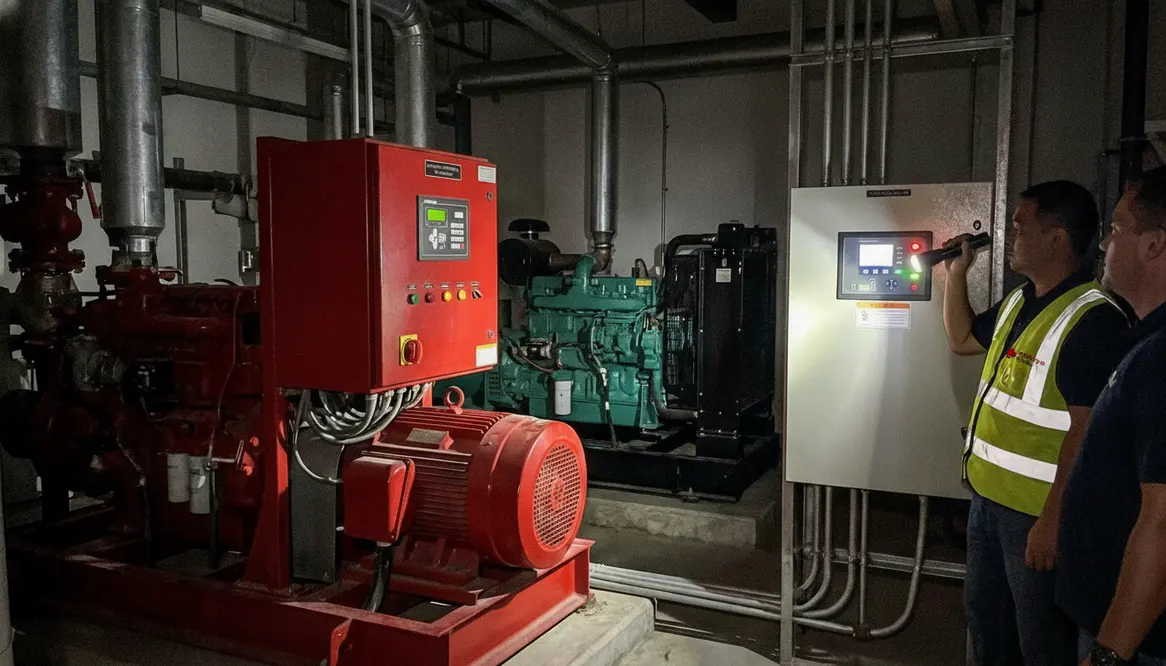
I start with the basics, because the basics usually catch the problem before it grows legs. First, I confirm whether the outage affects the whole site or only the fire pump circuit. Then I check the fire pump controller, the transfer switch, and any backup source. If the system has a diesel backup or generator, I want to know whether it started on time and whether it is carrying the load.
After that, I look for alarm signals, trouble lights, and any abnormal sound from the pump room. A fire pump should not sound like it is auditioning for a horror film. If it does, I treat that as a serious clue. Also, I notify the right people right away, including the facility team and the fire protection service provider. Speed matters here, because delayed action can affect life safety and code compliance.
Step 2: How I keep the fire pump system running
If the main power fails, the backup system must take over without drama. That means I expect the automatic transfer equipment to work fast and cleanly. In a well maintained setup, the fire pump should receive power from the alternate source with little delay. However, I never assume the system is fine just because a light came back on. I verify the transfer, the pump operation, and the return to normal service later.
Here is where planning pays off. I always recommend regular testing, clear labels, and a written response plan for emergency power loss. If the building supports large tenant loads, critical operations, or high value inventory, the fire pump backup must fit the site risk. I also make sure the team knows who has authority to start shutdown checks, who calls the contractor, and who logs the event. A good plan keeps people from improvising. And improvising around life safety equipment is about as smart as using a candle to inspect a gas leak.
Step 3: What I inspect after the system stabilizes
Once the immediate risk passes, I inspect the site with care. I look for failed breakers, loose wiring, controller faults, and signs of wear on the transfer gear. I also review any event log, because the log often tells the truth even when people are too busy to notice it. If the fire pump powered through the event on backup, I still want a full check before I call it done. A system that survived one outage may still have a weak point waiting for round two.
Power source
Did the utility fail, or did the issue come from the switchgear, controller, or backup source?
Pump performance
Did the pump start, hold pressure, and run the way it should?
Alarms and logs
What did the controller record, and what did the site staff see or hear?
Room conditions
Did heat, moisture, vibration, or blocked access add to the problem?
Why documentation and code checks matter
This part may not sound exciting, but it matters more than a dry stack of paperwork in a rainstorm. I document the outage, the response, the test results, and the repair steps. That record helps with maintenance tracking, insurance, and code reviews. It also supports the next person who walks into the room and needs to know what happened last Tuesday at 2:14 p.m.
For facilities that need a broader emergency power strategy, I also point to commercial emergency power systems requirements design maintenance as a useful reference. It helps connect the fire pump response to the larger backup power plan for commercial buildings. In other words, the pump does not live on an island. It works best when the whole emergency system works together like a well timed ensemble cast, not a group chat gone sideways.
What commercial facilities should do next
I focus on action, not panic. For commercial and industrial properties, the next step after a power loss should be a full service check, not a shrug and a coffee refill. I want the owner or manager to confirm the cause, restore reliable power, inspect the fire pump controls, and schedule corrective work fast. If the system depends on a generator, I check load transfer and runtime. If it depends on a secondary source, I confirm it can handle the demand under real conditions.
For fire pump support in major properties, I also recommend reviewing los angeles fire pump services when the site needs expert evaluation, repair, or maintenance. That matters most when the building serves many people or protects valuable operations. After all, life safety systems should not run on hope and good vibes alone.
FAQ
Conclusion
When a fire pump power failure happens, I do not wait and hope for the best. I check the source, verify backup operation, inspect the system, and document every step. That is the calm path, the smart path, and the one that protects major commercial and industrial buildings when pressure is on. If your site needs a stronger plan, I suggest acting now, before the next outage writes its own script. A little preparation today can save a very expensive surprise tomorrow.