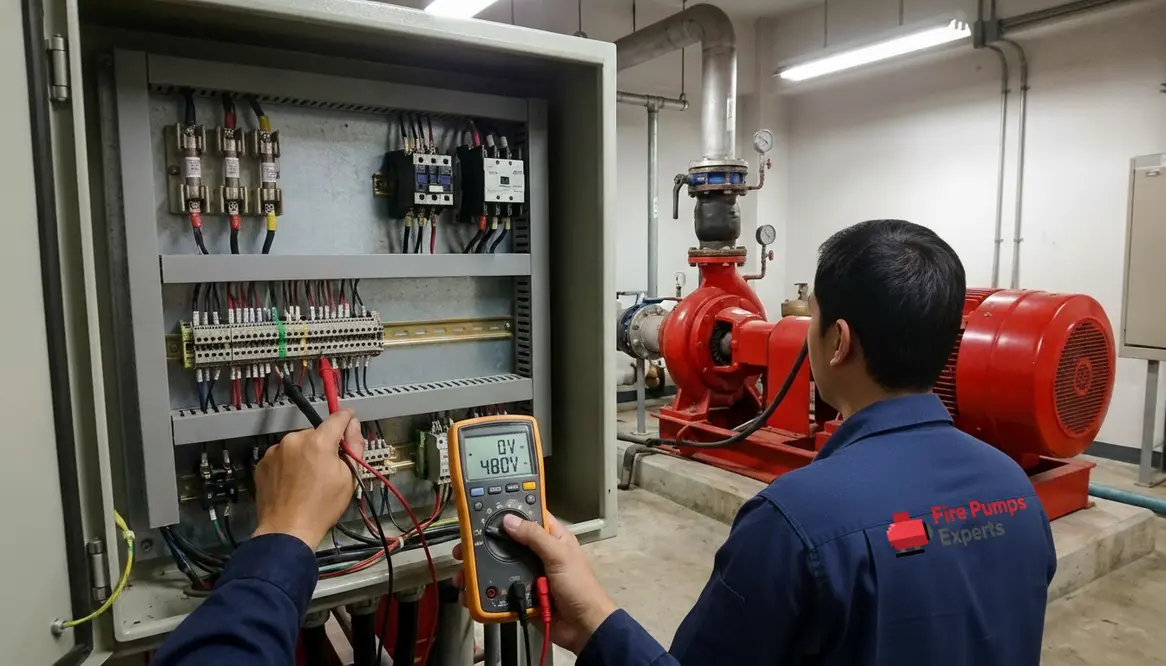
Fire Pump Phase Loss: Signs and Detection
When I talk about fire pump phase loss, I’m talking about one of those electrical problems that looks small on paper and turns into a very bad day in real life. In a commercial or industrial facility, a fire pump has one job: move water fast when the system needs it. If one phase drops out, the motor can lose power, overheat, or fail to start at all. And yes, that is about as welcome as a jazz band in a library. The good news is that I can spot the warning signs early and keep the system ready for the moment it matters most.
For major properties, warehouses, towers, plants, and other large buildings, this issue deserves real attention. So let me break down what phase loss does, how I detect it, and why proper electrical design matters so much.
What phase loss does to a fire pump motor
In a three phase system, the motor needs all three phases to run the way it should. When one phase goes missing, the motor does not just politely pause and ask for help. Instead, it tries to keep working with the power it still has. As a result, current rises in the remaining phases, heat builds fast, and torque drops. That can cause weak performance, noisy operation, or complete motor damage.
Here is the part that matters most for commercial and industrial facilities: a fire pump may still spin, but it may not deliver the pressure and flow the building needs. That means the system can look alive while doing a pretty poor impression of a working fire pump. In other words, the danger hides in plain sight.
How I detect fire pump phase loss early
I look for both electrical and mechanical clues. First, I check voltage on all three phases. If one phase reads low or missing, that is the obvious red flag. However, the problem can also show up as imbalance, which means the phases are still present but not equal. That uneven load often points to a failing connection, damaged fuse, loose lug, or contactor issue.
Next, I listen and watch. A motor under phase loss may hum, run hot, trip a breaker, or start more slowly than normal. Therefore, I also use phase monitoring devices, overload protection, and alarms tied into the fire pump controller. These tools help me catch trouble before the motor turns into expensive smoke, and nobody wants a fire pump auditioning for a disaster movie.
Why detection depends on good design
Detection works best when the system is built with the right controls and wiring from the start. That is why I always pay close attention to electrical layout, controller settings, and protective devices. For a helpful overview of related system rules, I recommend this internal resource on fire pump electrical requirements for commercial buildings. It connects the dots between code, power supply, and system reliability.
Also, the fire pump must have stable power and proper protection that does not trip too easily. After all, a fire pump should not quit because a tiny voltage swing entered the chat like it owns the place. So I focus on coordination, proper phase monitoring, and regular testing to keep the system dependable.
Fire pump phase loss signs and checks
When I inspect a system, I use a simple two column view to keep the problem clear.
Common signs
- Motor hums but does not perform well
- Breaker trips without a clear load issue
- Uneven motor heat
- Burning smell near the controller or motor
- Pump starts slowly or fails to build pressure
What I check
- Phase voltage at the supply and controller
- Fuse condition and breaker status
- Loose wire terminations
- Contactor wear and contact damage
- Motor current on all phases
These checks help me tell the difference between a simple wiring issue and a true fire pump phase loss event. And that difference matters because a small fault can grow fast if I ignore it.
Why this matters for commercial and industrial buildings
Large properties depend on fire pumps because the water demand can be high and the risk can be serious. If phase loss hits during an emergency, the pump may fail when the building needs it most. Therefore, I treat this as more than a maintenance issue. I treat it as a life safety issue and a business continuity issue at the same time.
For facilities in dense markets, I also consider local service support and response speed. That is why I keep a close eye on resources like los angeles fire pump service when planning maintenance and repair support. Quick action can save equipment, limit downtime, and protect the people who rely on the system.
FAQ
Quick questions, clear answers, and enough detail to keep your fire pump phase loss detection grounded in reality.
Conclusion
If I want a fire pump to work when it counts, I do not wait for a failure to teach the lesson. I test the system, watch for imbalance, and fix weak points before they grow teeth. So if your commercial or industrial facility depends on steady fire protection, take fire pump phase loss seriously. Review the electrical setup, schedule a detailed inspection, and make sure your fire pump is ready to perform with confidence, not excuses.
Because when detection is handled early, the system stays dependable, the motor stays healthy, and your response time stays exactly where it should be.