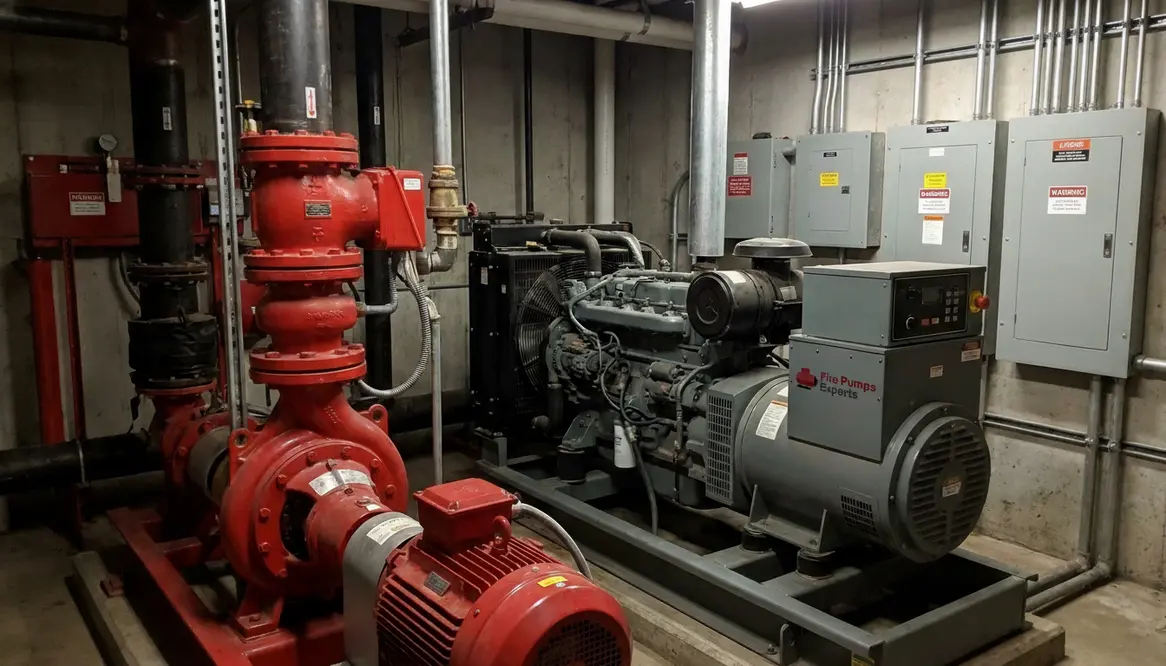
Generator Backup for Fire Pumps: Emergency Power
When I talk about generator backup for fire pump systems, I am talking about the quiet muscle that steps in when the grid takes a nap. In a commercial or industrial building, that backup power can keep a fire pump ready when smoke, heat, or chaos starts testing the place. And yes, it is one of those topics that sounds dull until the day it is the only thing standing between a close call and a very bad headline. For major properties, the job is simple in theory and serious in practice: keep water moving when normal power fails.
That is why I look at emergency power as part of the fire protection plan, not as an afterthought. I also think the best way to understand it is to walk through how it starts, how it stays ready, and why it matters for commercial and industrial facilities. So let us get into it.
How Emergency Power Starts When Utility Power Fails
When utility power drops, the emergency system must react fast. A fire pump cannot sit around wondering what happened. It needs power right away, because pressure loss can hit the fire protection system hard. In many setups, the generator senses the outage, starts automatically, and sends power to the fire pump transfer equipment. Then the system keeps the pump ready for action.
This handoff matters because fire pumps often support sprinkler systems, standpipes, or both. If the building loses power and the pump cannot run, the whole water supply plan can suffer. So I treat this step as the heart of generator backup for fire pump reliability. The system must start cleanly, switch correctly, and keep working under stress. No drama. No hesitation. Just business.
What a Fire Pump Generator Setup Includes
A solid backup system is more than a generator sitting in a corner looking confident. It includes the generator itself, transfer controls, fuel supply, wiring, protection devices, and routine testing. Each part plays a role.
Key parts I check
Generator unit: Supplies emergency power for the fire pump.
Transfer controls: Move power from utility to backup mode.
Fuel source: Keeps the generator running during an outage.
Testing plan: Confirms the system works before anyone needs it for real.
In commercial and industrial buildings, these parts must work as one. If one piece fails, the whole setup can wobble like a folding chair at a company picnic. That is why design and maintenance both matter. I also recommend reviewing commercial emergency power system requirements, design, and maintenance for a deeper look at the larger backup power picture.
Why Commercial and Industrial Facilities Need More Than a Basic Backup Plan
Major buildings face bigger risks, higher loads, and more complex life safety systems. A generator for a fire pump must match that reality. It cannot just look strong on paper. It has to support the actual demand during an emergency.
Here is where I usually split the topic into two parts for clarity:
| Power side | Fire protection side |
| Generator size, fuel, transfer controls, voltage, and run time | Pump pressure, water demand, sprinkler support, and system response |
That balance is the whole game. If the generator is undersized, the pump may not perform as needed. If the transfer process is slow, pressure can dip at the worst moment. And in a large facility, those moments matter. A lot. This is not the time for the system to “find itself.”
Generator Backup for Fire Pump: Testing, Maintenance, and Readiness
I always say emergency power is only as good as its last test. A generator can sit quietly for months, then fail when it is finally called upon. That is why testing should be regular and documented. It should include startup checks, transfer checks, fuel checks, and load checks where required.
Maintenance also keeps the system honest. Batteries age. Fuel can go stale. Contacts wear down. Dust builds up. In other words, the system collects the same bad habits as a neglected office coffee machine, only with far higher stakes. So I make sure the plan covers inspection, repair, and record keeping.
For fire protection teams, this means the generator backup for fire pump must stay ready at all times. The goal is not just compliance. The goal is confidence. When the lights go out, the pump should not send out a resignation letter.
FAQ
What is a fire pump generator backup used for?
It supplies emergency power so the fire pump can keep running during a utility outage.
How fast does the generator need to start?
It must start automatically and quickly enough to support the fire protection system without delay.
Do all buildings need one?
No. It is mainly used in commercial, industrial, and major properties with fire pump systems.
How often should the system be tested?
It should be tested on a regular schedule based on code, site needs, and maintenance plans.
What happens if the generator fails?
The fire pump may lose emergency power, which can reduce system performance during a fire event.
Where can I learn more about fire pump support in Los Angeles?
You can review los angeles fire pump support for more details.
Conclusion
If I had to sum it up, I would say emergency power for fire pumps is not optional theater. It is real protection for real buildings with real stakes. If you manage a commercial or industrial facility, now is the time to review your system, check your generator plan, and make sure every part is ready to perform. Reach out, verify your backup strategy, and keep your fire pump ready before the first outage makes the decision for you.