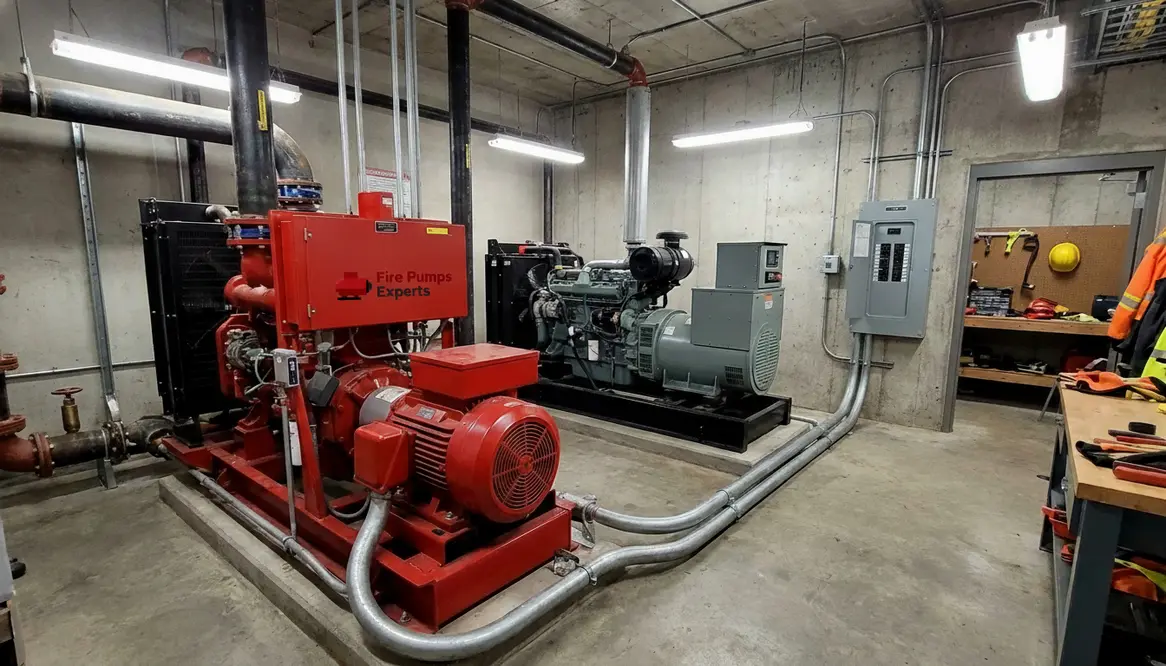
Fire Pump on a Generator for Commercial Buildings
Can a Fire Pump Run on a Generator? Yes, it can, and in many commercial and industrial buildings, it should. I say that with care, because this is not the kind of system you want to “wing it” with like a late night pizza order. A fire pump is part of a building’s life safety plan, and if the utility power goes down, the generator may be the quiet hero that keeps water moving when everything else goes dark. In this article, I will walk through what makes that setup work, what can go wrong, and how to keep a fire pump ready for the real world.
How a Generator Supports a Fire Pump
A generator can power a fire pump if it is sized and installed the right way. That sounds simple, but the details matter. Fire pumps need a large starting current, and that surge can be much higher than the steady run load. So, I always look at both the starting demand and the running demand before I trust the setup.
In a commercial or industrial facility, the generator must deliver power fast enough and steady enough to let the pump start without a painful voltage drop. If the voltage sinks too low, the pump may struggle, trip, or fail to reach proper flow. And that is not a fun plot twist. It is more like a bad episode no one asked for.
A fire pump also needs proper transfer equipment. The switchgear, controls, and wiring must work as a team. In other words, the generator is not a solo act. It needs the full band.
What I Check Before I Trust the Setup
When I review a system, I look at the load, the transfer path, the fuel supply, and the code needs. I also look at whether the building can support long enough run time during an outage. A generator that runs out of fuel early may look strong on paper, but paper does not put out fires.
Here is the practical checklist I use:
- Generator size matches the fire pump starting load
- Transfer equipment supports emergency operation
- Fuel system can keep the generator running for the needed time
- Controls and alarms are set for emergency use
- Testing follows the site plan and code rules
Also, I always remind facility teams that a fire pump protects major properties, not small one off setups. These systems serve large commercial buildings, warehouses, hospitals, plants, and other high demand sites where water pressure must stay reliable. That is where the stakes get very real.
Fire Pump and Generator Design Tips for Commercial Sites
If you want the system to work under pressure, the design has to stay clean and simple. First, the generator should have enough capacity for the pump’s starting load. Next, the fire pump controller should be compatible with the power source. Then, the wiring path should reduce loss and avoid weak links.
I also pay attention to the generator location. It should be protected, easy to access, and set up for maintenance. If the unit sits in a poor spot, then rain, heat, or bad airflow can shorten its life. Even a strong machine can act tired if you treat it like an afterthought.
Dual Column View: Key Factors and Why They Matter
- Generator capacity – It must handle the pump start without a drop in performance.
- Fuel supply – It must last long enough during an emergency.
- Transfer system – It must switch power smoothly and fast.
- Maintenance – It must stay ready through regular checks and testing.
- Code compliance – It must meet the rules that guide fire protection systems.
Why Testing Matters More Than Guessing
I do not trust guesswork with fire protection, and neither should you. A generator may look solid during a simple start test, yet fail when the fire pump demands a full load. That is why load testing and routine inspections matter so much. They show how the system behaves under real stress, not just in a calm room with no drama.
For a deeper look at broader emergency power planning, I often point people to commercial emergency power systems requirements, design, and maintenance. It helps connect the fire pump with the rest of the building’s backup power plan.
And if you want a local example of fire pump support for large facilities, I also recommend this resource: los angeles fire pump services. It is useful for teams that manage major commercial and industrial properties and need reliable fire protection planning.
FAQ
Conclusion
If you want a fire pump to run on a generator, I suggest treating the system like the life safety asset it is. Do not guess. Do not under size. Do not wait for an outage to reveal weak points. Instead, review the design, test the full system, and keep maintenance on a steady schedule. If your commercial or industrial property depends on reliable fire protection, now is the time to verify that your backup power plan can carry the load.