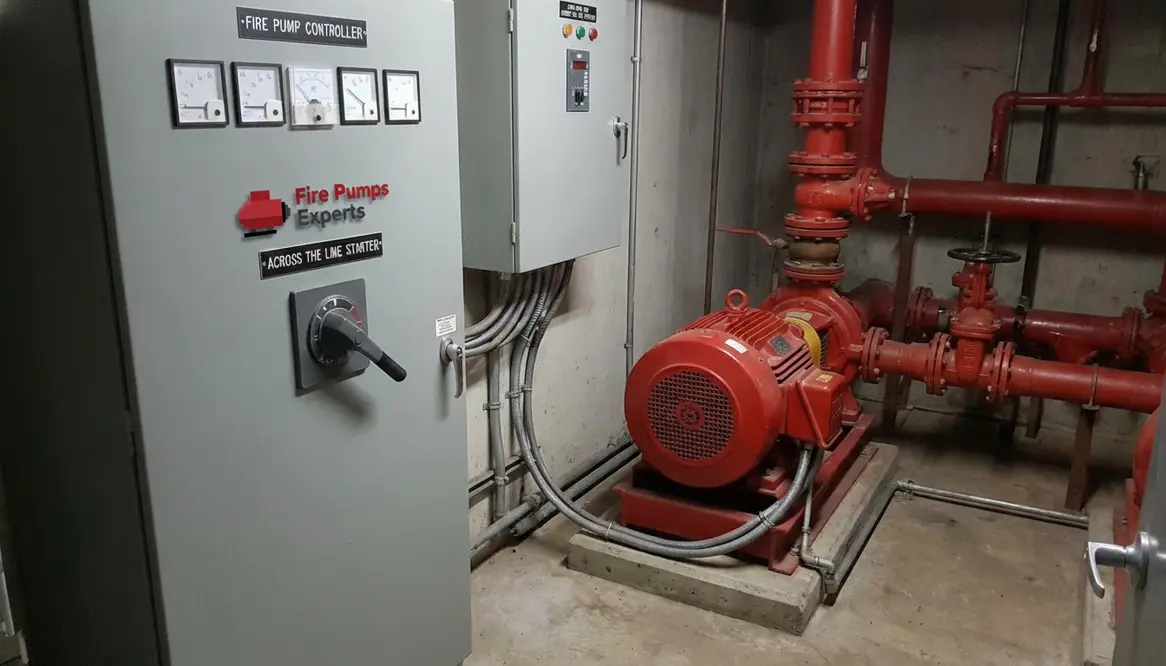
Across the Line Fire Pump Starting Explained
When I talk about a fire pump across the line starter, I am talking about a direct and steady way to bring a fire pump motor to life. It is simple, proven, and still widely used in commercial and industrial fire protection systems. In plain terms, the motor gets full voltage at startup, which means full torque right away. That matters when a system must move water fast, because fire does not wait around for a polite introduction. And yes, in this line of work, “good enough” is about as useful as a screen door on a submarine.
For major buildings, factories, warehouses, and other large properties, this starting method can be a strong fit when the electrical system supports it. I will walk through how it works, why it matters, and where it fits best. I will also point out what I look for when a project needs a practical, code aware approach.
What an across the line starter does
An across the line starter connects the fire pump motor straight to the power source. As soon as the starter closes, the motor starts at full line voltage. Because of that, the pump reaches operating speed quickly and with strong starting torque. In a fire event, that quick response helps the system deliver water without delay.
This setup is common because it is simple. Fewer parts mean fewer things to go wrong. Also, maintenance teams usually understand it fast, which helps when time is short and the room smells like warm metal and urgency. However, that simple design also brings a real electrical inrush at startup, so the building power system must handle the load without trouble.
How I decide if it fits a commercial building
I first look at the motor size, the available power, and the strength of the electrical service. If the inrush current is too high for the system, then voltage drop can become a problem. That can stress other equipment and may affect reliable starting. So, while the method is simple, I never treat it like a one size fits all answer.
I also check the building type and the role the pump plays in protection. A high rise, distribution center, or industrial plant may have different needs than a smaller commercial property. Therefore, I match the starter choice to the facility’s load profile, code requirements, and overall resilience plan.
Why this start method still matters
The fire pump across the line starter stays popular for a reason. It gives a fast, direct start and works well in many fire pump applications. In addition, it avoids the added complexity of reduced voltage systems, which can be useful in projects where reliability and ease of service matter most.
Here is the short version in a clean two column view:
Advantages
- Fast full torque start
- Simple design
- Easier maintenance
Trade offs
- High inrush current
- Needs strong electrical support
- Not ideal for weak power systems
That balance is the whole story. If the electrical backbone is solid, this starter can do its job without drama. If not, the start event can make the rest of the system grumble like a tired actor in the third reboot of a franchise no one asked to revive.
Fire pump electrical requirements for commercial buildings
When I review a project, I do not stop at the starter itself. I look at the full electrical path, because the pump is only as dependable as the system feeding it. That includes service capacity, transfer equipment, conductor sizing, grounding, and protection rules. For a deeper look, I often point teams to fire pump electrical requirements for commercial buildings, since it helps connect the starter choice to the broader electrical design.
In practice, I want the pump to start without causing nuisance issues elsewhere in the facility. Therefore, I review voltage drop, available fault current, and coordination with the rest of the fire protection setup. I also make sure the system supports safe operation during normal conditions and during an emergency. Fire protection is not the place for wishful thinking. It rewards planning and punishes shortcuts.
When I recommend this starter over other options
I lean toward an across the line starter when the building has enough electrical capacity and the project calls for a direct, reliable start. It works well when the owner wants a familiar system that crews can service without a steep learning curve. Also, it suits facilities where simplicity and dependable torque matter more than soft start features.
On the other hand, if the service is tight or the motor is large enough to create major inrush problems, I may look at other starting methods. The right answer always depends on the site, the load, and the life safety goal. I never pick the starter first and the facts later. That approach belongs in bad movies, not fire protection.
FAQ
Quick answers for the fire pump across the line starter questions that show up right when the paperwork gets spicy.
Conclusion
If I had to sum it up, I would say this: an across the line starter is a direct, dependable way to start a fire pump when the electrical system is ready for it. It is simple, fast, and familiar, which makes it valuable in commercial and industrial fire protection. If you are planning a system for a major property, I recommend reviewing the electrical design early. The right fire pump across the line starter choice protects the building, supports code goals, and keeps the whole system ready when it matters most.
Because when seconds count, you do not want surprises. You want a fire pump across the line starter that starts clean, runs strong, and keeps the whole setup steady from startup to discharge.