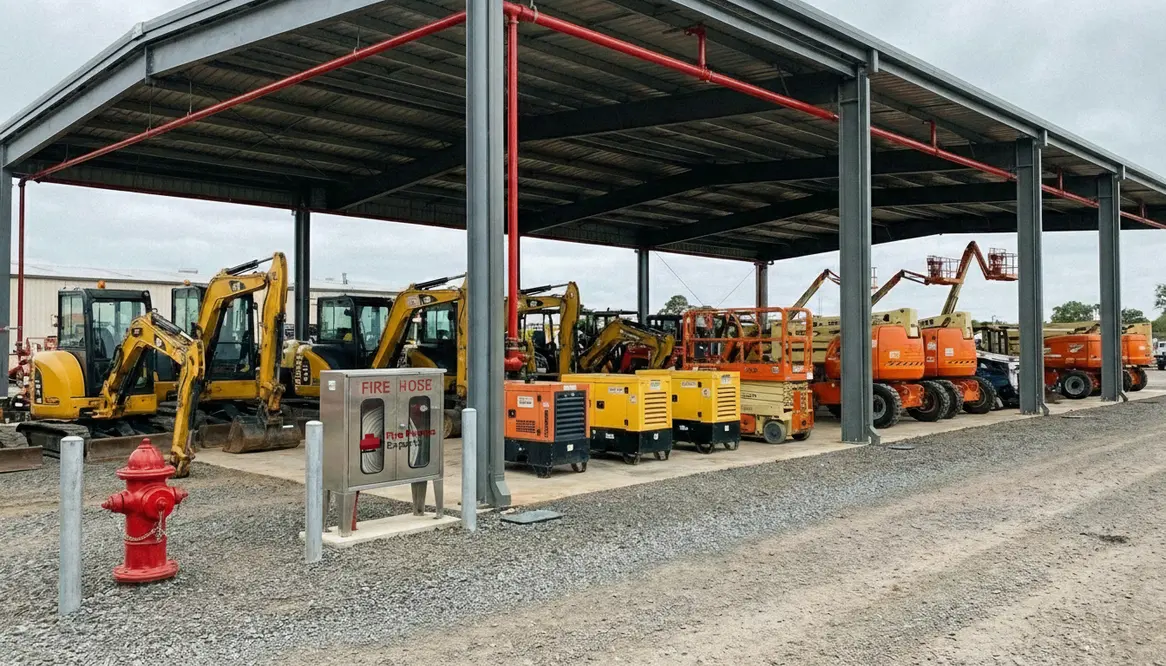
Fire Pump Systems for High Value Equipment Storage
I have spent years around large facilities where machines hum louder than most conversations. And if there is one lesson that settles in deep, it is this: Fire protection for high-value equipment storage is not optional. It is survival. In equipment rental facilities, where millions of dollars sit in neat rows waiting for the next job, fire pump systems act like the quiet bodyguard in a movie. You barely notice them… until everything depends on them. And trust me, when that moment comes, you do not want a system that hesitates like someone choosing a Netflix show.
Why Fire Pump Systems Matter in Equipment Rental Yards
Equipment rental facilities are not your average storage spaces. They hold excavators, generators, compressors, and specialized machinery that cannot be replaced overnight. Because of this, fire risk carries a higher financial and operational impact.
So, I look at fire pump systems as the heartbeat of a suppression setup. Without consistent water pressure, even the best sprinklers become decorative ceiling art. Moreover, rental yards often span large areas, which means municipal water pressure alone rarely cuts it.
As a result, a properly designed fire pump system ensures water reaches every corner of the facility with force and consistency. And yes, it works even when city pressure decides to take a coffee break.
How Do Fire Pump Systems Actually Work in Large Facilities?
I get this question a lot, and the answer is simpler than people expect. Fire pumps boost water pressure to meet the demands of large scale fire suppression systems. They pull water from a reliable source and push it through the system at the required rate.
However, not all pumps are created equal. In commercial and industrial environments, I often see:
Electric fire pumps for consistent performance when power is stable.
Diesel fire pumps for backup reliability when power fails.
Jockey pumps that maintain pressure without constantly running the main pump.
Because of this layered approach, facilities stay protected even when one component goes down. It is a bit like having both Batman and Superman on call. Overkill? Maybe. Necessary? Absolutely.
Fire Protection for High Value Equipment Storage in Rental Operations
When I design or evaluate systems for rental facilities, I focus on protecting assets that generate revenue every day. Fire protection for high-value equipment storage requires more than basic compliance. It demands strategy.
For instance, equipment spacing matters. Tight layouts may maximize storage, but they also increase fire spread risk. Therefore, I recommend pairing smart layout planning with high capacity fire pumps that can handle peak demand instantly.
In addition, fuel powered equipment introduces another layer of risk. That means systems must respond fast and maintain pressure long enough to control intense fires. A weak system in this scenario is like bringing a garden hose to a dragon fight. Not ideal.
Key Components I Prioritize in Fire Pump System Design
When I walk into a facility, I do not just look at the pump. I look at the entire ecosystem. Because every component plays a role, even the ones people forget.
Core Elements
- Fire pump unit sized for demand
- Reliable water supply source
- Controller for automatic operation
- Backup power or diesel engine
Supporting Elements
- Pressure maintenance systems
- Proper pipe sizing and layout
- Alarm and monitoring integration
- Routine testing connections
Additionally, I always stress maintenance access. A system you cannot easily test is a system you cannot trust. And in this business, trust is everything.
Smart Design Choices That Reduce Risk and Downtime
Over time, I have noticed a pattern. Facilities that invest in thoughtful design upfront experience fewer emergencies later. It is not magic. It is planning.
First, I make sure redundancy is built in. If one pump fails, another takes over without hesitation. Next, I consider environmental factors like temperature and dust, which can quietly sabotage system performance.
Then there is automation. Modern fire pump controllers provide real time data and alerts. So instead of discovering a problem during an emergency, operators can fix it early. Think of it as getting a warning before the plot twist.
Finally, regular testing keeps everything honest. Weekly and monthly checks reveal issues before they escalate. Because even the best systems need a little attention now and then.
Common Mistakes I See in Equipment Rental Facilities
Even well run operations can miss the mark. And when they do, the consequences are not small.
One common issue is undersized pumps. Facilities expand, but the fire system stays the same. That mismatch creates dangerous gaps in coverage.
Another mistake is neglecting maintenance. I have seen systems that looked perfect on paper but failed during testing. Why? Because no one had checked them in months.
Also, some facilities rely too heavily on municipal supply without verifying pressure consistency. That is like assuming your phone will always have signal. It usually does… until it really matters.
FAQ: Fire Pump Systems for Equipment Rental Facilities
Final Thoughts and Next Steps
When I look at equipment rental facilities, I see more than machines. I see investments that deserve serious protection. A well designed fire pump system does not just meet code. It protects revenue, operations, and peace of mind. If you are running a large scale facility, now is the time to evaluate your system, strengthen weak points, and ensure everything performs when it counts. Because when fire shows up uninvited, preparation is the only response that matters.