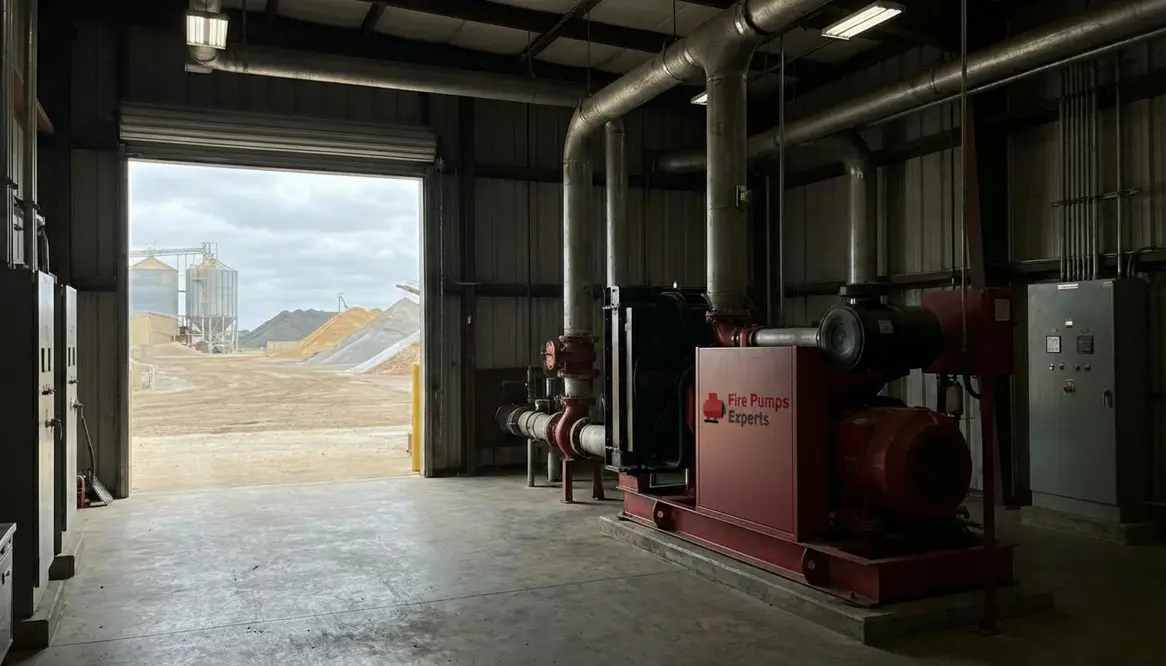
Fire Pump Needs for Large Raw Material Storage
I have spent years walking through industrial sites where the stakes are high and the margin for error is… well, nonexistent. When we talk about Fire pump needs for large raw material storage, we are not discussing a box you check on a compliance sheet. We are talking about the one system that quietly waits in the background, ready to perform like a seasoned actor who never misses a cue. And yes, when it finally runs, it had better deliver more reliably than your favorite action hero in the final scene.
So let me guide you through what really matters, with a calm, steady pace and just enough wit to keep us both awake.
What are fire pump requirements for bulk material facilities?
Let me answer this plainly. Bulk material facilities need fire pump systems that deliver consistent pressure, high flow capacity, and immediate response. These sites store combustible materials like grain, coal, wood chips, or chemicals. That combination creates a perfect storm for rapid fire spread.
Because of this, I always focus on three essentials. First, the pump must meet NFPA standards, particularly NFPA 20. Second, it must handle peak demand without hesitation. Third, it must integrate smoothly with detection and suppression systems.
Moreover, these environments demand durability. Dust, vibration, and temperature swings can wear down weaker systems fast. In other words, this is not the place for bargain equipment. Even Batman upgrades his gear.
Designing systems that match material risk profiles
Not all bulk materials behave the same in a fire. Therefore, I never approach system design with a one size fits all mindset. Instead, I match the fire pump setup to the specific hazard.
For example, grain facilities produce explosive dust clouds. Meanwhile, coal storage can lead to deep seated fires that burn slowly but stubbornly. Each scenario changes how much water flow and pressure you need.
Consequently, I look at:
- Material type and how it ignites
- Storage configuration such as silos, conveyors, or open piles
- Facility size and layout complexity
Then, I align pump capacity with worst case scenarios, not average conditions. Because in fire protection, average is just another word for unprepared.
Fire pump needs for large raw material storage and system configuration
Now we get into the mechanics. When addressing Fire pump needs for large raw material storage, I focus on system configuration that supports both scale and reliability.
Typically, I recommend electric or diesel driven pumps depending on power stability. If the facility sits in an area where outages are common, diesel becomes the dependable friend who always shows up on time.
Additionally, redundancy is critical. A single pump is a single point of failure. I prefer setups with backup pumps or jockey pumps to maintain pressure.
Here is where I like to simplify things:
Primary Goals
- Maintain steady pressure across large areas
- Support sprinkler and hydrant systems simultaneously
- Ensure rapid startup during emergencies
Key Components
- Main fire pump sized for peak demand
- Backup pump for redundancy
- Controller systems for automatic activation
As a result, the system works as a coordinated unit rather than a collection of parts. Think of it like a well rehearsed orchestra, not a garage band tuning up mid performance.
Water supply and pressure planning that actually holds up
A powerful pump means nothing without a reliable water source. I have seen facilities install impressive equipment only to choke it with inadequate supply. It is like buying a sports car and filling it with cooking oil. Technically possible. Practically disastrous.
So I prioritize water availability early in the design process. This includes:
- Dedicated storage tanks sized for extended fire events
- Municipal connections with verified flow testing
- Backup sources such as reservoirs or secondary feeds
Furthermore, pressure calculations must account for elevation changes, pipe friction, and simultaneous system use. If you skip these steps, the system may pass inspection but fail when it matters most. And trust me, fire does not care about paperwork.
Maintenance strategies that prevent silent failures
Here is a truth I repeat often. Fire pumps do not fail dramatically. They fail quietly, slowly, and at the worst possible moment.
Therefore, I treat maintenance as a core requirement, not an afterthought. Regular testing under load conditions ensures the pump performs as expected. Weekly churn tests and annual flow tests are not optional. They are essential.
In addition, I recommend monitoring systems that track performance trends. These tools catch small issues before they grow into expensive problems.
Because at the end of the day, a fire pump is like a parachute. You do not get a second chance to see if it works.
Compliance, inspections, and long term reliability
Compliance is not just about avoiding fines. It is about ensuring that every component performs under real world conditions.
I always align systems with NFPA standards and local codes. However, I also go beyond minimum requirements. Why? Because minimum standards are designed for safety, not necessarily for resilience in complex industrial environments.
Regular inspections, documentation, and system audits keep everything in check. Moreover, working with experienced commercial fire protection specialists ensures that nothing slips through the cracks.
And yes, paperwork may not be exciting. But neither is explaining to a board why the system failed during an incident.
Linking pump design to real facility risks
The most effective systems start with a frank look at what is stored, how it is moved, and where ignition is most likely. When planning Fire pump needs for large raw material storage, I sit with operators, maintenance teams, and safety managers. Together, we map out where a small spark could become tomorrow morning’s headline.
- Transfer towers and conveyor galleries where friction, misalignment, or bearing failures can ignite dust.
- Loading and unloading points where static, impact, and spills combine with busy traffic.
- Deep storage zones where access for hose lines is poor and only well designed fixed systems can keep up.
These realities shape Fire pump needs for large raw material storage far more than any brochure or catalog. The goal is simple: when the worst ten minutes of the facility’s life happens, the system should respond like it has rehearsed this moment a thousand times.
FAQ: Fire Pump Requirements for Bulk Material Facilities
These are the questions that usually come up around Fire pump needs for large raw material storage, especially when owners are balancing budgets, insurance requirements, and practical reality.
Bringing strategy, hardware, and operations together
In practice, Fire pump needs for large raw material storage sit at the intersection of engineering, operations, and human behavior. You can have flawless drawings and brand new hardware, but if forklift routes, housekeeping, and maintenance culture do not support that design, risk creeps back in through the side door.
- Operators need to know what the system can and cannot do.
- Maintenance teams need clear procedures, test schedules, and spare parts strategies.
- Management needs honest assessments of residual risk, not comforting myths.
When those groups agree on what is at stake and how the system is supposed to perform, Fire pump needs for large raw material storage stop being a line item and become a core piece of business continuity.
Conclusion
If you manage a bulk material facility, now is the time to take a closer look at your fire protection strategy. I encourage you to evaluate your system, identify gaps, and partner with professionals who understand complex industrial risks. A properly designed fire pump system protects your operations, your assets, and your people. Reach out to a qualified commercial fire protection expert today and make sure your system is ready long before it is ever needed.