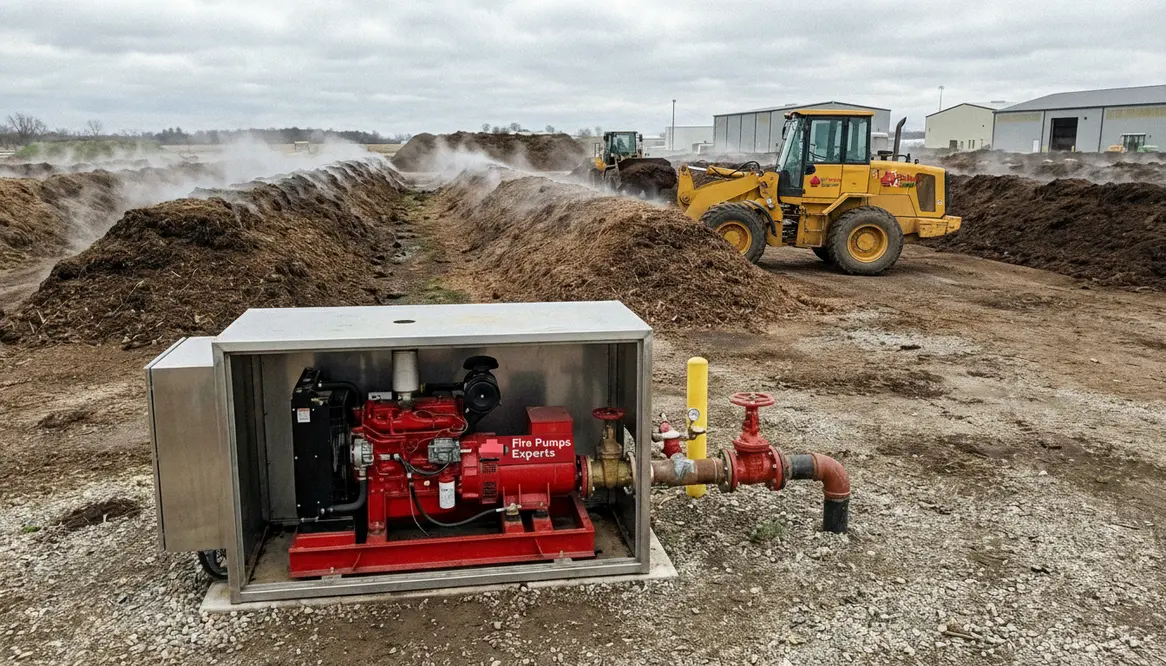
Fire Pump Planning for Composting Facilities
I have walked through more composting facilities than I can count, and let me tell you, they are alive. Heat, gases, organic piles quietly working like a slow cooking stew. Now imagine that same energy getting out of hand. That is where Fire pump planning for organic processing environments becomes less of a checklist and more of a lifeline. Within the first few minutes of any serious incident, the right system decides whether you have a controlled event or a headline. And nobody wants their compost pile trending for the wrong reason.
Why composting facilities demand specialized fire pump systems
Composting operations are not your average industrial site. Organic material generates heat naturally. Add oxygen, poor pile management, or equipment sparks, and you have a recipe for combustion. Therefore, I always approach these facilities knowing that traditional fire protection assumptions fall short.
Unlike a warehouse with predictable loads, compost piles shift, settle, and trap heat pockets. Consequently, fire pumps must deliver consistent pressure across unpredictable layouts. I focus on systems that can respond quickly to deep seated fires, not just surface flare ups. In my experience, that distinction saves both infrastructure and months of operational downtime.
And yes, compost fires can smolder like they are auditioning for a slow burn drama. They take their time, then suddenly escalate.
What should I consider when designing fire protection for composting operations
Water demand comes first
I start with water demand. Always. Compost fires require more than a quick spray. They demand sustained flow that penetrates dense organic material. So I size pumps to exceed minimum code requirements, not just meet them.
Planning for evolving layouts
Next, I evaluate layout. Facilities often expand over time, which means fire protection must adapt. Therefore, I prioritize scalable pump systems that can handle future growth without a complete overhaul.
Reliability under pressure
Then comes reliability. I prefer diesel driven fire pumps for many of these sites because power interruptions are not uncommon. However, electric pumps still play a role when paired with backup systems.
Accessibility for responders
Finally, I consider accessibility. Fire crews need immediate support. Hydrant placement, pressure consistency, and system clarity all matter. If responders waste time figuring out your setup, the fire has already won round one.
Fire pump planning for organic processing environments in high risk zones
Not every corner of a composting facility carries equal risk. I divide sites into zones based on heat generation, material density, and equipment usage. Active composting piles, grinding areas, and storage zones each require different suppression strategies.
For example, grinding areas introduce sparks. Therefore, I ensure high pressure delivery near processing equipment. Meanwhile, curing zones may need broader coverage with sustained flow rather than intensity.
Additionally, I integrate monitoring systems. Temperature sensors and early detection tools allow pumps to activate before a situation escalates. It is like having a smoke alarm that actually knows what it is talking about.
High Risk Areas
- Active compost piles
- Grinding and shredding zones
- Material storage heaps
Fire Pump Focus
- High flow penetration
- Rapid pressure response
- Extended operation duration
How do fire pumps integrate with large scale industrial infrastructure
I treat fire pumps as part of a larger ecosystem, not a standalone piece of equipment. In large commercial and industrial composting facilities, integration is everything.
Water supply and control
First, I align pump systems with site wide water supply. Whether it is a dedicated tank, municipal source, or reservoir, consistency matters. Then, I connect pumps to automated controls that communicate with alarms and suppression systems.
Redundancy that actually delivers
Moreover, redundancy plays a key role. I often design systems with backup pumps or jockey pumps to maintain pressure stability. This ensures that even during peak demand, performance does not dip.
And let us be honest, a fire pump that fails during an emergency is about as useful as a screen door on a submarine.
Fire pump planning for organic processing environments that scale with growth
Facilities evolve. What starts as a modest operation often expands into a large scale industrial site. Therefore, I never design with only today in mind.
I build flexibility into every system. अतिरिक्त capacity, modular layouts, and upgrade pathways all allow the fire protection system to grow alongside the facility. As a result, operators avoid costly redesigns and downtime.
Additionally, I ensure compliance with industrial standards while anticipating stricter future regulations. That way, facilities stay ahead of requirements instead of scrambling to catch up.
It is a bit like planning for a sequel before the first movie even premieres. If it succeeds, you are ready. If not, at least you were prepared.
Fire pump planning for organic processing environments only works long term when you expect change, design for expansion, and assume that tomorrow’s operation will look bigger, hotter, and far busier than today’s.
Putting Fire pump planning for organic processing environments into practice
Translating theory into a working system means matching risks, infrastructure, and operations. In composting facilities, that balance is constantly shifting, which makes Fire pump planning for organic processing environments a recurring process rather than a one time project.
From intake to curing piles, from biofilters to leachate basins, every zone benefits when pumps are sized, powered, and connected with those specific hazards in mind. Done well, you get a facility that runs hot, productive, and controlled, instead of one that tiptoes along the edge of the next incident.
When the planning for these facilities aligns with guidance from specialists and reputable resources such as https://firepumps.org, the result is a more resilient and predictable response when conditions turn against you.
FAQ
Conclusion
If you operate or design a composting facility, you already know the stakes are high. The right fire pump system does more than meet code. It protects your investment, your people, and your reputation. I design every system with that responsibility in mind. If you are ready to build a safer, more resilient operation, now is the time to act. Reach out and let us create a solution that works as hard as your facility does.