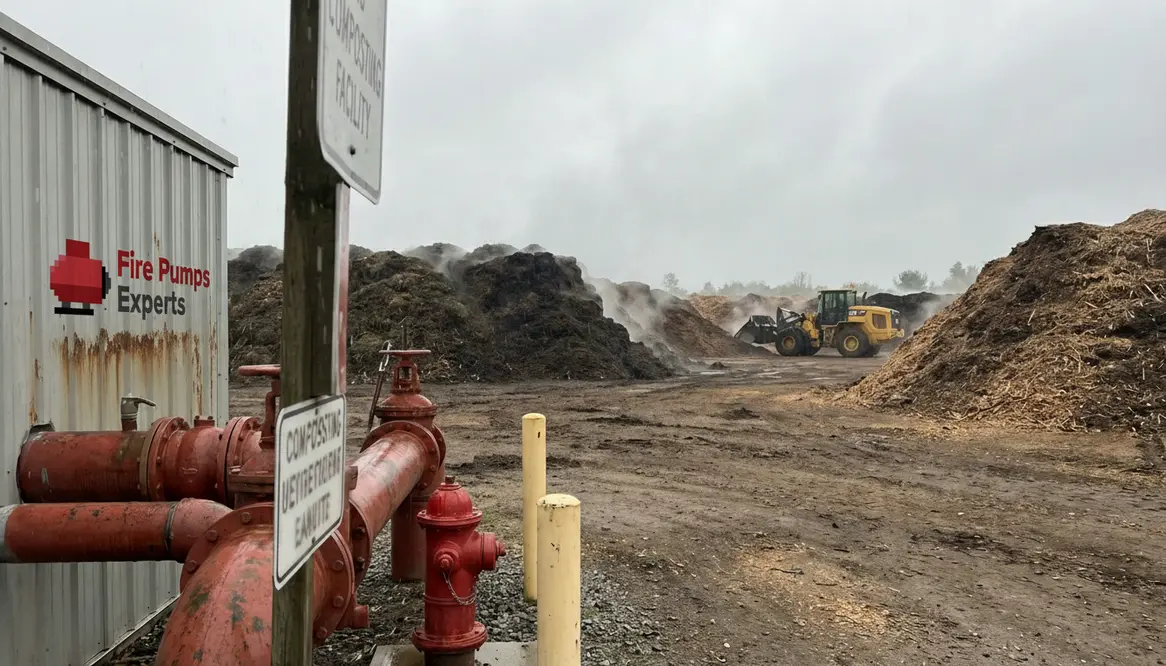
Fire Pump Planning for Composting Facilities
I have spent years walking through industrial yards where steam rises like a scene from a sci fi film, and let me tell you, composting facilities have a quiet intensity to them. Beneath that earthy smell sits a very real fire risk. That is where Fire pump planning for organic processing environments becomes more than a checkbox. It becomes the backbone of safety. I approach it the same way a director frames a scene. Every element matters, every second counts, and yes, if something goes wrong, there is no heroic soundtrack to save the day.
Why composting sites demand specialized fire pump systems
Composting facilities are not your average industrial property. They generate heat internally through biological activity. Piles can smolder for hours before anyone notices. So, while many facilities rely on standard suppression methods, I always advise a more tailored approach.
Because organic material behaves unpredictably, fire pumps must deliver consistent pressure over extended periods. Additionally, water demand spikes quickly when deep seated fires occur. I have seen operators underestimate this, only to realize too late that their system cannot keep up.
And let us be honest, compost fires are stubborn. They do not politely go out after a quick spray. They linger like that one guest who does not get the hint to leave.
How do I size a fire pump for a composting facility?
I start with flow demand. Always. Composting operations often require higher gallons per minute due to pile depth and surface area. Then, I factor in system pressure losses across long pipe runs, especially in sprawling facilities.
Next, I evaluate water supply reliability. Municipal sources are not always sufficient for industrial composting sites, so I often recommend dedicated storage tanks paired with diesel driven pumps. Electric pumps are great, until the power decides to take a vacation.
Finally, I look at duration. It is not about how fast you can respond, but how long you can sustain it. Fires in organic material demand endurance, not just intensity.
Key components that make or break system performance
When I design systems, I focus on integration rather than isolated parts. Every component must work like a well rehearsed band, not a group of solo artists fighting for attention.
Pump type selection
I often lean toward horizontal split case pumps for their reliability and ease of maintenance. They handle high flow rates without drama.
Driver choice
Diesel engines provide independence from the grid. In critical facilities, that independence can be the difference between control and chaos.
Controller systems
Modern controllers allow for precise monitoring. I like systems that tell me what is happening before I have to ask.
Water storage
Large onsite tanks ensure consistent supply. Without them, even the best pump becomes a very expensive decoration.
Distribution network
Pipe sizing and layout matter. Poor design here is like building a highway that suddenly turns into a dirt road.
Redundancy
Backup systems are not optional. They are insurance against the unexpected, which in this industry, happens often.
Fire pump planning for organic processing environments in large facilities
When I work with large scale composting operations, I think in layers. First, I consider detection. Then, suppression. Then, containment. Each layer supports the next.
For example, I often integrate hydrant systems alongside fixed suppression. This allows manual firefighting efforts to scale quickly. Meanwhile, zoning the facility ensures that water pressure remains stable even when multiple areas are active.
And here is something many overlook. Access. Fire crews need clear routes. I have seen beautifully engineered systems rendered useless because trucks could not get close enough. It is like having a perfect script with no actors to perform it.
Common mistakes I see and how I avoid them
One mistake stands out. Underestimating fire load. Compost piles grow, shift, and change density. Therefore, designs must account for worst case scenarios, not average conditions.
Another issue is neglecting maintenance planning. A fire pump system is not a set it and forget it investment. I always recommend routine testing schedules and clear accountability. Because when the moment comes, the system does not care about excuses.
Also, some facilities try to retrofit inadequate systems. While upgrades can work, starting with proper fire protection planning for composting operations saves time, money, and a lot of headaches.
Putting Fire pump planning for organic processing environments into practice
Fire pump planning for organic processing environments is not just about ticking compliance boxes. It is about understanding how organic piles breathe, heat up, and occasionally rebel. When you match pump capacity, storage, and distribution to that behavior, you move from reactive firefighting to proactive control.
From the first site walk to the final acceptance test, Fire pump planning for organic processing environments should stay front and center. That means questioning assumptions, challenging “standard” designs, and insisting that every hydrant, monitor, and hose station actually supports how your crews will fight a real fire at two in the morning.
If you want to see how others are tackling this, resources at https://firepumps.org can give additional perspective on performance, testing routines, and configuration ideas tailored to demanding environments.
Closing thoughts and next steps
I see fire protection as a story of preparation. Every valve, every pump, every design choice plays a role before the first spark ever appears. If you are managing a composting facility, now is the time to take Fire pump planning for organic processing environments seriously. Reach out, evaluate your system, and strengthen it. Because when fire shows up uninvited, you want more than hope. You want certainty, ready and waiting.