Fire Pump Systems for Prototype Facilities Guide
Fire Pump Systems for Prototype Facilities
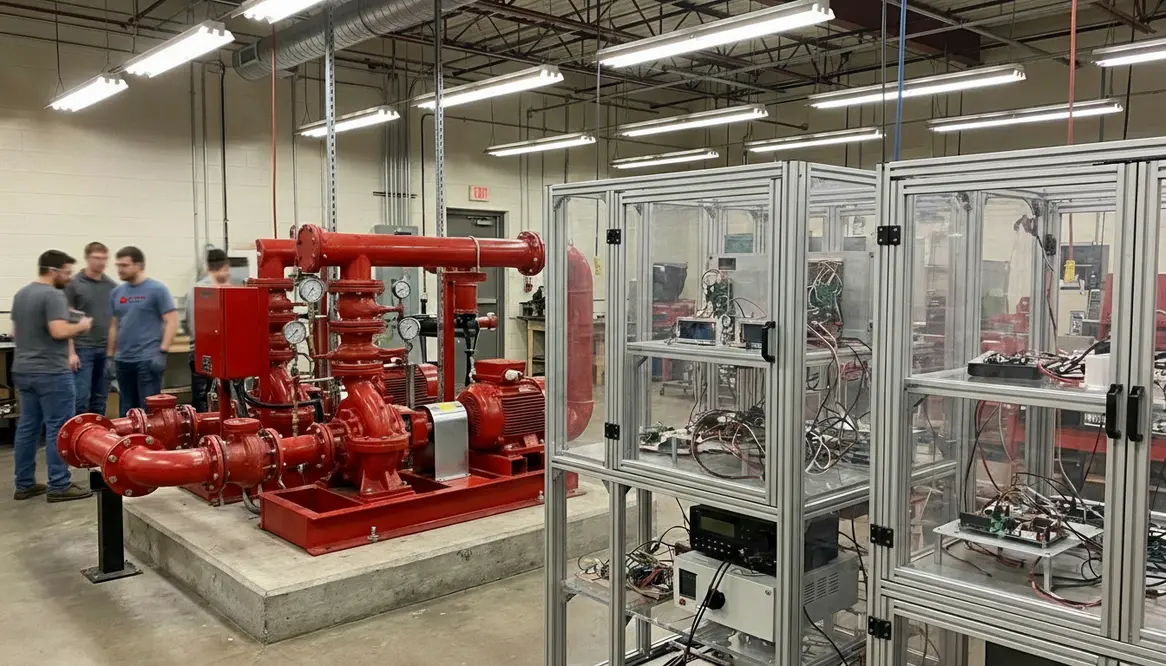
I have spent enough time around prototype facilities to know one thing for certain. Innovation moves fast, but fire does not care how clever your engineers are. It only cares about fuel, oxygen, and opportunity. That is where Fire pumps for small-scale production and testing step in, quietly waiting in the background like the unsung hero in every good movie. Think of them as the narrator of your building. Calm, steady, and always ready to step in when things get dramatic.
In facilities where new ideas come to life, fire protection cannot be an afterthought. It has to be built in, just like your power systems and process controls. So let me walk you through how I approach fire pump systems for these environments, and why they matter more than most people realize.
Why Prototype Facilities Demand a Different Fire Strategy
Prototype facilities live in a constant state of change. One day you are testing materials, the next day you are running pilot production. Because of that, I always design systems that can adapt without missing a beat.
Unlike traditional industrial buildings, these spaces deal with shifting risks. For example, new equipment may introduce higher heat loads or unexpected ignition sources. Therefore, a fixed mindset in fire protection simply does not work.
I focus on flexibility and responsiveness. Fire pump systems must handle variable demand while maintaining consistent pressure. Otherwise, your sprinklers become little more than expensive decorations. And nobody wants that.
Additionally, downtime in these environments can derail entire development timelines. So reliability is not just a safety issue. It is a business priority.
How do fire pump systems support rapid testing environments?
I get this question often, and the answer is straightforward. Fire pump systems provide immediate water pressure when municipal supply falls short. In prototype facilities, that shortfall happens more often than you might expect.
Testing equipment can require specialized suppression zones. Consequently, water demand spikes quickly during an incident. Without a properly sized pump, your system struggles right when it matters most.
Practical design moves that keep pressure ready
Here is how I ensure performance stays sharp:
- I size pumps for peak demand, not average use
- I integrate backup power to keep systems running during outages
- I design for quick activation to minimize response time
Because of these steps, the system reacts instantly. No hesitation, no drama. Just water where it is needed, when it is needed.
Fire pumps for small-scale production and testing in evolving layouts
Layouts in prototype facilities change like plot twists in a thriller. Walls move, equipment shifts, and processes evolve. Therefore, I design fire pump systems that can keep up without requiring constant overhaul.
First, I prioritize modular system integration. This allows new zones to connect without disrupting existing coverage. Additionally, I ensure that pressure remains stable even as demand points increase.
Second, I consider future expansion from day one. It is far easier to build capacity early than to retrofit under pressure later. Trust me, retrofitting is about as fun as assembling furniture without instructions.
Finally, I coordinate closely with engineers and facility managers. Because when everyone works together, the system becomes part of the operation rather than an afterthought.
What I prioritize
- Consistent pressure across all zones
- Scalable pump capacity
- Easy maintenance access
What I avoid
- Oversized systems that waste energy
- Complex layouts that slow response
- Single points of failure
Key components that make or break system performance
A fire pump system is only as strong as its components. I pay close attention to each piece because even a small failure can compromise the entire setup.
The pump itself must match the facility demand curve. Meanwhile, controllers need to respond instantly and reliably. I also insist on high quality valves and piping because weak links tend to reveal themselves at the worst possible time.
Testing, monitoring, and staying ahead of trouble
Another critical factor is testing. Regular flow testing ensures the system performs exactly as designed. Without it, you are essentially guessing. And guessing is not a strategy I recommend when dealing with fire.
Moreover, I incorporate monitoring systems that provide real time data. This way, facility managers can detect issues before they escalate. Think of it as having a dashboard for your safety infrastructure.
Balancing compliance with real world performance
Codes and standards provide the foundation, but I never stop there. Meeting compliance is important, yet real world performance is what truly protects your facility.
I go beyond minimum requirements by analyzing actual operational risks. For instance, I consider how materials behave under heat and how workflows might influence fire spread. Then I adjust the system accordingly.
Keeping compliance from becoming a checkbox exercise
Additionally, I ensure that inspections and maintenance routines are practical. A system that looks good on paper but is difficult to maintain will eventually fail. And when it does, it will not send a polite warning first.
In other words, compliance gets you in the game. Performance wins it.
FAQ
These are the questions I hear most often when teams start planning Fire pumps for small-scale production and testing in prototype environments.
Conclusion
If you are running a prototype facility, you are already pushing boundaries. Your fire protection system should keep up. I design fire pump solutions that adapt, perform, and protect without compromise.
When you are ready to strengthen your facility with reliable Fire pumps for small-scale production and testing, take the next step and work with experts who understand both innovation and safety. Your ideas deserve protection that works as hard as you do, whether they live in a single test cell or a full pilot line.
The right design lets you reconfigure spaces, bring in new materials, and ramp up processes without constantly worrying whether your fire protection has fallen behind. That confidence is exactly what well planned Fire pumps for small-scale production and testing are built to deliver.