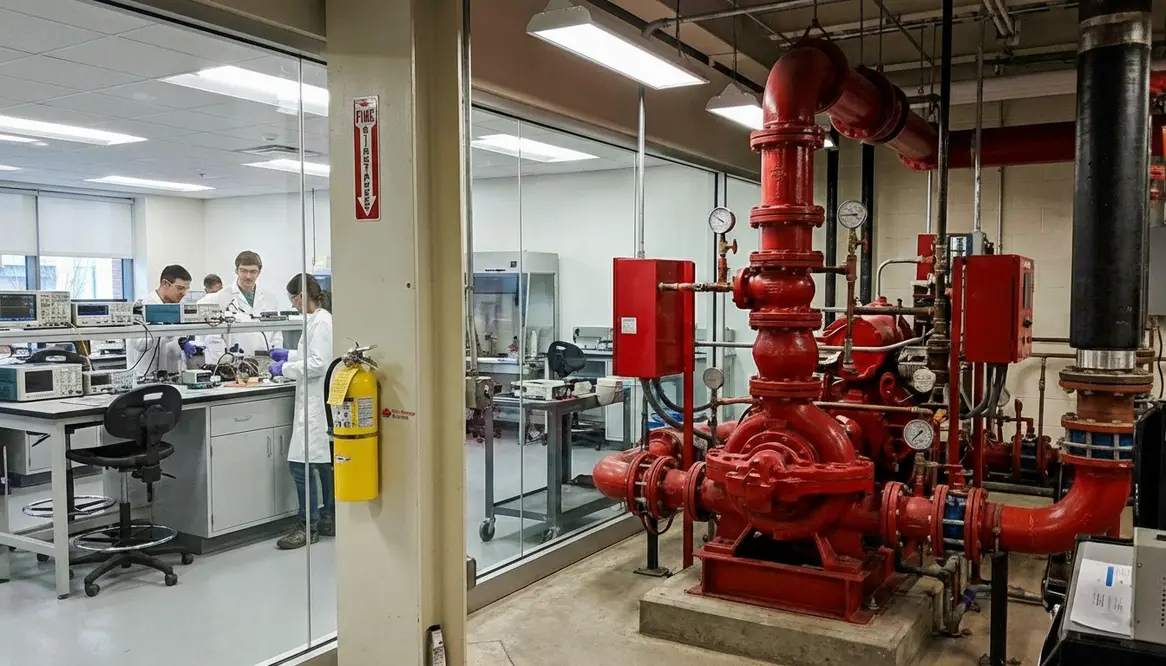
Fire Protection for Innovation Focused Production
I have spent enough time around industrial facilities to know one truth: when innovation moves fast, risk tries to keep up. That is exactly why Fire protection for innovation-focused production is not just a checkbox for R&D manufacturing sites. It is the quiet system standing by, ready to act when things get loud. In environments where experimental materials, pilot lines, and high energy processes coexist, fire pumps become less of a backup plan and more of a frontline defense. And yes, while fire pumps are not exactly the rockstars of a facility, they do save the day more often than any superhero in a cape.
What makes fire pump systems essential in R&D manufacturing facilities?
I will get straight to it. R&D sites are unpredictable. Unlike standard production plants, these facilities deal with changing processes, unknown variables, and sometimes materials that behave like they just watched a Fast and Furious movie.
Because of that, fire pumps must deliver consistent pressure and flow regardless of system demand. Additionally, they must respond instantly. In many cases, municipal water alone cannot meet the required pressure, especially in large scale or multi level research buildings. Therefore, fire pumps bridge that gap.
Moreover, compliance plays a major role. Codes like NFPA 20 set strict requirements, but in R&D environments, engineers often go beyond minimum standards. After all, when millions of dollars in research sit behind a single wall, cutting corners is not exactly a winning strategy.
Designing fire pump systems for high risk innovation environments
When I approach design for these facilities, I think in layers. First comes hazard analysis. Then system demand. Then reliability. Each step builds on the last.
For example, facilities working with flammable liquids or lithium based technologies often require higher flow rates and redundancy. Therefore, I always consider:
- Primary and backup fire pumps to ensure continuous operation
- Diesel driven units when electrical reliability is questionable
- Pressure maintenance pumps to stabilize system readiness
In addition, placement matters more than most people expect. A poorly located pump room can introduce delays or maintenance issues. So I always recommend accessible, protected spaces that allow quick service without disrupting operations.
And yes, I have seen pump rooms tucked into corners that feel like they belong in a horror movie. That is not the goal.
Fire protection for innovation-focused production and system reliability
Reliability is where theory meets reality. A fire pump that looks great on paper but fails during a test is about as useful as a screen door on a submarine.
To prevent that, I focus on three core elements. First, power reliability. Facilities often install dual power feeds or automatic transfer switches. Second, routine testing. Weekly churn tests and annual flow tests are non negotiable. Third, monitoring systems. Modern facilities integrate real time alerts so teams know immediately if something drifts out of spec.
Furthermore, redundancy is not overkill here. It is standard practice. In innovation driven environments, downtime is expensive, but uncontrolled fire is catastrophic. There is a difference.
Key considerations
- Consistent pressure delivery
- Backup power integration
- Accessible pump placement
- Routine maintenance schedules
Common pitfalls
- Undersized pump capacity
- Ignoring future expansion
- Poor ventilation in pump rooms
- Infrequent system testing
How do I ensure compliance without slowing down innovation?
This is the question I hear the most. And the answer is balance.
I work closely with both safety teams and R&D leaders. While compliance codes set the baseline, flexibility in design allows innovation to continue without constant redesign. For instance, modular fire pump systems can adapt as facilities expand or shift focus.
Additionally, early planning makes all the difference. When fire protection is considered during the initial design phase, it integrates smoothly. When added later, it becomes that awkward guest who rearranges the furniture.
So yes, compliance and innovation can coexist. They just need to be introduced properly.
Scaling fire protection for future growth in R&D sites
Growth is the goal of every research driven facility. Therefore, fire protection systems should not be static. I always design with future demand in mind.
This includes allowing space for additional pumps, oversizing certain components where appropriate, and ensuring infrastructure can handle increased load. Because let us be honest, no one wants to tear apart a facility just to upgrade a pump system.
In fact, scalable systems often reduce long term costs. While initial investment may be higher, avoiding major retrofits saves both time and money. And in this industry, time is often more valuable than the equipment itself.
Fire protection for innovation-focused production in complex facilities
Complexity defines modern R&D manufacturing. Multiple labs, pilot production lines, and specialized storage areas all exist under one roof. Therefore, fire pump systems must support a wide range of suppression systems, from sprinklers to foam systems.
Integration becomes critical here. I ensure that fire pumps can handle simultaneous demands without performance loss. Additionally, coordination with detection systems ensures rapid activation.
And while it may sound dramatic, in these environments, seconds truly matter. A fast response can mean the difference between a minor incident and a headline. This is where Fire protection for innovation-focused production stops being a theoretical concept and becomes a very practical shield around people, projects, and production schedules.
Frequently asked questions
Across different facilities and consulting projects, the same questions tend to surface whenever Fire protection for innovation-focused production becomes part of the planning conversation. Below is a concise reference you can share with safety teams, project engineers, and leadership to get everyone aligned around expectations.
Bringing it all together
By the time a new material, process, or pilot line is ready for scale up, there is usually a long list of priorities competing for budget and attention. Fire protection rarely shouts the loudest, but it quietly determines how much risk the organization is actually carrying. That is why treating Fire protection for innovation-focused production as a strategic asset, not a grudging compliance cost, changes the conversation completely.
Thoughtful pump selection, reliable power, flexible layouts, and room for future expansion all come together to support safe experimentation and fast iteration. The result is a facility where high energy processes, complex chemistries, and ambitious timelines can move forward without pretending that fire risk does not exist. Instead, it is managed, engineered, and monitored with the same seriousness given to production yield or product performance.
If you are running or designing an R&D manufacturing facility, I would not treat fire pumps as an afterthought. They are a core part of keeping innovation safe and operational. The right system supports growth, protects assets, and keeps compliance in check without slowing progress. If you are ready to strengthen your facility with reliable fire protection, now is the time to act and build a system that works as hard as your team does.