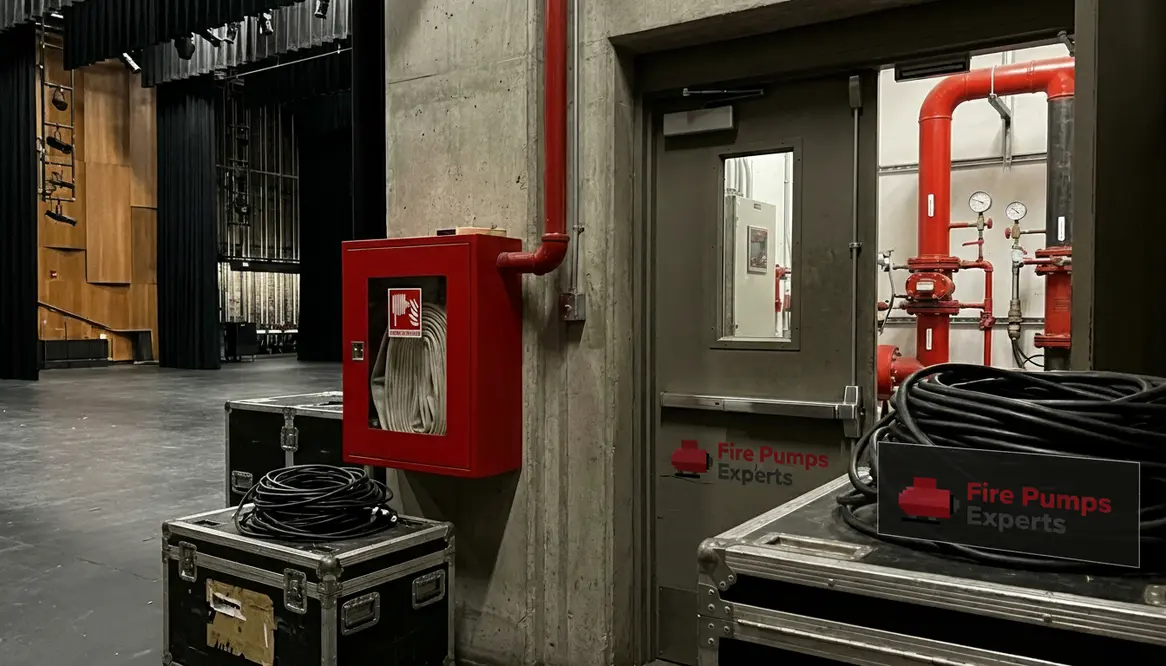
Fire Pump Requirements for Theaters and Venues
I have walked through enough auditoriums, arenas, and convention halls to know one thing for certain. When the lights go out and the crowd goes quiet, safety should still be the loudest presence in the room. That is where Fire Pump Requirements for Theaters step in, quietly doing their job behind the curtain. In public assembly buildings, fire protection is not just a code box to check. It is a living system that stands ready when everything else goes sideways. So yes, while the audience may be focused on the show, I am usually thinking about water pressure, pump reliability, and whether the system will perform like a seasoned actor on opening night.
Why Fire Protection in Public Assembly Buildings Demands Precision
Public assembly spaces carry a unique risk profile. You have high occupant loads, complex layouts, and often limited visibility when lights are dimmed. Therefore, every fire protection component must work in harmony. I treat these buildings like a carefully directed film. If one element fails, the whole scene falls apart.
Moreover, fire growth in crowded environments can escalate quickly. Because of that, systems must respond fast and with enough force to control or suppress flames before evacuation becomes chaotic. This is where fire pump systems for theaters and similar venues become critical. They ensure consistent water flow, even when municipal supply falls short. And trust me, relying on city pressure alone is like trusting a plot twist in a low budget movie. Sometimes it delivers. Sometimes it really does not.
How Do Fire Pump Requirements for Theaters Work in Real Buildings
I often get asked how these systems actually function beyond the textbook diagrams. In simple terms, fire pumps boost water pressure to meet the demands of sprinkler and standpipe systems. However, the real story lies in how they are specified, installed, and maintained.
First, I make sure the pump matches the building’s hazard classification and size. Then, I look at redundancy. Because in large venues, failure is not an option. Electric pumps are common, yet diesel backups add an extra layer of security. Additionally, controllers must be reliable and easy to access during emergencies.
Another key point is placement. I position pumps in protected, accessible areas to ensure they remain operational during a fire event. It is a bit like placing your star actor in the right spotlight. Timing and positioning matter.
Designing Systems That Keep Crowds Safe and Calm
Good design does more than meet code. It anticipates behavior. When people gather in large numbers, movement becomes unpredictable. Therefore, I design systems that support both suppression and safe evacuation.
For example, standpipe systems allow firefighters to act quickly on upper levels. Meanwhile, sprinklers begin controlling the fire almost immediately. Together, they create a layered defense. Additionally, alarm systems must be clear and unmistakable. No one should wonder whether that sound is part of the show or a real emergency. We are not filming a suspense thriller here.
Key Design Focus
- Reliable fire pump sizing and capacity
- Strategic sprinkler coverage
- Accessible standpipe locations
- Clear alarm integration
Operational Priorities
- Fast system activation
- Consistent water pressure
- Ease of firefighter access
- Routine inspection readiness
Fire Pump Requirements for Theaters and Large Venues
When I focus specifically on Fire Pump Requirements for Theaters, I look beyond minimum standards. Large venues demand systems that can handle peak demand without hesitation. That includes accounting for simultaneous sprinkler and standpipe usage.
Additionally, I factor in future expansion. Buildings evolve, and systems should adapt without requiring a complete overhaul. Variable speed pumps often help maintain efficiency while meeting fluctuating demands. Furthermore, I ensure compliance with national standards while tailoring solutions to the building’s unique layout.
Maintenance also plays a starring role. A fire pump that is not regularly tested is like a prop that looks good but does nothing. Weekly churn tests, annual flow testing, and continuous monitoring keep the system ready for action. If you want to explore more on commercial and industrial systems, resources at https://firepumps.org can be a useful starting point.
Inspection, Testing, and the Reality of Long Term Reliability
I cannot stress this enough. Installation is only the beginning. Long term reliability depends on consistent inspection and testing. Over time, components wear down, valves shift, and small issues grow into big problems.
Therefore, I recommend structured maintenance programs for commercial and industrial properties. These include scheduled testing, detailed record keeping, and immediate correction of deficiencies. In high occupancy buildings, even a minor lapse can have serious consequences.
Additionally, digital monitoring tools now allow real time tracking of system performance. That means issues can be identified before they become emergencies. It is like having a backstage crew that never sleeps.
What Makes a Fire Protection Strategy Truly Effective
An effective strategy combines engineering, compliance, and practical experience. I always align fire pump systems for theaters with overall building safety plans. This includes coordination with emergency lighting, exit design, and staff training.
Moreover, communication between stakeholders is essential. Owners, engineers, and safety teams must stay aligned. When everyone understands the system, response times improve and risks decrease. Clear discussion around Fire Pump Requirements for Theaters ensures that expectations, limitations, and responsibilities are understood long before an alarm sounds.
And yes, while it may not be as glamorous as the main event, a well designed fire protection system deserves a standing ovation. Preferably one that never has to prove itself under real fire conditions.
FAQ
Conclusion
If you manage or design a large assembly building, now is the time to take fire protection seriously. I encourage you to evaluate your current system, especially your fire pump setup, and ensure it meets both performance and reliability expectations. Work with experts who understand commercial scale demands and can tailor solutions that last. Because when safety is handled right, no one notices. And honestly, that is the best outcome you can hope for.