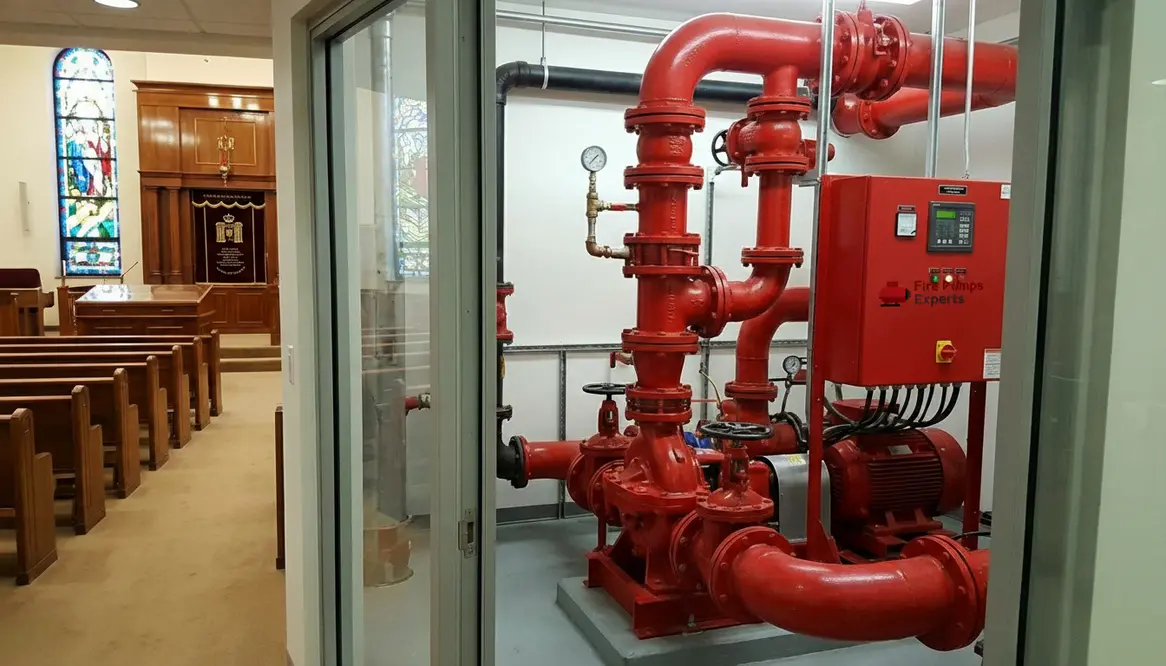
Fire Pump Systems for Synagogues Safety Guide
I have walked through many sacred spaces in my time. Quiet sanctuaries, towering cathedrals, and community synagogues that hum with history. Yet behind the stained glass and polished wood, there is one truth we cannot ignore. Fire does not care how holy a building is. It only cares about fuel, oxygen, and opportunity. That is where Fire Pump Systems for Synagogues come into the picture. These systems stand as silent guardians, ready to respond faster than any human ever could. And trust me, when it comes to fire, speed matters more than a superhero cameo.
Why fire protection in houses of worship demands a different approach
Houses of worship are not your typical commercial buildings. They combine large open spaces, high ceilings, and often older construction materials. Because of this, fire behavior can be unpredictable. Moreover, these properties host large gatherings, which means evacuation must be swift and orderly.
Therefore, I approach fire protection here with precision. I look at occupancy load, building layout, and the presence of historical elements. Many of these structures cannot simply be modified without care. As a result, I rely on tailored suppression strategies that preserve both safety and structure.
And let’s be honest. When a place holds decades or even centuries of meaning, losing it is not just a property loss. It is a community loss.
How do fire pump systems protect large worship facilities?
I like to explain fire pumps in simple terms. When water pressure is not enough, a fire pump steps in and says, “Don’t worry, I’ve got this.” It boosts water flow so sprinkler systems can perform at full strength.
In large synagogues and similar facilities, this becomes critical. High ceilings and expansive layouts demand consistent pressure across long distances. Without that boost, sprinklers may underperform at the exact moment they are needed most.
Additionally, modern fire pump units integrate with alarm systems and backup power. So even if the lights go out, the system stays active. It is a bit like having a backup generator, except instead of keeping your fridge running, it is keeping an entire building from disaster.
Fire Pump Systems for Synagogues and code compliance
I always tell property managers that compliance is not just paperwork. It is protection in action. Local and national fire codes require specific system designs based on building size and usage. Therefore, installing Fire Pump Systems for Synagogues ensures that these properties meet strict safety standards.
Furthermore, inspections and testing are not optional. They are part of the system’s life cycle. Regular testing verifies that pumps start instantly, maintain pressure, and deliver water where it is needed. Skipping this step is like owning a smoke detector with no batteries. It looks good until it doesn’t.
What I focus on during compliance
- Accurate pressure calculations
- Proper pump sizing
- Reliable power sources
- Integration with alarms
What clients often overlook
- Routine maintenance schedules
- Documentation of inspections
- Upgrades for older systems
- Emergency readiness training
Designing systems that respect both safety and structure
Now here is where things get interesting. Many houses of worship feature unique architecture. Decorative wood, intricate ceilings, and historical artifacts can complicate installation. However, I do not see this as a limitation. I see it as a design challenge.
I work to ensure that fire protection systems blend into the environment while remaining fully functional. Concealed piping, strategic pump placement, and careful system routing all play a role. As a result, the building retains its character without sacrificing safety.
It is a bit like placing modern technology into a classic film setting. Think Star Wars, but with better wiring and fewer exploding panels.
Fire Pump Systems for Synagogues in large scale property protection strategies
When I look at fire protection, I never isolate one system. Everything works together. Fire pumps support sprinklers, alarms trigger response, and emergency planning guides occupants to safety.
In large synagogue complexes or multi building worship campuses, this coordination becomes even more important. A single pump system may serve multiple zones, ensuring consistent coverage across the entire property.
Moreover, redundancy matters. Backup pumps and secondary power sources create layers of protection. Because when it comes to fire safety, one line of defense is good, but two is better. Three is even better, though at that point you are practically assembling the Avengers of fire protection.
Maintenance keeps protection alive
I cannot stress this enough. A fire pump system is not a set it and forget it investment. It requires ongoing care. Weekly churn tests, annual flow testing, and periodic component checks all ensure reliability.
Additionally, maintenance helps identify small issues before they become major failures. A minor pressure drop today could mean a critical malfunction tomorrow. Therefore, consistent monitoring protects both the system and the people who depend on it.
And yes, I have seen systems fail simply because someone assumed everything was fine. That assumption rarely ages well.
FAQ: Fire protection for houses of worship
Conclusion: Protect what matters most
When I think about fire protection, I think about responsibility. These buildings hold people, history, and purpose. Installing and maintaining the right system is not just a requirement. It is a commitment. If you manage a large worship facility, now is the time to act. Invest in the right fire pump solution, keep it maintained, and ensure your property stands strong for generations to come. Because some things are simply too important to leave to chance.
If you want a deeper technical breakdown of Fire Pump Systems for Synagogues, you can review additional guidance and best practices at https://firepumps.org, then work with a qualified fire protection professional to match those standards to the unique needs of your congregation.