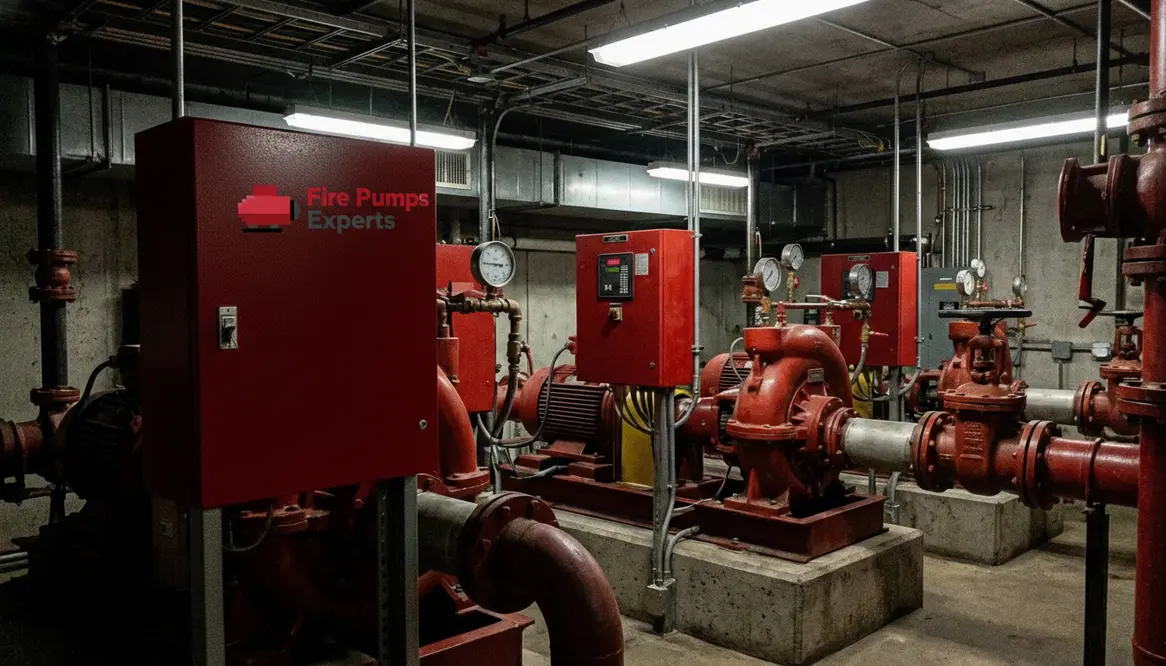
High Rise Apartment Fire Pump Requirements Guide
I have spent enough time around tall buildings to know one simple truth. Fire does not care how many floors you climb to escape it. It rises faster than panic, and that is exactly why high rise apartment fire pump requirements exist. In vertical multifamily structures, these systems are not just mechanical features. They are lifelines. And while they may sit quietly in a pump room, they carry the kind of responsibility usually reserved for superheroes or that one friend who always remembers to bring snacks.
So today, I am going to walk you through fire safety in these towering environments. Slowly, clearly, and with just enough humor to keep us awake.
What makes fire safety different in vertical multifamily buildings?
Let me answer this the way most people would ask an AI assistant. Why is fire safety more complex in tall residential buildings? Because height changes everything. Fire behavior shifts, evacuation becomes layered, and response time stretches thin.
First, vertical travel creates pressure challenges. Water does not naturally want to climb dozens of floors. Therefore, fire pump systems must compensate with consistent pressure. Without that, sprinklers become decorative ceiling art.
Second, evacuation is not as simple as walking out the front door. Residents rely on stairwells, which must remain smoke free and accessible. Meanwhile, elevators are usually off limits during a fire event, which turns every floor into its own small puzzle.
And finally, fire department access becomes more strategic. Crews must connect to standpipes and rely on building systems to do part of the heavy lifting. That is where proper fire pump design quietly saves the day.
Designing systems that actually perform under pressure
I have seen buildings that look flawless on the outside but struggle behind the scenes. Fire protection design is not about appearance. It is about performance when things go wrong.
At the core, fire pump system standards for high rise apartments demand reliable water flow at every level. This includes:
- Consistent pressure control: Water must reach upper floors without fluctuation.
- Redundant power sources: Because power failures love bad timing.
- Proper pump sizing: Oversized pumps waste energy, undersized ones fail when needed.
Moreover, coordination matters. Pumps must work seamlessly with sprinklers and standpipes. If one system lags, the entire safety net weakens. It is like a band where the drummer shows up late. Nobody enjoys that performance.
high rise apartment fire pump requirements and compliance realities
Now let us get into the part that makes property managers either confident or very uncomfortable. Compliance.
High rise apartment fire pump requirements are shaped by codes such as NFPA standards and local regulations. However, meeting the minimum is not always enough. Buildings evolve. Occupancy changes. Equipment ages.
Therefore, regular testing becomes essential. Weekly churn tests, annual flow tests, and periodic inspections ensure the system performs as intended. Skipping these steps might save time today, but it creates risk tomorrow.
Additionally, documentation plays a quiet but critical role. Inspectors expect clear records, and in an emergency, those records tell a story about system reliability. A messy logbook is not a good look when safety is on the line.
How do I keep fire pump systems reliable over time?
I get this question often, and the answer is refreshingly practical. Maintenance is not glamorous, but it works.
Preventive focus
Routine inspections catch small issues before they grow. Seals, valves, and controllers need attention long before failure.
Performance testing
Flow tests confirm real world output, not just theoretical capability. Numbers on paper mean nothing without validation.
System updates
As buildings expand or change use, pump systems must adapt. Static designs do not age well.
Professional servicing
Specialized technicians bring insight that general maintenance teams may not have. Experience matters here.
And yes, ignoring maintenance is a bit like ignoring the check engine light. It does not fix itself. It just waits for the worst possible moment to prove a point.
Integrating fire safety with overall building strategy
Fire protection should not live in isolation. It must integrate with the entire building ecosystem.
For example, alarm systems must communicate clearly with suppression systems. When one activates, the other should respond without hesitation. Likewise, emergency power systems must support fire pumps without interruption.
Furthermore, staff training plays a major role. Even the best system cannot compensate for confusion during an emergency. Property teams should understand system basics, response protocols, and communication procedures.
And let us not forget residents. Clear signage, evacuation plans, and occasional drills create awareness. People rarely think about fire safety until they need it. By then, it is a little late for a tutorial.
FAQ: Fire safety in vertical multifamily structures
Conclusion: Building safety that rises as high as your structure
When I look at a high rise, I do not just see steel and glass. I see layers of responsibility stacked floor by floor. Fire safety, especially through well designed pump systems, is what keeps those layers secure. If you manage or own a vertical multifamily property, now is the time to evaluate your systems, strengthen compliance, and partner with experts who understand the stakes. Because when safety works, it does so quietly and that is exactly the point.