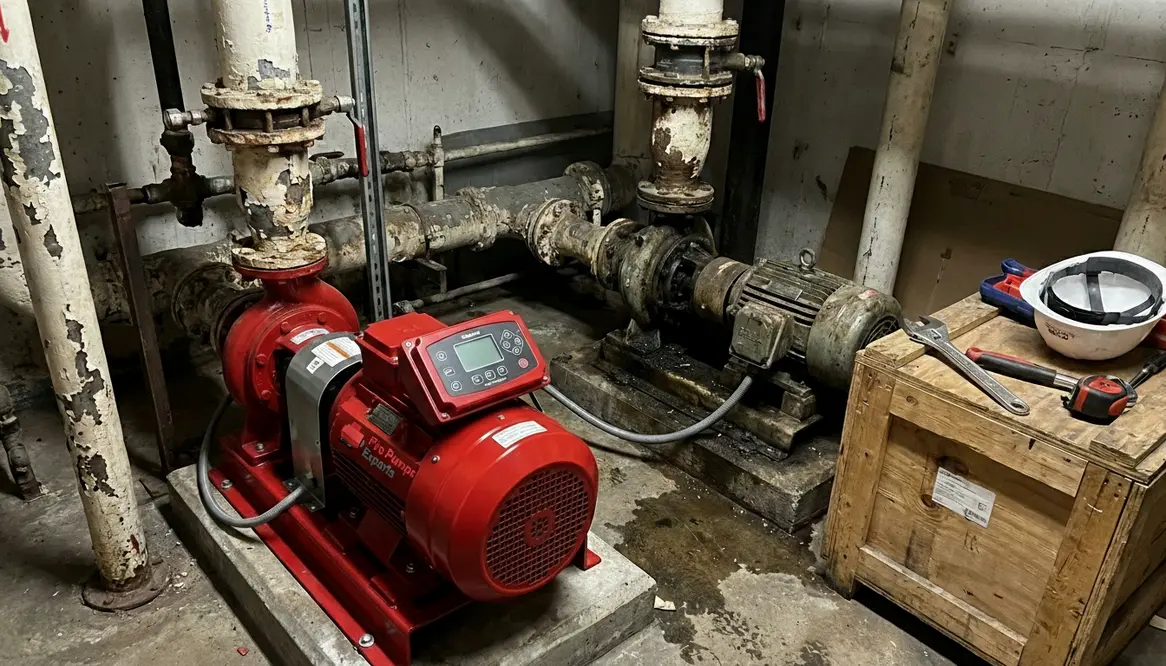
Residential High Rise Fire Pump Retrofit Guide
I have spent enough time inside mechanical rooms to know one thing for certain. Fire pumps do not age like fine wine. They age like milk left out during a summer blackout. That is exactly why residential high rise retrofit fire pump systems matter so much in older towers. These buildings were designed for another era, another code, and frankly, another set of expectations. Today, however, safety standards have evolved, and so must the systems that protect lives and assets. So, let me walk you through what upgrading really means, without the jargon, and with just enough humor to keep us both awake.
Why older towers struggle with modern fire protection demands
Older high rises were built with the best knowledge available at the time. However, codes have changed, water demands have increased, and building occupancy has grown denser. As a result, legacy fire pumps often fall short when tested against today’s requirements.
For instance, many older systems cannot maintain consistent pressure across upper floors. Meanwhile, pipe friction losses increase over time due to corrosion and buildup. Consequently, even a pump that once performed well may now deliver less than what is needed.
And let’s be honest. Some of these pumps have been running longer than certain movie franchises. If your fire pump predates the first Jurassic Park, it might be time for a serious conversation.
Aging infrastructure plus modern expectations is not a fair fight unless you upgrade the system that feeds the standpipes and sprinklers.
What goes into upgrading residential high rise retrofit fire pump systems
Upgrading is not about swapping one machine for another. Instead, it involves a careful evaluation of the entire fire protection ecosystem. I always start with hydraulic calculations because guessing in fire protection is a terrible hobby.
Next, I look at available water supply. City pressure may have changed over time, and that directly impacts pump selection. Then, I assess electrical infrastructure since older buildings often lack the capacity for modern equipment.
Finally, I integrate controls and monitoring. Modern systems allow real time data tracking, which means problems get spotted before they turn into emergencies. It is a bit like having a smartwatch, except this one protects hundreds of people instead of counting your steps.
Key upgrade elements
- Hydraulic recalculation to match today’s demand profile
- New pump selection aligned with code and building height
- Controller modernization for better reliability and diagnostics
- Power supply validation so nothing trips when you need it most
Operational benefits
- Stable pressure delivery to top and mid level floors
- Reliable code compliance during inspections and testing
- Reduced failure risk when the system is actually called to act
- Improved visibility so issues show up on screens, not in headlines
How do I know my building needs a fire pump upgrade?
If you are asking that question, you are already halfway there. Still, there are clear signs I always point out.
First, frequent pressure fluctuations during testing indicate performance issues. Second, if replacement parts are becoming rare, your system is living on borrowed time. Third, failing inspections or receiving code violations is a loud and clear signal.
Moreover, insurance carriers are becoming stricter. They expect modern reliability, not vintage charm. And unfortunately, a fire pump is not something you want to treat like a classic car. No one wants to admire it while it fails.
Design considerations that actually make or break performance
Design is where many retrofit projects either shine or quietly unravel. Therefore, I focus on matching the pump curve precisely to the building demand. Oversizing can cause pressure surges, while undersizing leaves gaps in protection.
In addition, I evaluate vertical zoning strategies. High rise buildings often benefit from pressure zoning to avoid overstressing lower floors. This approach keeps the system balanced and efficient.
Another key factor is redundancy. While it may sound like overkill, having backup capacity can prevent a minor issue from becoming a major disaster. Think of it as having a spare tire, except this one is significantly more important.
Match the building, not the catalog
Every tower has its own quirks: riser layout, demand curves, occupancy types. Residential high rise retrofit fire pump systems that actually work are the ones tailored to those realities, not just picked from a table.
Design for bad days
Fire events rarely match the neat scenarios in the design report. Building a margin of safety, zoning wisely, and planning for partial failures makes the system far more forgiving when conditions get messy.
Minimizing disruption during retrofit projects
Now, here is where things get interesting. Retrofitting in an occupied high rise is a bit like performing surgery while the patient is running a marathon. It requires planning, coordination, and a steady hand.
I typically phase installations to maintain continuous protection. Temporary systems may be used to ensure compliance during construction. Additionally, work often happens during off peak hours to reduce impact on occupants.
Communication also plays a critical role. When building management, contractors, and engineers stay aligned, projects move smoother. When they do not, well, let us just say chaos tends to follow.
Keeping residents calm while the system changes
- Share clear timelines and impacts in advance.
- Coordinate noisy or intrusive work for least disruptive hours.
- Confirm temporary protection measures in writing and on drawings.
- Test and document each phase before moving on.
Long term value of modern fire pump retrofits
Upgrading is not just about meeting code today. It is about future proofing the building for years to come. Modern residential high rise retrofit fire pump systems offer improved efficiency, better diagnostics, and longer service life.
Additionally, they enhance property value. Buyers and investors see updated fire protection as a sign of responsible management. On top of that, insurance premiums may improve due to reduced risk.
And perhaps most importantly, these systems provide peace of mind. Because when something goes wrong, and eventually something always does, you want a system that performs without hesitation.
Well planned residential high rise retrofit fire pump systems can also simplify future modifications. When the baseline infrastructure is strong, adding floors, reworking layouts, or changing occupancy becomes far less painful from a fire protection standpoint.
Think of a retrofit as a reset button for reliability. You are not just replacing old hardware; you are re establishing confidence in a system that only has one job: work perfectly when everything else is going wrong.
FAQ
Take the next step with confidence
If your building still relies on aging equipment, now is the time to act. I help property owners and facility managers upgrade with precision, minimal disruption, and long term reliability in mind. A well executed retrofit protects lives, strengthens compliance, and adds measurable value. Reach out today, and let us bring your fire protection system into the modern age with clarity and confidence.
Whether you are just starting to question your existing fire pump or already collecting quotes, treating residential high rise retrofit fire pump systems as strategic infrastructure rather than a grudging expense will pay off in performance, resilience, and peace of mind for everyone who lives and works in the building.