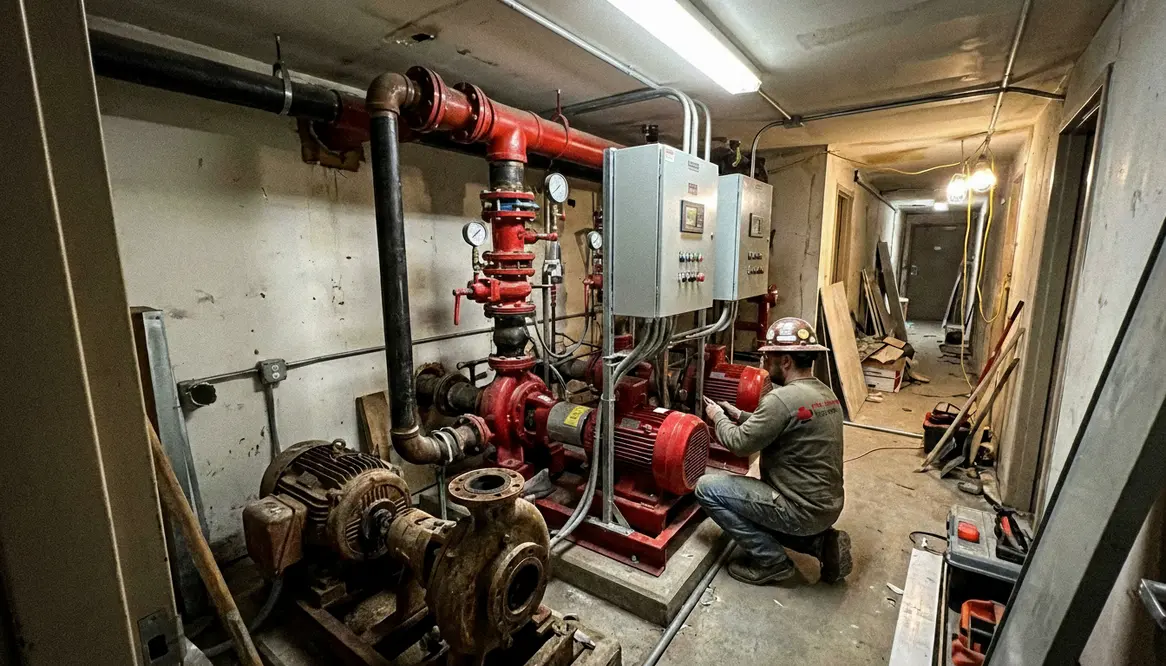
Apartment Redevelopment Fire Pump Requirements Guide
I have spent enough time in large scale rehabs to know one truth: if you ignore apartment redevelopment fire pump requirements, the building will remind you later, and it will not be polite about it. In major housing renovations, fire pump upgrades are not just a code checkbox. They are the quiet backbone of life safety. And while they rarely get the spotlight, they carry more responsibility than the hero in a summer blockbuster, just without the cape or soundtrack.
So let me walk you through what really matters, in a way that keeps things clear, grounded, and maybe even a little entertaining.
Why Fire Pump Upgrades Matter in Major Housing Rehabs
When I step into a redevelopment project, I immediately look at the existing fire protection system. More often than not, it was designed for a different era, a different occupancy load, and frankly, a different expectation of safety.
As buildings grow taller, denser, and more complex, the demand on fire pumps increases. Therefore, upgrading becomes less of a choice and more of a necessity. Older pumps may struggle with pressure consistency, and in a fire scenario, hesitation is not something you can afford.
Additionally, modern codes tied to apartment redevelopment fire pump requirements often call for improved reliability, redundancy, and monitoring. And yes, inspectors notice everything. They are a bit like detectives, except instead of solving crimes, they solve noncompliance.
What triggers fire pump upgrades during redevelopment projects
I usually tell clients that upgrades do not happen randomly. They are triggered by specific changes in the building.
For example, when you increase the number of units or add new floors, the hydraulic demand shifts. As a result, the existing pump may no longer meet required pressure levels. Similarly, converting usage spaces, like turning storage into residential units, changes the hazard classification.
Then there is infrastructure aging. If a pump system has been around longer than some of the tenants’ favorite sitcoms, it is probably time to reconsider its role. Components wear down, efficiency drops, and reliability becomes questionable.
In short, redevelopment is not just cosmetic. It reshapes how the building breathes, flows, and protects.
Key triggers owners often overlook
- Adding amenities like rooftop lounges or fitness centers that change occupancy patterns
- Reconfiguring stairwells or corridors that alters egress and sprinkler demand
- Expanding parking or storage below grade that increases system complexity
Designing systems that meet modern codes and real world demands
Upgrading a fire pump is not about swapping out old equipment for shiny new gear. It requires a careful balance of engineering precision and practical foresight.
I focus on system demand first. That includes flow rate, pressure requirements, and system zoning. Then I align those needs with current fire codes and standards tied to large residential structures.
However, compliance alone is not enough. I always plan for real world conditions. Power fluctuations, water supply inconsistencies, and maintenance access all play a role. A system that works perfectly on paper but struggles in reality is about as useful as a screen door on a submarine.
Therefore, I prioritize controllers with advanced diagnostics, reliable backup power options, and layouts that allow technicians to service components without acrobatics.
Translating codes into practical design
Modern apartment redevelopment fire pump requirements point you toward performance targets, but the real art lies in fitting those targets into existing structures without turning the mechanical room into a maze. Clear pipe routing, sensible valve locations, and realistic access clearances all matter just as much as the nameplate on the pump.
How do I balance cost, performance, and long term reliability?
This is the question everyone asks, and rightly so.
I approach it with a simple mindset: spend where failure is not an option, and optimize where flexibility exists. Fire pumps fall firmly into the first category.
That said, smart planning can control costs. For instance, selecting the right pump type for the building profile prevents oversizing. Oversized systems not only waste energy but also increase wear over time.
Moreover, integrating monitoring systems reduces unexpected failures. Early alerts allow maintenance teams to act before issues escalate. Think of it as giving your building a voice, instead of waiting for it to scream.
What I prioritize
- Accurate hydraulic calculations
- Code compliant system design
- Durable pump construction
- Accessible maintenance layout
What I avoid
- Oversized or undersized pumps
- Ignoring future expansion needs
- Complex layouts without service access
- Short term cost cutting that risks failure
Where strategy meets apartment redevelopment fire pump requirements
The sweet spot is matching the legal minimums with smart upgrades that actually lower lifecycle cost. Better controls, right sized motors, and a layout that makes routine testing painless will do more for your budget over 10 to 20 years than shaving a few dollars off the initial bid.
Integrating fire pump systems into large scale building infrastructure
In major housing rehabs, coordination is everything. Fire pumps do not operate in isolation. They connect with electrical systems, water supply lines, alarm networks, and building management systems.
So I work closely with engineers, contractors, and facility managers. This ensures that installation aligns with both design intent and operational reality. Additionally, I pay attention to space constraints. Mechanical rooms often feel like a game of Tetris, and nobody wants to lose that game.
Furthermore, modern upgrades tied to apartment redevelopment fire pump requirements often include remote monitoring capabilities. This allows teams to track performance in real time, which adds another layer of security and control.
Making the pump room part of the bigger story
When the fire pump talks to the building automation system, the alarm panel, and your maintenance software, you stop guessing and start managing. That level of integration turns apartment redevelopment fire pump requirements from a compliance headache into a real operational asset.
Common pitfalls I see in fire pump upgrades
Even experienced teams can miss key details. I have seen projects where the pump met code but failed under actual demand conditions. That usually comes down to incomplete calculations or overlooked variables.
Another issue is poor installation. A high quality pump installed incorrectly will underperform every time. Alignment, anchoring, and proper commissioning all matter.
Finally, skipping routine testing after installation is a mistake. Fire pumps need to prove themselves before they are called into action. Because when that moment comes, there is no rehearsal.
Avoiding the “meets code but fails reality” trap
- Verify real water supply conditions instead of assuming ideal values
- Confirm power quality and backup power compatibility before finalizing equipment
- Plan test headers and flow paths that can actually be used without shutting down half the site
FAQ
Conclusion
Fire pump upgrades are not just another line item in a redevelopment budget. They are a long term investment in safety, performance, and peace of mind. If you are planning a major housing rehab, now is the time to get it right. Work with experts who understand large scale systems and know how to meet evolving demands. Visit https://firepumps.org and take the next step toward a safer, stronger building today.