UAE Fire Code Fire Pump Rules for High Rise
UAE Fire Code Fire Pump Requirements for High Rise Buildings may sound like a dry topic, but I promise it matters a great deal when a tower starts treating water pressure like it is optional. In the UAE Fire Code high rise world, I have seen how the right fire pump setup can make the difference between a controlled emergency and a very expensive headline. For commercial towers, industrial sites, and major property buildings, the rules are built to keep water moving when a fire pump system has to do its hardest job.
So, let me walk you through the core requirements in a clear way. I will keep it practical, current, and focused on what matters for large buildings that need strong fire protection without the drama.
What the UAE Fire Code Expects From a High Rise Fire Pump System
At the heart of the code, I need a fire pump system that delivers water at the right pressure, at the right flow, and under the right conditions. High rise buildings demand more than a basic setup because gravity is not exactly a team player. As a building grows taller, the pump must push water to upper floors with enough force to support sprinklers, hose reels, and fire fighting lines.
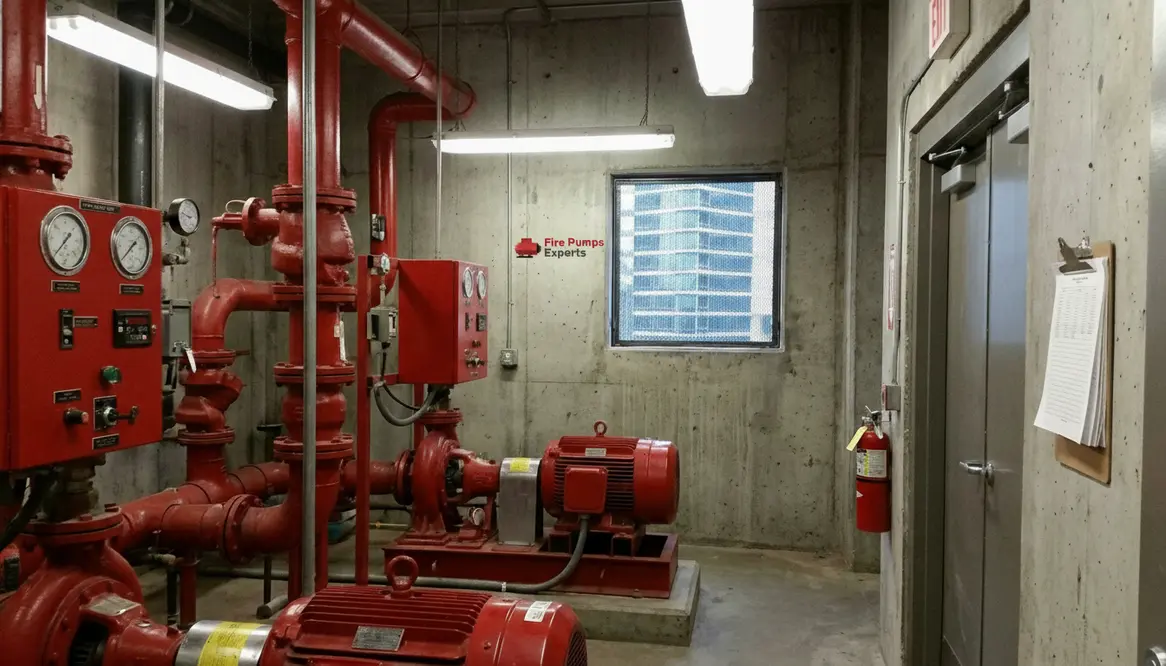
In practice, I look for a system that includes a main fire pump, a standby pump, and a jockey pump. The main pump handles the real load. The standby pump takes over if the main unit fails. Meanwhile, the jockey pump keeps pressure steady and reduces unnecessary starts. That may sound simple, but it saves wear, lowers risk, and keeps the system ready. Even Batman would appreciate a backup plan.
Fire Pump Sizing and Pressure Rules for Tall Buildings
Correct sizing is not guesswork. I must match the pump to the building height, fire risk, demand load, and network design. If the pump is too small, upper floors may not receive enough water. If it is too large, the system can suffer from excess pressure, noise, and damage to pipes and fittings. Nobody wants a fire system that acts like it drank too much coffee.
The UAE Fire Code high rise requirements place strong focus on pressure loss, elevation gain, and system demand. Therefore, I always consider:
- Total building height and floor count
- Hydraulic demand from sprinklers and fire hose systems
- Pressure needed at the highest outlet
- Friction loss in pipes and valves
- Water supply reliability and tank capacity
Because of this, a proper hydraulic calculation is not a nice extra. It is the backbone of the design.
How I Check the Main Parts of the Fire Pump Room
The fire pump room must be easy to access, protected, ventilated, and built for service work. I do not want a pump room that feels like a hidden dungeon behind a storage stack of broken chairs. The code expects a clean, safe, and reliable space with enough room for inspection, testing, and repair.
Here is a simple dual view of what I always check:
Inside the pump room
- Main fire pump
- Standby pump
- Jockey pump
- Controllers
- Valves and gauges
Why it matters
- Delivers the required fire flow
- Keeps protection active during failure
- Maintains pressure and prevents drop
- Starts pumps automatically and monitors performance
- Helps with control and inspection
I also look at power supply protection, because a fire pump that loses power during an emergency becomes a very expensive decoration. For commercial and industrial buildings, that is simply not acceptable.
Testing, Maintenance, and Code Compliance for UAE High Rise Properties
Compliance does not end after installation. In fact, that is where the real discipline begins. I need regular testing, inspection, and maintenance so the system stays ready. The pumps must start on demand, maintain pressure, and work for the expected duration. If a building owner skips maintenance, the system may look fine on paper while failing in real life. Paper does not fight fire.
Testing should include pump start checks, pressure readings, flow checks, controller verification, and alarms. In addition, the water tank and suction line need close review. If air leaks, blockages, or low water levels show up, the whole system suffers. I also recommend clear records for every test, because good logs help prove compliance and simplify audits.
Where I Would Use Expert Help for Fire Pump Systems
For major properties, industrial facilities, and tall commercial towers, I would always use a specialist team that understands local code and large system design. One useful reference is specialist fire pump support for commercial and industrial buildings, especially when the project needs proper design, installation guidance, or compliance checks. That kind of support matters because fire protection is not a place for shortcuts, and high rise systems leave very little room for improvisation.
In the UAE Fire Code high rise context, having people who understand how to balance pressure, flow, redundancy, and power supply can save both time and rework. It also makes it easier to defend the design to authorities, insurers, and anyone else who cares deeply about how water reaches the top floor when it is truly needed.
Quick UAE Fire Code High Rise Checklist
When I review a UAE Fire Code high rise project, I keep a short checklist in mind to stay honest about the system quality:
- Is there a correctly sized main fire pump, standby pump, and jockey pump?
- Has a full hydraulic calculation been done, documented, and verified?
- Can the system maintain required pressure at the highest point for the specified duration?
- Is the pump room accessible, protected, ventilated, and safe to work in?
- Do power supply and controls meet the reliability expected for a critical life safety system?
- Are testing, maintenance, and record-keeping already planned, not just promised?
FAQ
Conclusion
If you manage a tall commercial tower or a major industrial property, I strongly suggest treating fire pump compliance as a priority, not a side task. A properly designed and tested system protects lives, property, and business continuity. So, if you are planning a new project or reviewing an existing one, get expert help early, verify the pump capacity, and keep maintenance tight. In fire protection, calm preparation always beats frantic regret.