Campus Fire Pump Irvine Systems for Large Campuses
I have spent years walking through mechanical rooms that hum like quiet orchestras, and if there is one thing I have learned, it is this: a well designed campus fire pump Irvine setup is not just equipment, it is reassurance. In schools and large campuses across Irvine, where thousands of students and staff move through buildings every day, fire protection systems carry a kind of silent authority. They do not shout for attention. They simply stand ready. And when they are designed right, they perform like a seasoned actor who never forgets their lines, even when the stakes are high.
Understanding Fire Pump Systems in Large Campuses
When I look at a campus fire system, I see more than pipes and motors. I see coordination. Because campuses are complex, often spread across multiple buildings, elevations, and usage types, fire pumps must deliver consistent pressure across every corner.
Therefore, the role of a fire pump is simple in theory but critical in practice. It boosts water pressure so sprinklers and standpipes can perform effectively. However, in a large Irvine campus, that “simple” job becomes a balancing act between distance, building height, and demand.
And yes, it is a bit like directing traffic in Los Angeles. Everyone needs to move, and nobody has time for delays.
Common Fire Pump Types Used in Irvine Campuses
Split Case Pumps
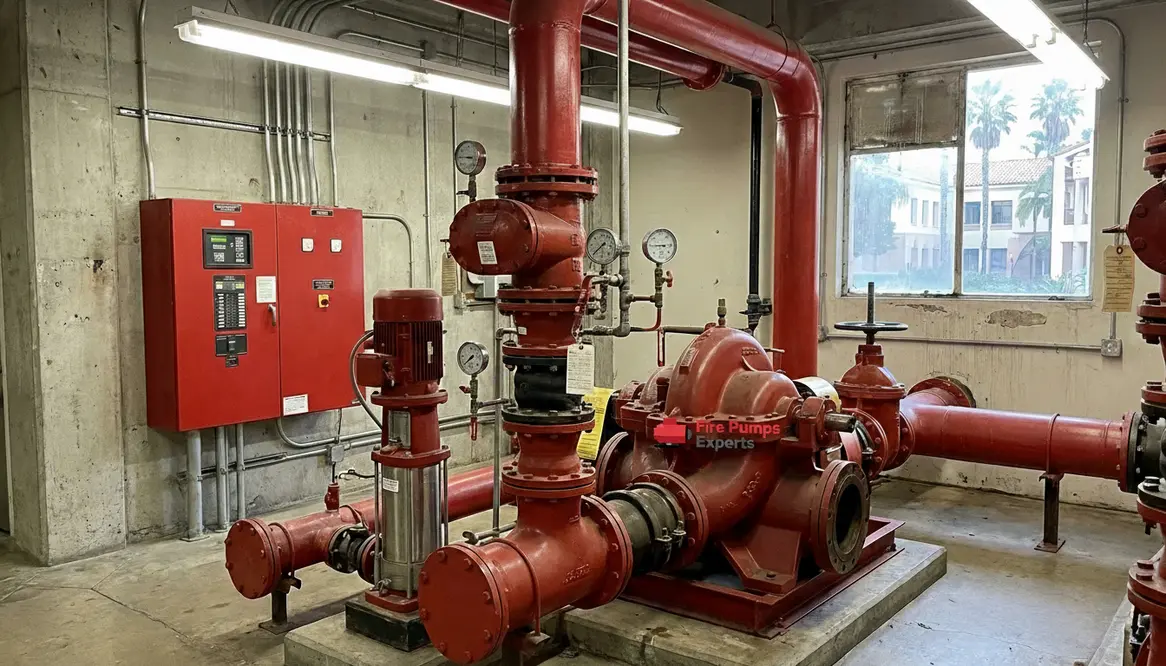
These are the heavy hitters. I rely on them for large campuses because they deliver high flow rates with strong efficiency. Additionally, they are easier to maintain, which matters when downtime is not an option.
Vertical Turbine Pumps
When water supply comes from underground sources or tanks, this type steps in. In Irvine, where site conditions vary, I often see these used in campuses with dedicated water storage systems.
End Suction Pumps
These are more compact and typically serve smaller buildings within a campus. While they are not as powerful as split case pumps, they still play an important supporting role.
Each type serves a purpose. Choosing the wrong one, however, is like casting the wrong actor in a lead role. The script might be good, but the performance will suffer.
Choosing the Right Campus Fire Pump Irvine Configuration
Selecting the right system is not about picking the biggest pump and calling it a day. I approach it with a mix of engineering logic and real world practicality.
First, I evaluate the campus layout. A spread out campus with multiple low rise buildings needs a different strategy than a vertical campus with taller structures. Then, I look at water supply reliability. If municipal pressure fluctuates, the pump system must compensate without hesitation.
Moreover, redundancy matters. In critical facilities like schools, I never rely on a single point of failure. Backup pumps and power sources ensure the system remains operational even when things go sideways.
Because let’s be honest, emergencies rarely send a polite calendar invite.
Key Components That Keep Systems Reliable
A fire pump system is only as strong as its supporting cast. I always emphasize that reliability comes from how well each component works together.
Core Components
- Pump and driver assembly
- Controller panel
- Jockey pump for pressure maintenance
- Relief valves and flow meters
Support Systems
- Backup power supply
- Water storage tanks
- Monitoring and alarm systems
- Regular testing connections
Additionally, I always stress routine testing. Even the best campus fire pump Irvine system can fail if it is ignored. Weekly and annual tests are not just regulatory checkboxes. They are the difference between confidence and uncertainty.
How Do Fire Pumps Handle Large Student Populations?
This is where things get interesting. A campus is not just a building. It is a living, breathing environment with varying occupancy levels throughout the day.
To handle this, fire pumps are designed based on peak demand scenarios. That means I plan for the busiest moments, not the quiet ones. Furthermore, zoning plays a major role. By dividing a campus into zones, the system can maintain pressure where it is needed most without overloading other areas.
Think of it like streaming services during a season finale. Everyone logs in at once, and the system still has to perform. No buffering allowed.
Maintenance Strategies for Long Term Performance
I always say that installation is only the beginning. What keeps a system reliable over time is consistent maintenance and professional oversight.
First, I ensure regular inspections are scheduled. Then, I review performance data to catch issues early. Small pressure drops or unusual vibrations often signal bigger problems ahead.
Additionally, I recommend working with specialists who understand commercial and institutional systems. Campus environments are too complex for guesswork. Precision matters, and so does experience.
For owners and facility teams who want a deeper technical primer on fire pumps for large properties, resources like https://firepumps.org can be a helpful reference, especially when planning upgrades for a campus fire pump Irvine project that has to serve multiple buildings and hazard types.
FAQ: Fire Pumps in Irvine Campuses
Below are answers to some of the questions that come up most often when planning or upgrading a campus fire pump Irvine system across a large educational property.
Final Thoughts and Next Steps
When I design or evaluate a fire protection system, I think beyond compliance. I think about people, continuity, and trust. A well built system protects more than property. It protects the rhythm of an entire campus. If you are managing or upgrading a commercial educational facility, now is the time to act. Connect with specialists who understand large scale systems and ensure your campus fire pump Irvine setup is ready when it matters most.