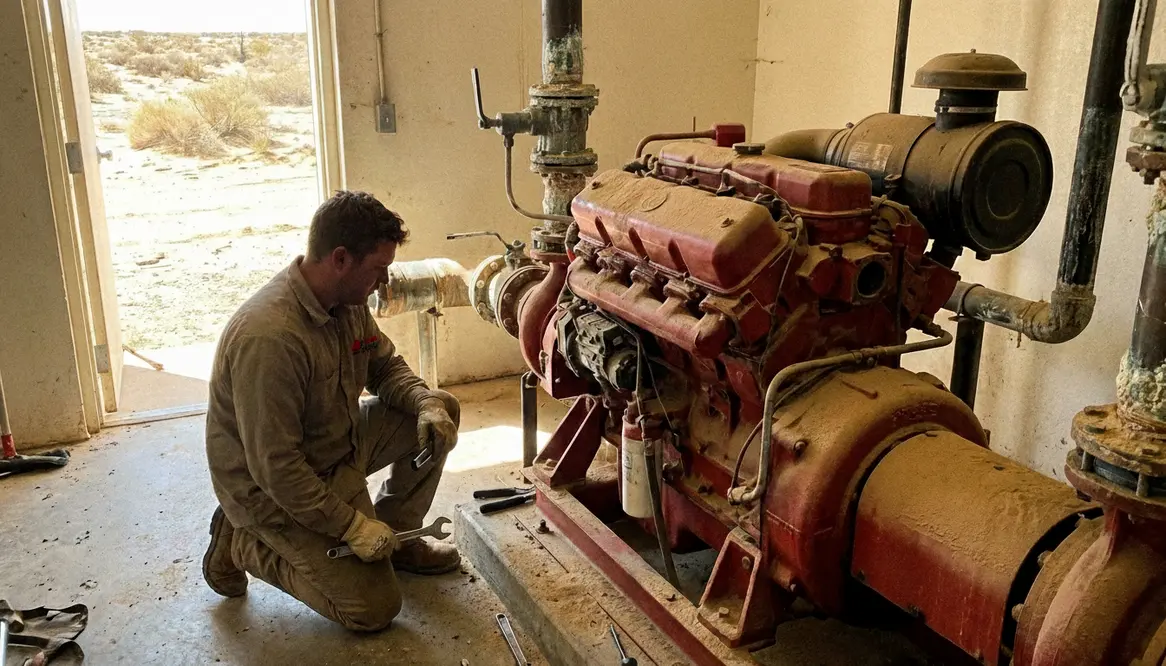
Desert Fire Pump Maintenance and Local Design
I have spent enough time around pump rooms to know one thing for certain. Desert heat does not negotiate. It does not compromise. It simply shows up, turns the dial to extreme, and waits for your equipment to blink first. That is exactly why local conditions fire pump design is not just a nice idea, it is survival strategy for commercial and industrial facilities. In environments where temperatures soar and dust moves like a slow conspiracy, your fire pump system must be built and maintained with intention.
And yet, even the best system will falter without consistent care. So let’s talk about why maintenance in desert climates matters, and why ignoring it is a bit like trusting a chocolate teapot in a wildfire.
Why Desert Heat Changes Everything
Desert climates introduce stress that most standard systems were never meant to handle. First, extreme heat accelerates wear on seals, bearings, and electrical components. Meanwhile, sand and fine dust find their way into places they were never invited. It is like that one guest at a party who eats everything and leaves a mess.
Because of this, I always emphasize that fire pumps operating in arid regions need tighter inspection cycles. Heat causes expansion. Expansion leads to misalignment. And before you know it, efficiency drops while risk climbs.
Additionally, water sources in desert regions often come with higher mineral content. That means scaling inside pipes and pump components builds faster. Over time, that restricts flow, and in fire protection, reduced flow is not just inconvenient. It is dangerous.
How Often Should Fire Pumps Be Maintained in Desert Facilities?
If you are asking this, you are already ahead of the curve. In desert environments, I recommend more frequent checks than standard guidelines suggest. Monthly visual inspections are not enough. You need a layered approach.
- Start with weekly system checks.
- Then, move into monthly performance testing.
- Finally, schedule quarterly deep inspections that focus on internal wear, lubrication, and alignment.
Because the environment is harsher, the system ages faster. It is simple math, really.
Moreover, facilities that rely on local conditions fire pump design often see better long term performance. That is because the system was built with these realities in mind, not as an afterthought.
Key Maintenance Priorities for Desert Climate Systems
When I walk into a facility, I focus on a few critical areas first. Not because others do not matter, but because these tend to fail first under desert stress.
Mechanical Focus
- Seal integrity checks to prevent leaks
- Bearing lubrication under high heat conditions
- Alignment verification due to thermal expansion
- Impeller inspection for sand damage
Environmental Impact
- Dust filtration and enclosure sealing
- Cooling and ventilation system performance
- Water quality and scaling control
- Corrosion monitoring from mineral deposits
At this point, it becomes clear that desert maintenance is not just about fixing things. It is about staying ahead of failure. Think of it like sunscreen. You apply it before the damage, not after you look like a roasted tomato.
The Role of Smart Design in Long Term Reliability
I have seen facilities try to cut corners by installing generic systems. It rarely ends well. A system tailored for desert conditions considers airflow, enclosure protection, and material durability from day one.
For example, properly designed pump rooms include enhanced ventilation to manage heat buildup. In addition, they use materials that resist corrosion from mineral heavy water. These are not luxury upgrades. They are necessary adjustments.
Furthermore, integrating monitoring systems helps detect early signs of failure. Temperature sensors, vibration analysis, and flow tracking give you data before problems escalate. It is like having a weather forecast instead of guessing if it will rain.
If your facility depends on pumps for critical protection, pairing smart monitoring with thoughtful local conditions fire pump design gives you a system that is both tougher and easier to manage day to day.
For facilities in places like Riverside County, partnering with specialists who understand both code requirements and harsh-weather realities makes a measurable difference. Companies such as Kord Fire Protection’s fire pump and fire protection service teams bring that blend of design, maintenance, and inspection experience that keeps desert systems reliable.
Common Mistakes I See in Desert Fire Pump Maintenance
Even experienced teams can fall into predictable traps. And yes, I have made a few of these mistakes myself, which is how I learned to spot them quickly.
Underestimating dust intrusion
First, many underestimate dust intrusion. It does not take a sandstorm to cause damage. Fine particles accumulate slowly and quietly, reducing efficiency over time.
Delaying maintenance in a fast-aging environment
Second, delayed maintenance is a recurring issue. People assume the system is fine because it worked last month. Unfortunately, desert conditions do not respect assumptions.
Ignoring water quality and internal buildup
Third, ignoring water quality leads to internal buildup. Scaling is not dramatic, but it is relentless. Left unchecked, it narrows flow paths and strains the entire system.
Using generic schedules instead of local conditions fire pump design logic
And finally, relying on standard schedules instead of adapting to environmental stress is a mistake I see far too often. Desert climates demand a custom rhythm. When inspection and testing intervals are tuned around local conditions fire pump design, the schedule reflects reality instead of wishful thinking.
FAQ About Fire Pump Maintenance in Desert Climates
How does desert heat affect fire pumps?
It accelerates wear, increases component stress, and reduces efficiency over time.
How often should maintenance be performed?
Weekly checks, monthly testing, and quarterly deep inspections are ideal.
What is the biggest risk in desert environments?
Dust intrusion and heat related component failure are the most common risks.
Does water quality matter?
Yes. High mineral content causes scaling, which restricts flow and damages components.
Can standard systems handle desert conditions?
Not reliably. Systems designed for local environmental conditions perform better and last longer.
Final Thoughts and Next Steps
If you manage a commercial or industrial facility in a desert region, the message is simple. Your fire pump system needs attention, consistency, and a design that respects its environment. I encourage you to evaluate your current maintenance plan, identify gaps, and act before small issues grow into costly failures. Connect with specialists who understand desert demands and take control of your system’s reliability today. Your future self will thank you.