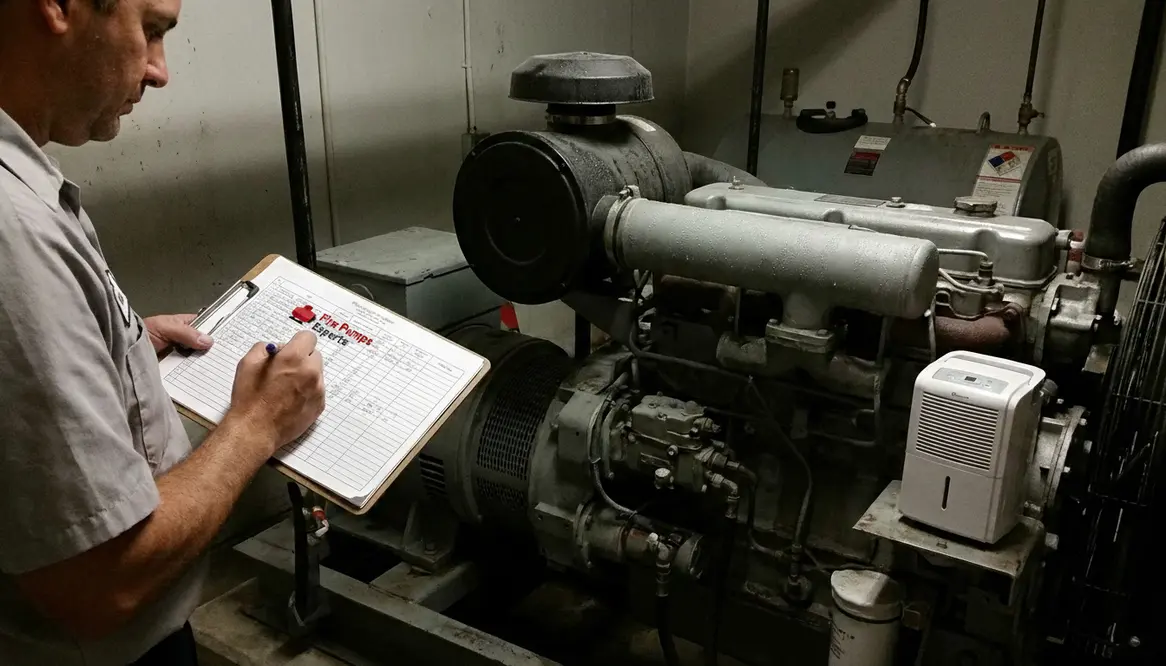
Diesel Fire Pump Maintenance Miami Humidity Fuel Quality
Why Miami’s heat, humidity, and fuel conditions demand a different level of discipline from diesel fire pump owners and facility teams.
I have spent enough time around fire pump rooms in South Florida to know one simple truth. Diesel equipment behaves differently in Miami than it does in cooler, drier places. Heat sits heavy in the air, humidity sneaks into places it should not be, and fuel quality can change faster than a Miami weather forecast. That is why I often talk with facility teams about diesel fire pump maintenance miami humidity fuel quality weekly run logs. Those five ideas are not random maintenance buzzwords. Together they form the backbone of reliable fire protection for large commercial and industrial properties.
Now, I will admit something. Diesel fire pumps are not glamorous. They do not have the flash of a sports car or the drama of a Hollywood explosion scene. However, when a real emergency arrives, these machines quietly become the most important equipment in the building. And like any dependable workhorse, they need attention, discipline, and a maintenance routine that respects the realities of Miami’s climate.
Miami Diesel Pump Reality Check
In Miami, diesel fire pump maintenance miami humidity fuel quality weekly run logs are not paperwork exercises. They are the difference between “the system worked exactly as designed” and “why didn’t the pump start?” on the worst day a building can face.
If your team still follows a generic cold-climate checklist, Miami will win that contest every single time.
Diesel Fire Pump Maintenance Miami Humidity Fuel Quality Weekly Run Logs
In Miami, humidity is not just a weather condition. It is practically a personality trait. Step outside for five minutes and suddenly you feel like you walked into a sauna wearing a business suit. Unfortunately, diesel fire pumps feel that same pressure.
Moisture in the air finds its way into pump rooms, fuel tanks, and engine components. Over time, that moisture leads to condensation inside tanks and lines. Consequently, water contamination becomes one of the most common issues I see when inspecting diesel driven fire pumps in large facilities.
Because of that, maintenance programs here cannot follow a generic checklist copied from a colder region. Instead, they must account for three major factors.
- Humidity exposure which increases condensation inside fuel systems.
- Fuel stability since warm environments accelerate fuel degradation.
- Consistent testing through documented run logs that reveal early warning signs.
When these areas receive proper attention, the diesel pump remains dependable. Without that attention, problems quietly develop until the day the system is needed most. And that, my friend, is not the moment anyone wants surprises.
How Miami Humidity Quietly Attacks Diesel Pump Systems
Let me paint a picture. Imagine a diesel tank sitting in a pump room that experiences daily temperature swings. During the day the room warms up. At night it cools slightly. As that temperature shifts, condensation forms inside the tank. Eventually small amounts of water settle beneath the fuel.
At first, this does not look dramatic. In fact, it hides quietly at the bottom like a villain in the first act of a movie. However, over time water contamination can lead to microbial growth, clogged filters, and injector damage.
Humidity: The Slow Saboteur
Think of humidity as the slow villain in a detective story. It rarely causes instant drama. Instead, it works quietly behind the scenes until one day the system refuses to cooperate. That is exactly why diesel fire pump maintenance miami humidity fuel quality weekly run logs should never be treated as background paperwork.
Therefore, facility engineers in Miami should treat moisture control as part of routine maintenance. I often recommend a few practical steps.
- Inspect tank vents and seals to prevent humid air intrusion.
- Drain water from fuel tanks at scheduled intervals.
- Use proper tank sampling procedures to detect contamination early.
- Maintain stable room temperatures when possible.
Furthermore, corrosion becomes a serious concern when humidity mixes with metal components. Engine blocks, fittings, and electrical contacts slowly deteriorate if moisture remains unchecked. As a result, pump reliability can degrade long before anyone notices.
Fuel Quality Management for Commercial and Industrial Fire Pumps
Diesel fuel looks simple. Pour it in the tank and the engine runs. Easy, right. Well, not quite.
In Miami’s warm climate, diesel fuel ages faster. Heat accelerates oxidation while humidity introduces water contamination. Consequently, the fuel inside a fire pump tank can degrade long before anyone expects it.
For major commercial and industrial properties, maintaining fuel quality is not optional. It is part of responsible life safety management.
First, facilities should schedule periodic fuel testing. Lab analysis reveals microbial growth, water levels, and chemical stability. That information allows engineers to correct issues before they affect the engine.
Second, fuel polishing services can remove water and contaminants. Think of it as a deep cleaning for your fuel system. Instead of letting problems accumulate, polishing restores fuel quality and extends equipment life.
Exercise for Engines, Not Just People
Third, tank turnover matters. Diesel that sits untouched for long periods slowly loses performance. Regular testing runs help cycle the fuel and keep the system active.
Besides, engines appreciate exercise. Leave any machine sitting too long and it begins to act like someone who skipped leg day for ten years. The moment you need it, something complains.
If you want a deeper look at how professional fire pump design and testing tie into reliability, resources like NFPA 20 overviews from Kord Fire Protection can help frame how maintenance practices and code expectations work together.
Why Weekly Run Logs Reveal Problems Before They Become Emergencies
Of all maintenance practices, weekly run logs might be the most underrated. They are not flashy. They are not dramatic. However, they reveal the story of your pump over time.
Every time a diesel fire pump runs during a weekly test, the operator records key performance data. These logs capture information such as engine pressure, temperature, starting performance, and run duration.
Now here is where things get interesting.
When facility teams review those records regularly, patterns appear. Maybe the engine takes longer to start than it did last month. Perhaps the temperature climbs slightly higher each week. Individually, these changes seem small. Together, they point toward developing mechanical issues.
Therefore, consistent documentation becomes an early warning system.
The Story Hidden in Your Run Logs
Without weekly run logs, small issues remain invisible until failure occurs. With logs, engineers see the story unfolding week after week. And that story often gives them plenty of time to fix the problem before an emergency arrives.
Even better, accurate records help demonstrate compliance during inspections for large facilities. Inspectors love documentation almost as much as movie fans love a good plot twist.
Diesel Fire Pump Maintenance Miami Humidity Fuel Quality Weekly Run Logs in Real Facility Operations
When I walk through major commercial properties, from high rise towers to industrial campuses, I usually see one of two situations.
In the first scenario, maintenance teams treat the pump room like a mission critical space. They monitor fuel condition, maintain logs, inspect ventilation, and schedule professional service when needed. As a result, the system runs smoothly year after year.
In the second scenario, the pump sits quietly in a corner. People assume it will work because it worked last year. Unfortunately, that assumption can lead to expensive surprises.
|
Proactive Facilities
|
Reactive Facilities
|
The difference between those two columns often determines whether a fire protection system performs exactly when it is needed. For large commercial and industrial buildings, that reliability is not just a maintenance detail. It is a responsibility grounded in consistent diesel fire pump maintenance miami humidity fuel quality weekly run logs.
FAQ About Diesel Fire Pump Maintenance in Miami
These are some of the questions that come up most often when facility teams start tightening up their programs for diesel fire pump maintenance miami humidity fuel quality weekly run logs and overall system reliability.
Conclusion
Reliable fire protection does not happen by accident. It happens through discipline, observation, and respect for the equipment protecting your property. If your facility depends on diesel fire pumps, now is the time to evaluate humidity control, fuel condition, and the accuracy of your run logs.
Work with experienced professionals who understand the realities of Miami environments and large scale systems. When the moment of truth arrives, your fire pump should respond with confidence, backed by smart diesel fire pump maintenance miami humidity fuel quality weekly run logs that prove the system has been cared for long before the alarm ever sounds.